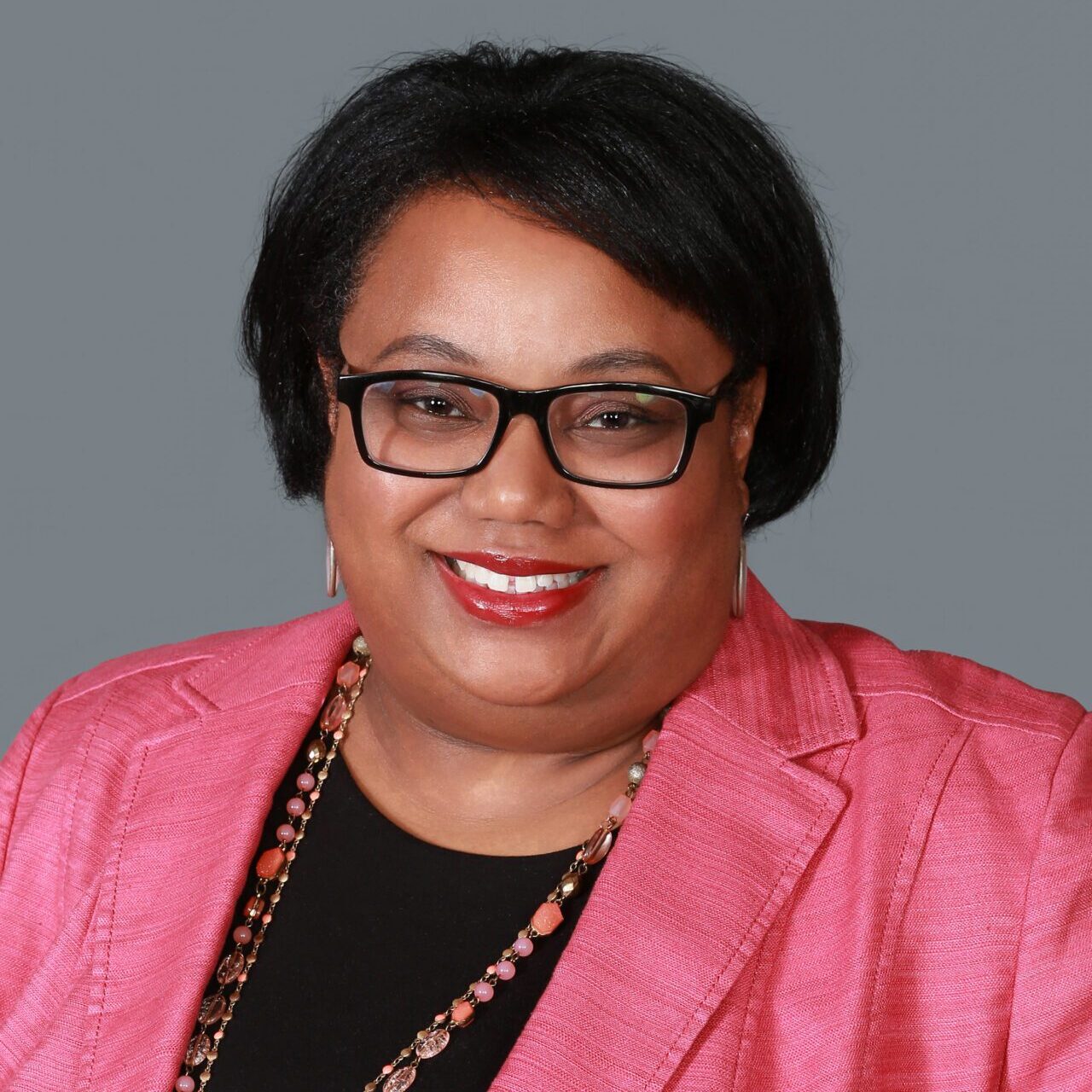
Following an eventful 2025, Belinda Drake and Michael Martin Drain are focused on taking action in 2026. Drake, executive director for Community Research and Resource Center (CRRC), and Michael Martin Drain, president and CEO of Step-UP, Inc. are looking ahead to what needs to happen for the Black LGBTQ community to create safe, supportive and inclusive spaces.
When asked what their biggest concerns were in 2025, Drake and Martin Drain talked about health insurance rates, the potential erosion of marriage rights, mental health, education and the negative rhetoric targeting LGBTQ people.
Starting off the new year, they are poised to take on these challenges and they welcome support from the community at large.
“If not now, then when for the Black community as a whole to show up for each other and reach some of these outcomes?” Drake asked. “We are Black first.”
Martin Drain added, “When it comes down to Black people, in order for us to move forward, everyone has to be in that boat.”
So, where should people get started?
Youth, education and mental health
Having a “free, accessible and inclusive” educational system with options for all students is key.
“We just have to make sure that resources are equally distributed to all communities regardless of your zip code. A good education system is the foundation to a healthy life,” Drake said.

Connecting to the dreams of the LGBTQ youth, learning what they are good at and honoring their goals is vital, Martin Drain said. When parents are aware of available programs for their students, they are more likely to show up, he added.
“A lot of times in our communities, education equals options and what path they would like to go in our lives. Of course, it needs to be more streamlined. It definitely needs to be more focused toward college; we need to also be bringing in trades, apprenticeships and these things need to be presented to our teens and our youth,” Martin Drain said.
For children to thrive in school, taking care of their mental health is a priority. Black LGBTQ youth often experience a disproportionate rate of mental health issues.
“Being Black, being gay – that within itself is a burden to hold on to, so how do you empower that person so that they’re able to see their color, their worth? But then also to be able to encapsulate what their dream is so that they can move forward,” said Martin Drain.
A rise in mental health issues and suicidal ideation is increasingly a cause for concern. More than 50% of Black LGBTQ youth screened positive for depression and more than 45% said they wanted mental health services, but did not receive them, according to a 2024 study by the Human Rights Campaign.
“Our LGBT Black youth don’t have the safe spaces like we believe they do,” Martin Drain said. “We are still navigating that stigma of being Black and also gay in a society that especially tells Black men that being gay is not masculine, that being gay is still a sin.”
He believes mentoring can help. By having spiritual mentors and mentors with a successful track record, Martin Drain said youth and families can find the support and guidance they need. So, being able to have cultivated spaces here in the city with spiritual mentors, with mentors with a proven track record of success of being able to talk and guide youth and families.

Supporting youth mental health initiatives is essential so that they can maximize their educational opportunities.
“So often youth are dealing with undiagnosed mental health issues and trauma. We see that (being) very prevalent within LGBT youth and that is something that (makes it) hard to listen and learn when you are dealing with trauma and you have school systems that have not been invested in,” Martin Drain said.
“We’ve seen success in creating spaces that are organic in our drop-in center where folks can have their basic needs met whether that comes to food, access to HIV/STI testing,” Drake said. The ballroom community is thriving right now with young people.”
CRRC connects people to free counseling onsite or virtually, making it accessible to those in need.
“That’s going to continue to be one of our priorities for 2026 and beyond,” Drake said.
Step-UP, Inc. provides therapy for individuals in the incarceral system and groups.
Economic development and mobility
Drake is prioritizing creating career pathways for Black and brown LGBTQ people. They are also some of the most active members in the larger Black community, Martin Drain noted, often caretaking for loved ones, supporting others financially and engaging in philanthropy.
“Why not invest in individuals who have those skills to help and grow the culture and take care of everybody?” Martin Drain.
“Workforce development has to become a health intervention,” Drake said. In this way, economic viability and health are significantly intertwined.
Drake envisions training people to obtain thriving wage jobs, maintaining those jobs, and creating a pathway to accessing health insurance can improve health outcomes..
“Economic stability and financial literacy is foundational for positive health outcomes. We have to start saying it that way, start making that the narrative from us – meaning Black culture, Black community, Black LGBTQ leaders,” Drake said.

Health care and public policy
But concerns about health remain at the forefront, particularly related to rising HIV rates among Black women.
“This isn’t policy, but this needs to be policy. Let’s talk about PrEp. There should be greater access to PrEP here within Indianapolis, Indiana,” Martin Drain said.
Pre-Exposure Prophylaxis (PrEP) is a medication administered to reduce a person’s chances of acquiring HIV upon exposure. Recent findings indicate that Black women are susceptible to HIV at a growing rate. Black women accounted for 50% of HIV diagnoses among women in 2022, as reported by the CDC.
Being unapologetic and proactive about increasing access to PrEP is necessary, he continued, noting that HIV affects many communities and everyone deserves to better understand sexual health.
“This is not just an issue that is facing LGBTQ people,” Martin Drain said. “We see higher instances when it comes to Black women and they are being exposed, not by the ‘DL men’ but they’re being exposed by other straight, cis-Black men. We’re also seeing higher rates with our trans brothers and sisters.”
“It got my attention and it needs to get our policymakers’ attention to figure out how to get our community access to PEP and PrEP, to get them into care,” Drake said.
Additionally, Senate Bill 91 addresses the syringe exchange program (SSP) extension, authored by Sen. Michael Crider, which would extend the program through 2036.
“It helps individuals who are in active drug use to be able to come to a space to exchange those needles, get new ones as well,” Martin Drain said.
But it’s more than needle exchange program, Martin Drain noted. SSP’s can have a significant impact on harm reduction by providing people with their basic needs such as sleeping bags, hand warmers, Hepatitis testing as well as a space to talk about HIV and recovery.
“One of the things that we have seen is that individuals that work with an SSP have a higher rate of being able to go into treatment and successfully complete treatment because they have that connection. To me, this is literally all about saving lives. We can take all of those opinions and throw those out the window. We’re there to serve,” Martin Drain said.
Where to get started
Interested community members can participate in LGBTQ Day at the Statehouse from 10 am. – 1 p.m. on Jan. 28.
“That’s just a day for folks to come together to be educated and also to educate our legislators and mobilize around any policies that directly impact our community. That’s a day that has been around for several years,” Drake said.
Both CRRC and Step-Up, Inc. welcome volunteers, visitors for tours, monetary donations and items such as clothing, toothbrushes and shoes.
“Come visit our facilities,” Martin Drain said. “Let us show you around, let us be a part of your network. It starts with stopping by.”
Visit Step-UP, Inc., an essential services organization, at stepupin.org. To learn more about the Community Research and Resource Center, visit communityrrc.org.

Camike Jones is the Editor-in-Chief of the Indianapolis Recorder. Born and raised in Indianapolis, Jones has a lifelong commitment to advocacy and telling stories that represent the community.