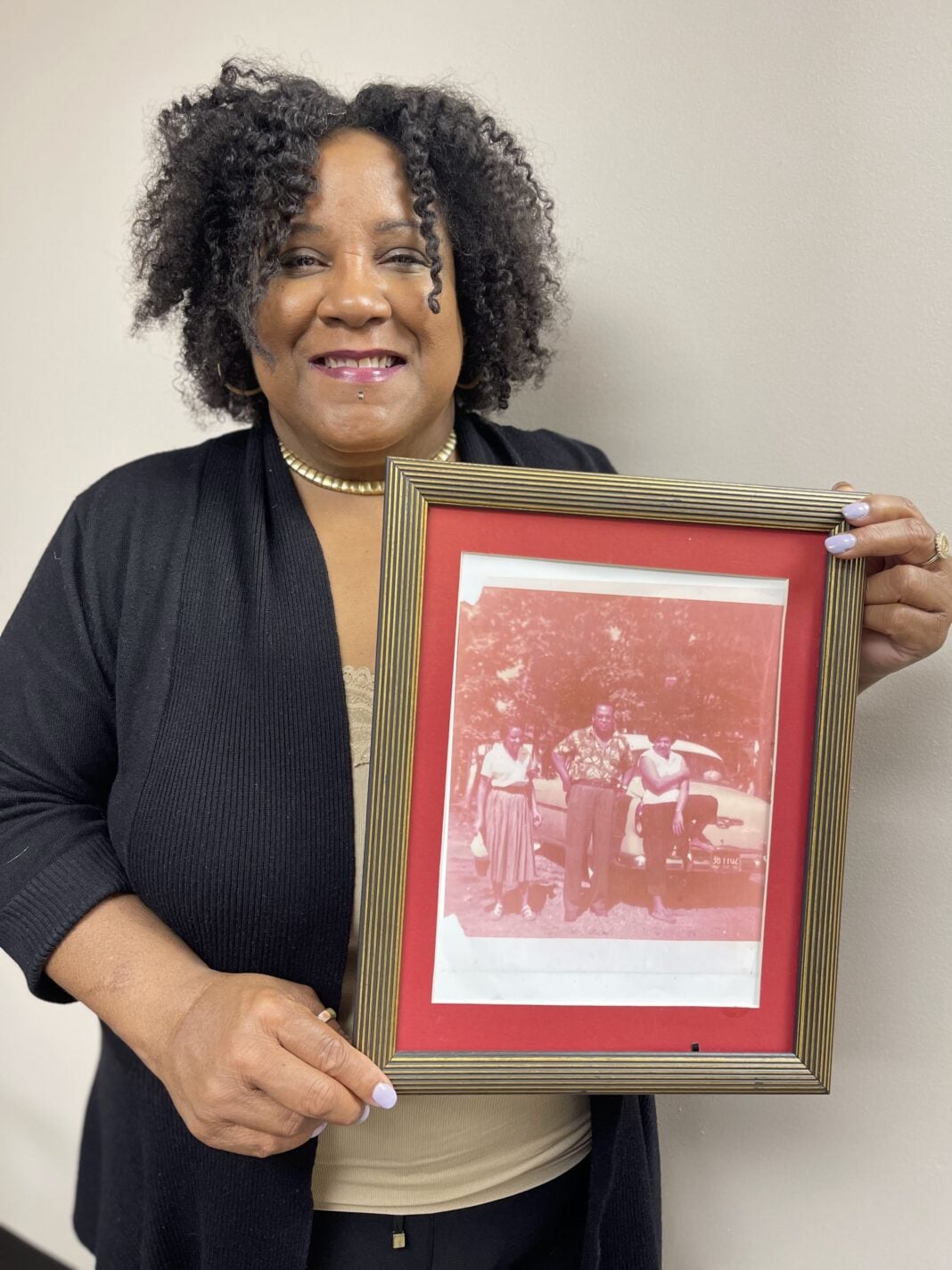
A local author uncovers her family’s legacy in the pages of the Recorder
Author and Indianapolis native Michelle Dartis never knew her family had strong ties to the once-thriving Indiana Avenue. Dartis’ grandfather, Herbert Hawkins, was a well-known business owner in the 1950s. Hawkins Filling Station once stood prominently on Indiana Avenue, a historic hub of Black-owned businesses.
After Hawkins’ sudden death in the late 1950s, his story was buried along with him. Dartis said that the family rarely spoke of him.
“I knew he had a gas station, that’s all I knew,” Dartis said. “And that’s when I started digging, getting online to find articles about him. And I started discovering all these different things that he, in the end, was really a leader in this community. And I was just in shock to learn this because my family didn’t talk about it.”
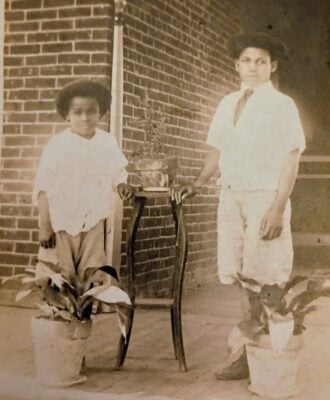
Her mother, Evelyn, and grandmother, Adeline, rarely mentioned him, so Dartis knew little about his achievements.
“And so, they never talked about all these details about his business with the gas station, which was called Standard Gas Station, also known as Hawkins Filling Station. And I also learned that it was right across the street from the Walker at 614 Indiana Ave,” Dartis said.
Dartis visited the Indiana State Library and the Indiana Historical Society to delve deeper into her family’s history.
It wasn’t until she searched the Recorder archives for local Black heroes that Dartis discovered the long-lost story about her own grandfather. But this story may never have been uncovered if it hadn’t been for Dartis’ granddaughter, Trinity, who said something to Dartis that stopped her in her tracks.
‘I wish I was white’
On their way home from a routine visit to the grocery store, a young Trinity said, “I wish I was white.”
Dartis was stunned and momentarily frozen. However, this phrase started Dartis’ mission to find ways to celebrate Black culture and family.
“I knew it’s the messaging that she’s getting from this world … and I knew I had to do something about that because I had no idea those kinds of thoughts were going through my six-year-old grandbaby’s mind,” Dartis said.
In Trinity’s honor, Dartis wrote the book, “I Wish I Was White: Racial Identity and Self-esteem,” to remind her and other children that they were made in God’s image and that God made them the way they were supposed to be. She also wanted to share her family’s achievements, such as her father’s and brothers’ military service.
Dartis began searching for heroes her granddaughter could look up to; she discovered a hero was closer than she could have ever imagined.
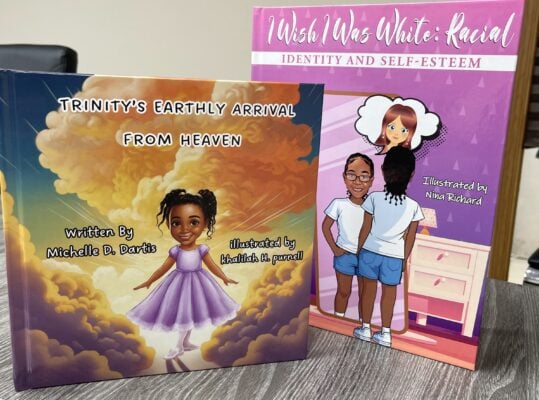
Trinity’s mother, Kelli Robinson, was shocked when Dartis began to uncover Hawkins’ story.
“Being a melanated individual, we see so many things, we hear so many things, especially with social media, especially now – the outrage of a lot of people and kids not being comfortable in their skin,” Robinson said.
The discoveries about Hawkins’ life gave Robinson hope.
“I think it was an inspiration for us to break some generational curses as well with this book, and all the information my mom found out that we would never know about if it wasn’t for this comment my daughter made,” Robinson said.
‘Bootleg cab kingpin’ or community hero?
In addition to Hawkins Filling Station, Dartis learned her grandfather operated a “million-dollar-a-year” taxi service. While he owned several licensed cabs in the 1940s, according to the Indianapolis Recorder archives, Hawkins did not have a license to operate in 1955. The lack of licensure did not stop him from providing the service and he became known as the “bootleg cab kingpin.”
“Bootleg cars are a definite necessity and Indianapolis Negroes depend a great deal on them,” Hawkins said in an exclusive interview with the Recorder in January 1955. The Recorder described Hawkins as a “smooth-talking businessman” who led the charge in getting other Black people licensed.
Black residents applied for taxicab licenses, but few received them and Hawkins said the demand for taxis was much higher than the number of licensed Black taxicab owners.
“Sure, there are Negro-owned-and-operated licensed cabs, but there aren’t enough to adequately serve the ever-increasing need.”
Herbert Hawkins
“Sure, there are Negro-owned-and-operated licensed cabs,” Hawkins said. “But there aren’t enough to adequately serve the ever-increasing need. And the white cabs are not dependable when hailed by Negroes or called into Negro neighborhoods.”
Dartis saw Hawkins’ example as a testament to his dedication to his community.
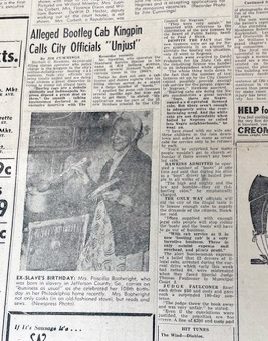
“That article just really let me know he was a leader in the community,” Dartis said. “White taxi drivers would not pick up Black people; they needed that service. So, that’s why he and other men got their own taxi services going.”
Today, Dartis could not help but draw parallels between her grandfather’s experience of being shut out of business opportunities and recent efforts to roll back DEI, supplier diversity initiatives and affirmative action.
“It’s a continued cycle,” Dartis said. “All these years later, after everything all the civil rights leaders did to bring more opportunities for all people, no matter your skin color, just to make the playing field right for everybody. They shouldn’t be shut out because nobody comes to know longevity (or) generational wealth. The cycle continues, unfortunately.”
A tragic loss, a sister found
Hawkins’ death was memorialized in the Recorder and placed on the front page of the Indianapolis Star in 1957. His death was reported as an accident, but some family members question whether the collision was intentional.
“My grandmother went to the site when he was killed,” Dartis said. “They tried to stop her; they couldn’t stop her from going to see her husband. And this is going to be graphic. He was driving a truck with a bunch of gravel in the back. So, when he was hit, the gravel smashed on top of him… his brains were on the pavement, and my grandmother and my aunt saw that and fainted.”
Dartis’ mother was only 19 years old when her father was killed. She believes the trauma of his death may be why her family rarely spoke about him.
“It was just something that wasn’t talked about, and since I was kind of new (to the family), I didn’t want to rock the boat … I was still learning them as a family back then,” said Gina Washington, Dartis’ long-lost sister who found her way back after another family adopted her.
Learning at an early age that she was adopted, as a young adult Washington was ready to know where she came from. She had a burning desire to know who she looked like.
Like Dartis, Washington began searching for her family’s origins. With just a certificate of adoption in hand, Washington went to the courthouse to look for records to find where she belonged.
She was given the adoption paperwork, signed by Evelyn Hawkins, her biological mother’s married name. Washington was listed as “Baby Girl Hawkins.”
Washington searched marriage records to discover Evelyn’s maiden name, which led her to the Dartis family. Washington looked through the phone book for anyone with the last name Dartis. She called them all.
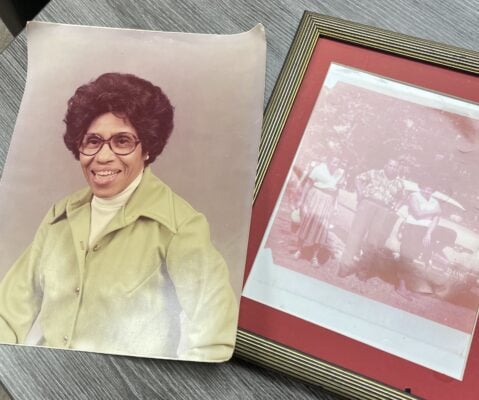
Eventually, Washington found Alfred Dartis, the family she was looking for. She even learned that she had attended school with some of her relatives. These relatives brought Washington to her grandmother’s home, where she saw her mother’s photograph for the first time.
Remembering their first meeting, Washington recalled: “(My grandmother) said, ‘Oh my goodness, you look just like Evelyn.’”
Over the years, Washington met more biological family members. She feels closest to her sister, Dartis, who updated her almost daily with new information about their grandfather.
“I can only imagine where this family would have been had he not been killed,” Washington said. “This discovery of our grandfather has just intrigued me to no end.”
The legacy continues
Though Dartis had never dreamed of being a children’s book author, the conversation with her granddaughter sparked a new passion. Inspired by Trinity, she has continued writing children’s books.

Dartis also followed in her grandfather’s footsteps by opening her own business — a publishing company called Leave a Mark Press (LAMP) because she said it was her duty on this earth to leave a mark.
“I say to (Trinity) in the book, ‘Perhaps you can continue his legacy and become an entrepreneur yourself,’” Dartis said.
Robinson hopes the book and the knowledge of her grandfather’s legacy will help to break generational curses. She wants her daughter, Trinity, to be strong, keep her head up and be comfortable in her own skin.
“I want her to know that ‘you are good enough’ no matter what … and always remember your family history that we have in past generations to keep her successful in life,” Robinson said.
For more information on LAMP or books by Dartis, click here.

Camike Jones is the Editor-in-Chief of the Indianapolis Recorder. Born and raised in Indianapolis, Jones has a lifelong commitment to advocacy and telling stories that represent the community.