As American animation continues to push forward, the artists who draw some of its most memorable images remain largely absent from the historical record. However, the story of Black animators is not a footnote to the medium’s development — it is paramount to understanding how America learned to see itself on screen.
Before Black artists entered studio doors, their images had already been animated by others. Between 1900 and 1960, major Hollywood studios produced more than 600 cartoon shorts depicting Black people in stereotypical fashion. White hands drew the characters who populated these frames with movements choreographed by artists who had never known the interior lives of those sketched.
The first rupture in the color barrier came through in the 1950s. Frank Braxton became the first Black animator hired at Warner Bros. after a white colleague, recognizing both Braxton’s talent and the studio’s likely prejudice, pushed for his hiring. Braxton worked as a perfectionist, often reworking scenes to justify his presence in rooms where he remained the only one who looked like him.
Floyd Norman followed a similar route, becoming Disney’s first Black animator in 1956. The studio never announced his hiring. Norman’s portfolio proved so strong that Walt Disney personally selected him for the story department, where he helped shape films including “The Jungle Book.”
Representation requires the represented
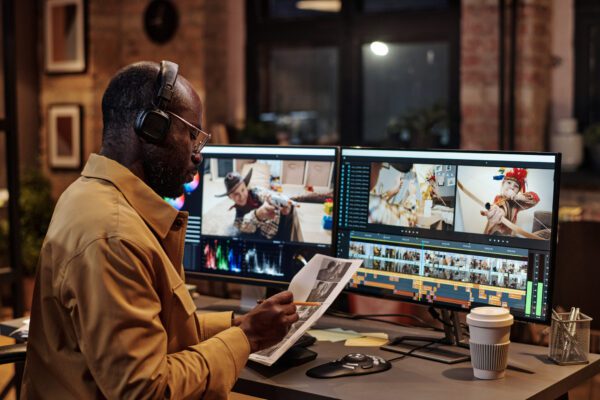
For decades, the logic of inclusion followed a flawed premise: that Black characters could be created without Black creators. Award-winning multimedia artist Eryn Forrest, whose work spans painting and graphic novels, said authentic storytelling requires living the experience being drawn.
“If you don’t have someone that’s Black trying to create a Black character, then it is not going to carry the same weight as someone who has actually lived the life of a character they are trying to create,” Forrest said. “You can’t do that with someone who doesn’t recognize or appreciate the culture and the nuances.”
That weightlessness has characterized much of animation history. The “Censored Eleven” — a group of Looney Tunes shorts pulled from syndication — represented the medium’s lowest point, their racist themes so pervasive that editing could not salvage them. When civil rights groups pressured studios to abandon stereotypes, many chose erasure rather than improvement, simply removing Black characters from cartoons entirely.
Co-founder of the Trapped In Anime collective Joseph Kennedy believes representation serves multiple audiences. It gives marginalized viewers someone to relate to while offering others a perspective they might otherwise lack.
“Even people who aren’t the same skin color, even representing similar backgrounds and similar stories can also help people to understand a little bit better,” Kennedy said.
The Saturday morning revolution
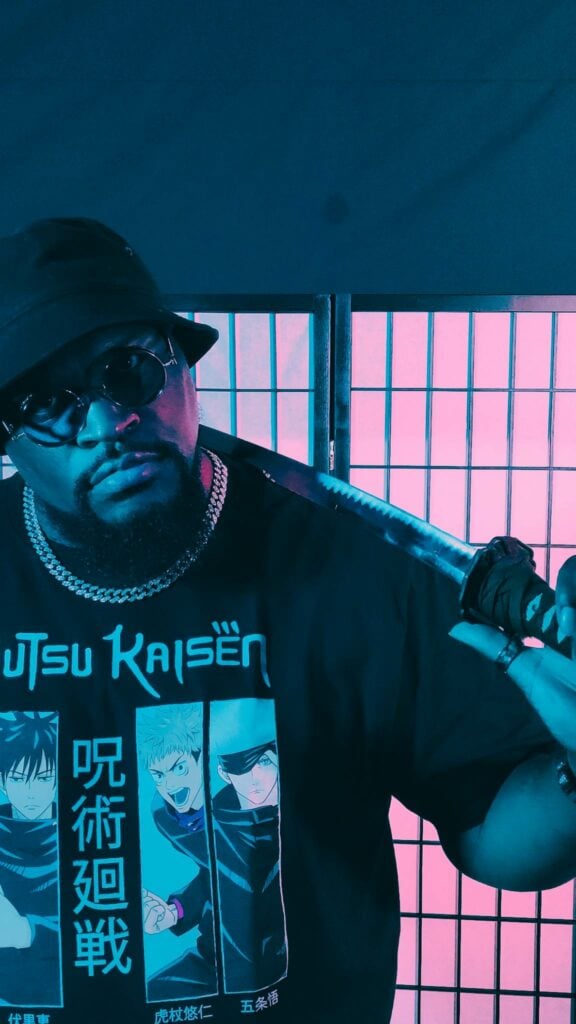
The late 1960s and early 1970s marked a revolution in television animation. The first sustained wave of Black-led programming arrived not through studio altruism but through Black entertainers seizing creative control.
“Fat Albert and the Cosby Kids,” which ran from 1972 to 1985, became the framework. Based on Bill Cosby’s comedy routine, the series followed urban children as they navigated real-life struggles through a lens of civic responsibility. For the first time, Black children saw characters on Saturday morning who looked and acted like them.
Director and editor for Trapped In Anime, David Jewell, recalled his earliest memory of seeing himself in animation came through “Static Shock,” the Milestone Media adaptation that ran from 2000 to 2004.
“(Static) was a super cool character, charismatic leader, young with awesome powers,” Jewell said. “That was the first one I remember seeing, and to this day I’m still waiting for updated Static Shock projects.”
Milestone Media, founded by Dwayne McDuffie, Denys Cowan, Michael Davis and Derek Dingle, negotiated a unique deal in the year 2000 with DC Comics: national distribution in exchange for 100% creative control. The arrangement produced “Static Shock,” which addressed gang violence, racism and mental health — topics other Saturday morning cartoons sophisticatedly sidestepped.
Cosplay and the struggle for space
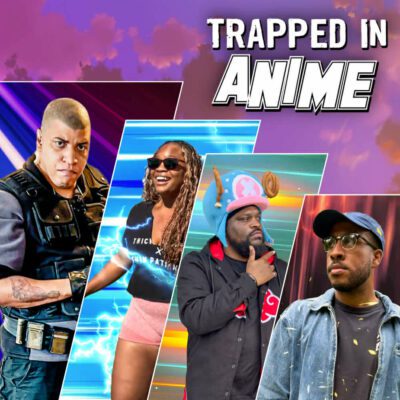
The rise of “Blerd” (Black nerd) culture has transformed how Black fans engage with animation. However, that engagement has come with conflict.
Producer Ashya Jewell believes Black cosplayers frequently face criticism for portraying characters originally drawn with lighter skin.
“When a Black person does a cosplay of somebody, and that original character doesn’t have their skin complexion, there’s a lot of racist comments,” Ashya Jewell said. “One cosplayer actually took their own life because of bullying and racist comments online.”
The collective’s work documenting Black fan experiences has taken on new urgency. Through interviews with cosplayers and convention attendees, they’ve documented both the joy of fandom and the gatekeeping that often accompanies it.
Actor Taurean Taylor said acceptance remains the goal.
“If people were accepting and inviting to cosplaying any character they want to be, the world would be a better place,” Taylor said. “It’s one thing to be upset that a character doesn’t look how you want them to. But these characters are fictional. Just because the character has a different complexion doesn’t mean certain people aren’t allowed to be them.”
Building new tables
The contemporary landscape looks vastly different from the one Braxton and Norman joined. Black-owned studios have proliferated, from D’Art Shtajio in Tokyo — the first American-owned anime studio based in Japan — to Black Women Animate, which empowers Black women and non-binary people in the industry.
Forrest, who is working on a graphic novel featuring a Black female lead, said the shift toward ownership reflects a crucial evolution.
“We need to accept the fact that we need to create those spaces,” Forrest said. “Instead of focusing on these studios that clearly are not willing all the time to hold space for these stories or characters, we might as well support the ones that are.”
The AfroAnimation summit, co-founded by Keith White, became one of the largest gatherings celebrating diverse talent in animation, gaming and creative technology in the country. As Television Academy Foundation Chair Tina Perry noted, “Black animators have shaped the imagination of generations, breaking barriers while expanding what’s possible in storytelling and art.”
That shaping continues through projects like Kugali’s “Iwájú,” which brought Pan-African storytelling to Disney+ through a futuristic Lagos, and through artists like Forrest, who integrates her Ghanaian heritage and New Orleans family history into her work.
“We pay homage to the hard labor of our animating ancestors,” Forrest said. “That’s why we always bring our past and our culture to these stories.”
The trajectory of Black animators traces an arc from uncredited labor to creative control, from being drawn to drawing themselves. It is not a separate history but American history — the story of a medium learning, finally, to see fully.
As Forrest summed it up: “Who else better to represent us than us?”
Contact Multimedia Reporter Noral Parham at 317-762-7846. Follow him on X @3Noral. For more news, visit indianapolisrecorder.com.

Noral Parham is the multi-media reporter for the Indianapolis Recorder, one of the oldest Black publications in the country. Prior to joining the Recorder, Parham served as the community advocate of the MLK Center in Indianapolis and senior copywriter for an e-commerce and marketing firm in Denver.