In 2014, a private equity firm acquired a Northern Michigan utility company. Shortly after, rates went up. A couple years passed. They went up again. Then it was sold to a different private equity firm. Rates went up once more.
Fast forward to 2026 in Indianapolis, where a similar deal is set to take place. A group of private equity investors, led by BlackRock — the world’s largest asset manager — could acquire AES.
I have serious concerns that this deal could make utility costs even worse for Indianapolis residents, while executives turn a profit at the expense of Hoosiers. That’s why I submitted a formal inquiry to the Federal Energy Regulatory Commission on this proposed acquisition.
My concerns are not unfounded. A series of reports from the Lawrence Berkeley National Laboratory show investor-owned utilities result in higher prices for consumers, at a faster rate, than any other ownership model.
Northern Michigan is one example of a private acquisition of a public power company driving up rates for consumers. It’s also happening in Minnesota, which approved a utility company takeover by BlackRock last year — the same firm whose affiliate is seeking to acquire AES Indiana. Consumer advocates believe this deal could increase already high bills, while executives rake in record profit.
Consumer advocacy groups joined me earlier this month in filing their own complaint with the Federal Energy Regulatory Commission. Their concerns echo mine: BlackRock’s core mission is profit, even if it’s at the expense of the people it serves. Utilities are an essential service — not a luxury.
There are many reasons utility rates have risen, largely due to Trump’s policies and his reversal of Democratic policies that kept costs down, which I’ve written about before. BlackRock’s acquisition of AES could pile onto a problem that already exists.
I’ve received hundreds of messages from Indianapolis residents on rising utility rates. One Indianapolis mother told me she struggles to balance the costs of raising her daughter, buying groceries and paying the light bill.
Black Americans already pay roughly $180 more monthly for utilities. Our community can’t afford an even wider gap — and there’s another layer here: the rise of AI data centers, which will disproportionately affect Black neighborhoods where many are being built.
BlackRock is just one Wall Street firm that’s seeking to buy utility companies. These firms go where the money is, and thanks to AI’s boom and the need to generate more power, that money is now in utilities. That is why we are seeing a trend of large Wall Street investment firms moving to acquire utility companies.
I support a federal pause on new data centers until we can ensure they don’t pass costs onto neighborhoods, protect labor jobs, support water reliability, and impact on our environment — especially since we keep seeing them built near Black neighborhoods. Carbon emissions from AI data centers specifically are raising the rates of asthma cases in low income and Black and Brown communities. Generators are run as backups to the electric grid failing which causes large plumes of exhaust and smog in neighborhoods that are next to these data centers. Noise and light pollution are also of concern, as these centers run 24/7 creating disturbances around the clock.
Meanwhile, Americans are paying more at the gas pump and at the grocery store in Trump’s America, while Republicans continue to pass tax breaks and handouts to the richest of Americans. Millionaires and billionaires are making more money than ever, while everyday Americans struggle to keep the lights on.
The default of our systems prioritizes profit over people — and we need to act proactively to make sure families aren’t taken advantage of. I think about the Indianapolis mother who wrote to me. I think about the families who tell me they’ve had to cut back on saving for college for their kids. The families whose utility habits haven’t changed, but somehow their bill has — and they’re scared soon they’re budget is going to get even tighter.
I’m fighting for those families — not the companies looking to make an extra million.
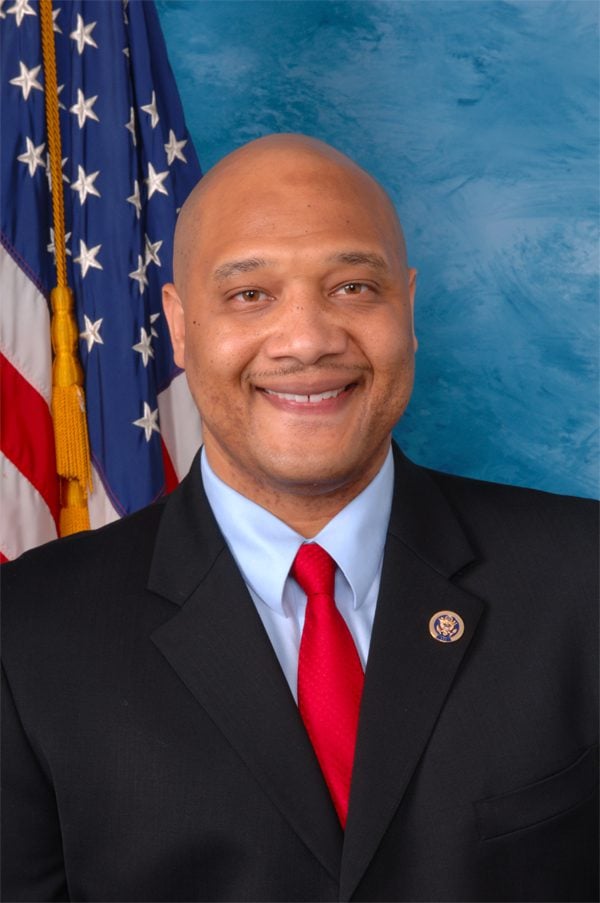
U.S. Rep. Andre Carson represents Indiana’s 7th District. Learn more at carson.house.gov.
For more, visit indianapolisrecorder.com.