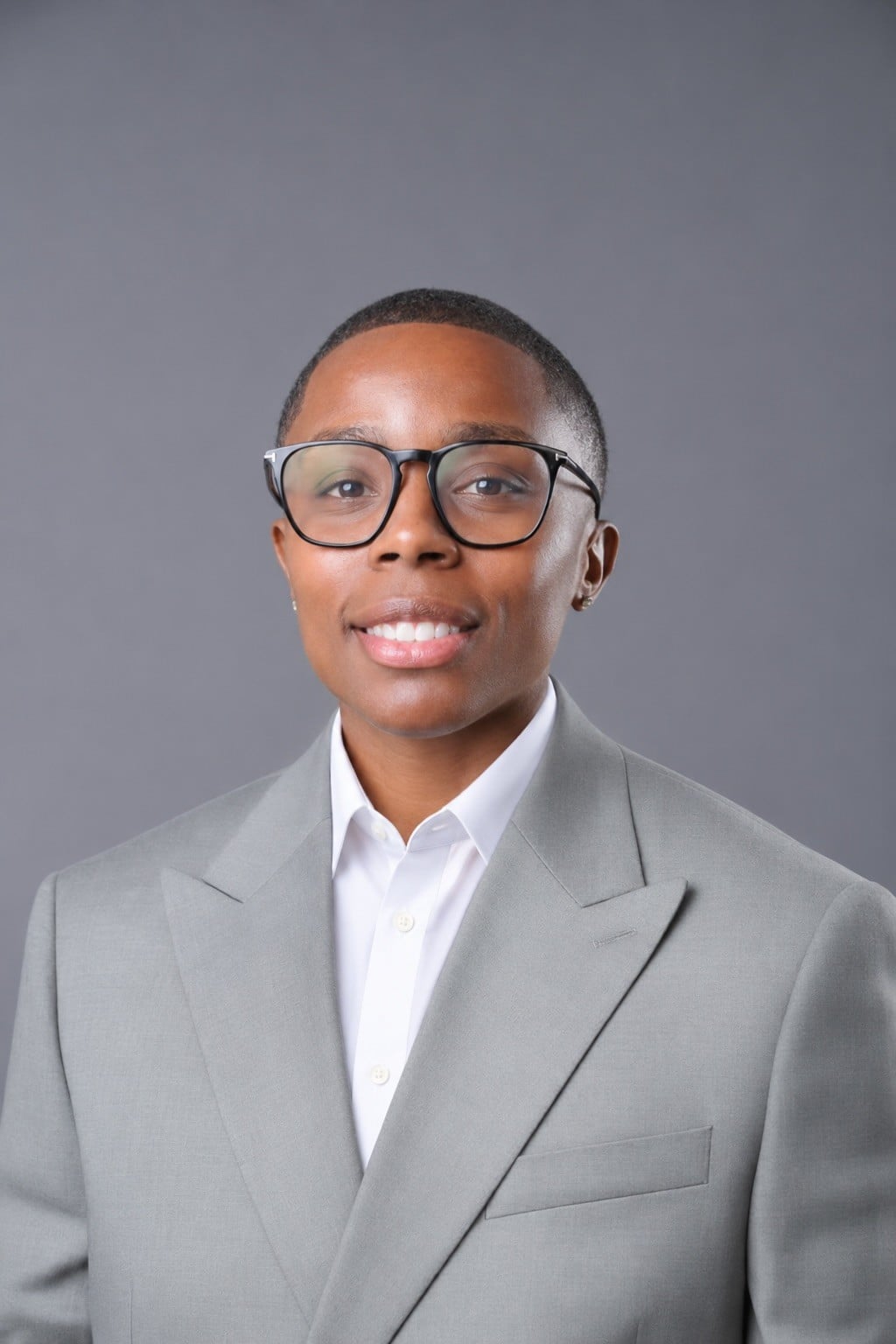
Belinda Drake is campaigning to represent District 8 on the Indianapolis City-County Council in the 2027 municipal election, centering her platform on neighborhood investment, mental health protection and resident-led development.
A longtime Indianapolis community advocate, Drake serves as executive director of the Community Research and Resource Center and recently completed five terms as an appointed member of the Indianapolis Board of Business and Neighborhood Services. She holds a bachelor’s degree in political science from Indiana University-Purdue University Indianapolis and a master’s degree in organizational leadership from Martin University.
The Indianapolis Recorder sat down with Drake to discuss her plans to support small businesses, address housing and mental health challenges, and bring resident voices to the City-County Building.
Responses have been edited for clarity and brevity.
You recently wrote about focusing on local economic growth and helping district entrepreneurs thrive. What specific municipal policies, procurement changes and funding mechanisms can the City-County Council enact right now to remove barriers for local small businesses and entrepreneurship?
Drake: Going back to my time on the Board of Business and Neighborhood Services — I was an appointed official for five terms, and on the board, we helped oversee the contracts and permitting process that a lot of small businesses had to go through. Understanding and recognizing some of the challenges that arise when someone is seeking a permit or contract for their business and being able to work with city departments that work with the council, like BNS and the Department of Public Works, will be key. Having those relationships already will help ensure I can connect small businesses in District 8 and advocate when it’s time for budget allocations to determine where we can invest in District 8 small business owners.
Your work with youth services and your time on the Board of Business and Neighborhood Services give you deep roots in community advocacy. How does that hands-on experience translate into navigating the city budget, zoning laws, basic municipal services, infrastructure and code enforcement?
Drake: I think it positions me to be the most qualified person to represent District 8. Over the last 15 years, I have dedicated my career and my life to helping people. Building relationships in the philanthropic world will be key, as many folks in our district would like us to have more green spaces and parks. Having access to the rooms where funding decisions are made will be key to advocating for the residents of District 8.
Another thing that sets me apart from many other councilors is my lived experience. I’m very connected to the community. I’m someone who has experienced homelessness, so I know what it means to advocate for housing resources for the residents of District 8 and make sure folks can stay in their homes. I am well-positioned, well-respected and connected to be the best candidate for District 8 in 2027.
Beyond increasing funding, what specific gaps exist right now in how Indianapolis city agencies, first responders and local service providers coordinate to get residents into care on the mental health and public safety side?
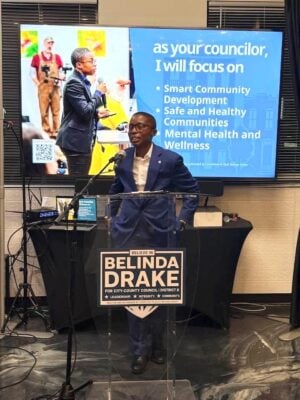
Drake: Over the last six to eight months, I did a lot of coffee conversations going to different neighborhoods to hear what the priorities should be for our campaign, and mental health did come up. We have to start thinking about mental health a little bit deeper and differently, because when we’re talking about safer neighborhoods, we have to be talking about investing in prevention services — youth employment, mentorship and community-based strategies that really prevent situations from happening so that residents have an outlet and a resource before entering into any system.
The partnerships I have — whether with city departments, schools, neighborhood organizations, faith communities or local businesses — will make me the best person to bring us all together to help tackle the mental health and housing crises that continue to impact our city. I look forward to using those relationships to advocate for the residents of District 8 and to work with my future council colleagues so we can tackle some of these challenges as a city.
You emphasized strengthening District 8 neighborhoods and commercial corridors as Indianapolis continues to see new redevelopment. How do you balance attracting new businesses and housing to District 8 while ensuring long-term residents aren’t priced out?
Drake: I think it comes back to responsible, smart development — meaning working with residents who are already in District 8 to understand what they would like to see developed in our neighborhoods, whether that’s a new business, a new health care facility, more parks and spaces, or housing that is sustainable and affordable for our seniors. One thing I’m going to do once I’m elected is continue to hold quarterly town halls so folks can weigh in on developments in our neighborhoods.
My vision for how I will govern is to be a partner to the residents of District 8. We’re at a place now where we need local government to get back to those fundamentals — not working ahead of the community, not working behind the community, but working with the community. That’s been my leadership style my entire professional and public career, and I’m going to continue to lead that way.
To your point about coffee conversations and regular town halls, what is one specific issue you are currently hearing about from District 8 community members at the doorstep that you feel isn’t getting enough attention at the City-County Building?
Drake: I’ve been on the doors for my campaign and for other candidates this year. One thing that keeps coming up in District 8 is that people don’t want data centers in their neighborhoods, and I continue to stand with the community on this issue. No one wants a data center in their neighborhood, especially when we don’t fully understand the potential health implications associated with some of them. Across the board, everyone I’m talking to — whether at the doors, on the phone or at the coffee shops — is saying we don’t want a data center in our district.
What separates you from your opponents?
Drake: I have spent my entire career working to help improve the lives of everyone around me. District 8 right now needs someone willing to be an advocate, who has the relationships and who understands how city government works. After spending five terms on the Board of Business and Neighborhood Services, I understand how city government works and how those relationships work with city departments, and I have a track record of delivering results for people.
I’m also going to be the leader who always answers the phone. That’s been a huge part of my messaging — I want to be the councilor who is accessible, practical and focused on transparency and integrity. I also understand budgets. Currently, as executive director of my local nonprofit, I oversee a large budget and staff, so I know what it means to review a city budget, understand the allocations and use that to advocate for what residents in District 8 want. Most importantly, I’m going to be a partner to the residents of District 8 because I care about people, and I look forward to working on their behalf.
For more information about Drake’s campaign and upcoming community events, visit belindadrake.com.
Contact Staff Writer Noral Parham at 317-762-7846 or noralp@indyrecorder.com. Follow him on X @3Noral. For more political coverage, visit indianapolisrecorder.com.

Noral Parham is the multimedia and senior sports reporter for the Indianapolis Recorder, one of the oldest Black publications in the country. Before joining the Recorder, Parham served as the community advocate at the MLK Center in Indianapolis and as a senior copywriter for an e-commerce and marketing firm in Denver. He is also a business owner.