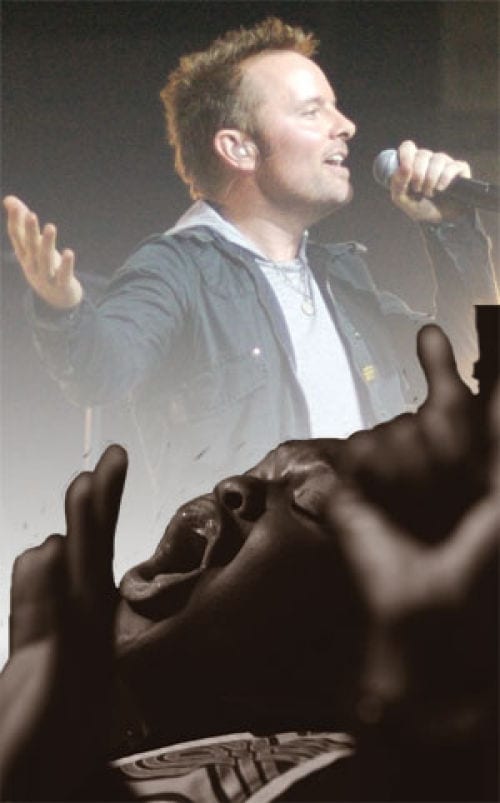

Kari Jobe. Amy Grant. Chris Tomlin. Do any of those names ring a bell? You are probably singing songs by those contemporary Christian artists at your place of worship.
You may also be unaware that their form of worship is causing friction in some Black churches.
“I do enjoy contemporary Christian music, but in some cases it does seem to lack the power and depth that is manifested within the gospels,” said Hosea Baxter, director of reconciliation and urban ministries at Crossroads Bible College. “Gospel music isn’t just about music. It’s about how God walked African-Americans through history. I don’t want us to lose sight of that.”
Baxter said that Black pastors have to be intentional about passing on the history and traditions of Black gospel music. The demise of the hymns is a loss of that which can root us in the past, and still be meaningful for us in the present as it carries us in the future, he says.
He predicts Black ministries will see a steep decline in traditional music as culture makes the shift toward more contemporary forms of worship.
This change in music Baxter describes may lead to the disappearance of traditional hymns. Does “Wade in the Water” versus “Shine, Jesus Shine” concern the Black community?
According to senior Pastor A. Thomas Hill of Healing Streams Word and Worship Center it doesn’t.
“Blacks are embracing contemporary Christian music. A lot of artists are coming to the forefront that are bridging that gap,” said Hill who is also managing director of Upon this Rock Productions. “Even more traditional churches are getting worship leaders to sing contemporary songs in church. They taste what I tasted years ago, and are now starting to adopt it into their church worship itinerary.”
The taste Hill speaks of took place during a career change, when he became part of a multiracial church staff. “I was introduced to a whole other flavor of music at this church. There was some adjusting I had to do. In doing so, I began to enjoy that new genre of music.”
He describes it as simple innocent praise, music that is directly to God. Hill had no difficulty introducing contemporary worship to his congregation. He looked forward to incorporating it into worship.
His testimony includes a personal healing he received through contemporary worship resulting in him seeing its value. Hill wanted to give that healing away to others, which continued over to Healing Streams. It offers a balance to Hill.
“We still hold onto our gospel music. But our focus is worship. It’s something about focusing your attention more on the glory of God, then glorifying the problems and the issues. It’s about getting lost in his presence. I believe it was that connect that gave us the balance we needed.”
That balance may come with a cost. Baxter explains it’s unfortunate if in the process of being contemporary, Black churches have to lose that which is traditional and classic.
“To the extent that we really want to hang onto God doesn’t mean that we have to lose ourselves in contemporary music. There is enough room and spirituality within the body of Christ to make room for that which is contemporary without wholly discarding that which is historical and classic,” Baxter said. “To lose traditional Black music to some extent is kind of like having an identity crisis. That is the danger in the demise of the meaning of traditional Black music.”