
Next week, the estimated 2.1 billion Christians around the world will celebrate the birth of Jesus Christ.
For centuries, believers have reflected on that occurrence, which introduced the world to a figure whose impact was so major that it divided history with B.C. (before Christ) and A.D. (anno Domini, in the year of the Lord).
However, the events surrounding Christ’s birth, told for generations through biblical readings and plays, are based on both Scripture and tradition. Following is a listing of common beliefs about the first Christmas, the holiday surrounding it and how, according to most experts, they likely occurred in real life.
For many Christians, however, the most important aspect of Christmas to consider is that it is about more than just gifts, decorations and Santa. It is a celebration of Christ and the gift of salvation he offered to the world.
Christ was born on Dec. 25, 33 B.C.
Fact: Theologians and historians actually do not know the exact date Jesus was born. The date chosen to celebrate his birth is related to the Roman Saturnalia festival, which involved decorating evergreens and gift giving and lasted from Dec. 17-21. This date was chosen somewhere during the 4th century A.D. by the heads of the church. The date became widely accepted by most branches of Christianity.
Another theory comes from the traditional Jewish calendrical belief that “great prophets” would die and either be born or conceived on the same day. Jesus’ death was said to be during Passover, so based on this theory, early Christian writer Tertullian calculated Jesus’ birth to be nine months later – around Dec. 25.
Jesus was born in a manger
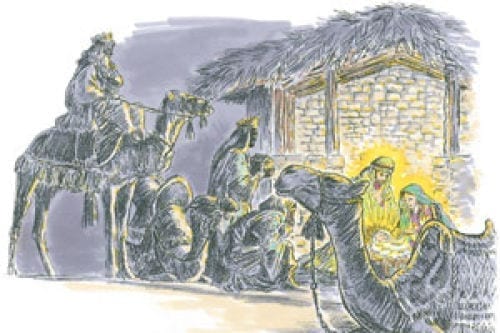
Fact: Luke 2:7 says an innkeeper turned away Joseph and Mary, and that Jesus was born in a manger in a stable. Archaeological discoveries have confirmed the general accuracy of Luke’s account of the circumstances.
Jesus was visited by wise men
Fact: Historians generally accept this as fact. These three men were magi (magoi), possibly priests or philosophers from the Euphrates Valley with the learning of the East, guided by the Lord by means of “his star,” as recorded in the book of Matthew.
Gifts have always been presented
Fact: The tradition of gift-giving is believed by some to be associated with the pagan Roman festival of Saturnalia, which featured periods of gift-giving. When the idea was later incorporated into Christmas celebrations, gifts started out very modestly and evolved to include more elaborate expressions of love. This was not met with full acceptance by some Christians who disliked the pagan connection. However, supporters of gift-giving, likened the activity to that of the Magi, who gave gifts to baby Jesus, and in this regard it became symbolic and necessary to the grand tradition of Christmas.
Other facts
■ The custom of decorating a Christmas tree has been traced back to the 15th century.
■ Christmas Day has been a federal holiday in the United States since 1870.
■ The name Santa Claus originated from the Dutch word Sinterklaas which means Saint Nicholas.
Source: Christmasfacts.net and history.com.