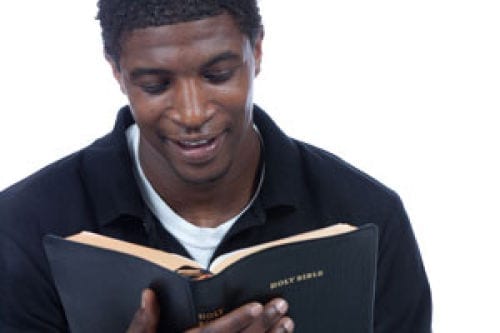

The 400th anniversary of the publication of the King James Bible was celebrated in 2011.
That year also marked the beginning of a three-year Indiana University-Purdue University at Indianapolis study of the Bible’s place in the everyday lives of Americans.
With a $507,000 grant from Lilly Endowment Inc., IUPUI’s Center for the Study of Religion and American Culture set out to answer questions of how, where, when and why ordinary Americans use the Bible.
According to findings made public online in the 44-page “The Bible in American Life” report, the four-centuries-old King James Version of the Bible is far from dead. Despite its archaic language and a market flooded with newer, more modern English translations, more than half of the individuals and two-fifths of the congregations surveyed still prefer the King James Bible.
Following is some other information from the study:
- Of those surveyed, African-Americans reported the highest levels of Bible engagement.
- Seventy percent of all Blacks said they read the Bible outside of public worship services, compared to 44 percent for whites, 46 percent for Hispanics and 28 percent for all other races.
- Bible memorization is highest among Black respondents, 69 percent, compared to 51 percent among white conservative Protestants and 31 percent among white moderate/liberal Protestants.
“There are no measures, individually or in congregations, where ‘Black’ is not strongly correlated with the most conservative, most active, most involved level of scriptural engagement, no matter which other group comes closest,” the report says. “If one wanted to predict whether someone had read the Bible, believed it to be the literal or inspired Word of God, and used it to learn about practical aspects of life, knowing whether or not that person was Black is the single best piece of information one could have.”
The newly released report first looks at the practice of Scripture reading in the U.S., and then explores eight measures among those who read the Bible, such as translation used; Scripture memorization habits; favorite passages; and race.
Roughly half of Americans have read religious Scripture outside of a public worship service in the past year. For 95 percent of those, the Bible is the Scripture they read.
What did the study reveal about Bible readers?
- Most of those people read at least monthly, while 9 percent of all Americans read daily.
- Women were more likely to read than men; older people were more likely to read than younger; Southerners were more likely to read than any other region.
- The percentage of verse memorizers among Bible readers (48 percent) equates to roughly 80 million people.
- Psalm 23 – which begins “The Lord is my shepherd” – was the most popular passage.
- Younger people, those with higher salaries and, most dramatically, those with more education among the respondents read the Bible on the Internet or an e-device at higher rates.
The written report, based on survey questions on both the General Social Survey (1,551 individuals) and the National Congregations Study III (denominations represented among the General Social Survey respondents), is the first stage of the study and offers sociological data about the role of the Bible.