
The benefit and timeliness of Beyonce’s halftime Super Bowl performance cannot be understated, as she intentionally paid homage to the Black Panther Party (BPP) for Self Defense on the occasion of its 50th anniversary of their founding. I would expect Beyonce’s performance would encourage young people to do some research on their own and discover the BPP was not just a black-tam, blow-out afro, large lapel collar black leather coat–wearing group of young men and women marching around in formation reciting chants about unjust conditions in Oakland, California, and other urban centers. They were, more than anything, a well-read group of disciplined and strategic community activists who were informed by a collective of diaspora intellectuals, such as Frantz Fanon and Che Guevara, and other philosophers and activists who provided them a lens and language to view and understand the complexity of systematic oppression and to consider alternative approaches toward true emancipation.
As Audre Lorde said in her article “The Master’s Tools Will Never Dismantle the Master’s House,” “Within the interdependence of mutual (nondominant) differences lies that security which enables us to descend into the chaos of knowledge and return with true visions of our future, along with the concomitant power to effect those changes which can bring that future into being. Difference is that raw and powerful connection from which our personal power is forged.” The “Black Panther Party Ten Point Platform,” created in 1966 by Huey P. Newton and Bobby Seale — with its focus on fair housing, self-determination and economic opportunity, police brutality and excessive militarization — for all intent and purposes still has some relevance today.
I recently read an article on insidehighered.com, “Get Ready For More Protests” by Jake New (Feb. 11), who reported that in the most recent American Freshman Survey that collected responses from 141,000 first-year students during their first few weeks of study, the results showed a substantial increase in the number of Black students who expect to participate in student protests and demonstrations during college. Naturally some of this may be a heightened awareness of the possibilities as a result of the visible activism of Black students at predominantly white academic institutions across the country, who are calling attention to their everyday discriminatory and marginal conditions experienced and demanding immediate changes — with some relative success.
And yet some of this keen level of consciousness may be due to the recognition of this complex myriad of significant historical anniversaries — from Freedom Summer to the Selma-to-Montgomery Voting Rights March to the founding of the Black Panther Party — where the stark reality of the issues that were at the forefront then are not too dissimilar from the same issues that are at the forefront today: voting rights impediments, racially based injustice and inadequate empowering higher education, among other challenges. The energy and activism of these college students must be cultivated and supported, because just like those Black Panther Party leaders who went before them, their voices are a necessary truth that must be heard.
And so in the spirit of bridging their connectedness to the wisdom of Huey Newton, Eldridge Cleaver, Elaine Brown, Fred Hampton, Bobby Seale, Angela Davis and countless others, I offer the following Black History Month Reading List for Radicals, fiction and non-fiction, in no particular order:
W.E.B. DuBois — The Souls of Black Folk
Booker T. Washington — Up From Slavery
Frantz Fanon — The Wretched of the Earth
C.L.R. James — Every Cook Can Govern
Carter G. Woodson — The Mis-education of the Negro
Zora Neale Hurston — Dust Tracks on a Road
Richard Wright — Native Son
Langston Hughes — Black Misery
Audre Lorde — Sister Outsider: Essays and Speeches
Ivan Van Sertima — They Came Before Columbus
Toni Morrison — The Bluest Eye
Alice Walker — In Love & Trouble
Paulo Freire — Pedagogy of the Oppressed
Kwame Ture and Charles V. Hamilton — Black Power: The Politics of Liberation
Eldridge Cleaver — Soul on Ice
George Jackson — Soledad Brother
Martin Luther King Jr. — Why We Can’t Wait
Alex Haley — The Autobiography of Malcolm X
Elaine Brown — A Taste of Power
The Angela Davis Reader
bell hooks — killing rage
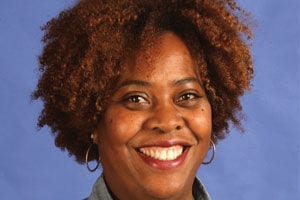
Dr. Terri Jett is an associate professor of political science and special assistant to the provost for diversity and inclusivity at Butler University. Comments can be sent to tjett@butler.edu.