
I am just going to say it: We need a new vision for this community, one that is inspirational, inclusive and sustainable. With the confluence of issues we are facing right now — school closings, police-community relations, food deserts, youth violence — and the lack of adequate resources to address them all, it is easy to focus on what is most direct and offer quick solutions. We don’t look at these challenges as they relate to and connect with one another; we prefer a myopic lens, which provides us an instant return for our efforts. It’s safe and keeps us going. It’s kind of like having children grow broccoli when you’re first teaching them how to garden, because it typically grows fast after being planted and gives them immediate gratification.
We are socialized to look at some of these challenges from an individual perspective, where we blame those who are most deeply wounded by these challenges rather than looking at the harm from a collective standpoint. However, when one is treated in an unjust manner, we all suffer. If I am complicit in an unjust system, even as one who is benefiting from it, I am still harmed simply from the duplicitous effect on my humanity.
Our Band-Aid solutions are not sustainable, don’t address the root causes that have led these challenges to converge and don’t lead to any real systemic transformation. For example, many organizations regularly go through a painful process called strategic planning, often using those plans as a five-year map to determine their priorities and assess the effectiveness of the minutiae of their products or services. In higher education we look at course and/or curriculum student learning outcomes, but how can you really do that if the student’s knowledge doesn’t really become apparent until years after the student has graduated and, additionally, is also determined by factors outside of the classroom?
Sometimes those strategic plans are developed with the appearance of thorough organizational input, but really much of what is ultimately carried out in the plan is simply a slight exaggeration of what they have always been doing, with some incremental change. And those carrying out the plan don’t really look at it once it is completed, just those who have a job that is based on looking at the plan. The wording or branding might change, but in terms of radical transformation of the organization in a manner that allows for greater systemic revolution? No, and that’s not really the goal. Because if these organizations were seeking real change, they would look at their connections to other organizations and work alongside them to develop a strategic plan that is more complex, transformational, far-reaching and inclusive.
I am not going to articulate what a new vision looks like, but what I am going to provide is an example of what a collective visioning process could involve. Two organizations that are in the midst of considering some changes are the Indianapolis Metropolitan Police Department (IMPD) and Indianapolis Public Schools (IPS). And when you think about it, there is an unfortunate close connection between those two entities that can and should be changed, but that won’t happen unless they are sitting at the table together, along with those whom they supposedly serve. Other related entities are the public transportation system, IndyGo and neighborhood associations. They should also be in the same room with IMPD and IPS imagining new possibilities, along with small and large businesses and art and recreational organizations. And if I’m really thinking critically about inclusivity, then I have to consider racial and ethnic demographic changes, including more gender-fluid identities and differently constructed extended family living arrangements. So a new visioning process would bring representation from all of those organizations and people into one space collectively and continuously for dialogue and real, radical transformation.
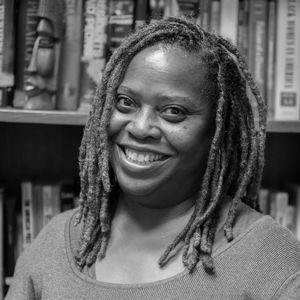
Dr. Terri Jett is an associate professor of political science and special assistant to the Provost for Diversity and Inclusivity at Butler University.