Who defines genius? Who gets to decide who is worthy of that title?
I recently conducted a simple internet search of the word genius. Immediately, names like Albert Einstein, Leonardo da Vinci, Aristotle and Isaac Newton appeared. Not one of them looked like me.
If Black and Brown people are absent from the list of recognized geniuses, what does that say? What does it mean? Are we not geniuses? How can our young people know they carry genius in their DNA if evidence of it is buried, distorted or simply erased? Far too often, the message delivered to Black and Brown youth is rooted in stereotypical negativity rather than historical truth.
During slavery, the message was that Black people were “naturally inferior,” intellectually incapable and “better off” enslaved. During Reconstruction and the era of Jim Crow, the narrative shifted but the venom remained: lazy, dangerous, hypersexual, incapable of self-governance. Then came mass incarceration, where Black males were labeled criminals and “super-predators,” while Black females were demeaned as “welfare queens.” Black people were cast as the problem while systemic racism was ignored as the cause.
With messages like these saturating generations, how can our young people be expected to see — let alone live into — the geniuses they are?
I had to search long, hard and deep — with an ingrained understanding of what I was looking for — to find documented evidence of Black genius.
Take Imhotep, for example: the first physician and architect — period. He lived in Kemet (ancient Egypt) over 4,600 years ago, at a time when years were not recorded as they are today. He authored the Edwin Smith Papyrus, detailing 48 clinical cases of trauma, including injuries to the head, neck and spine. He sutured wounds, recorded heartbeats and blood circulation, and identified and treated over 200 diseases — from tuberculosis and appendicitis to gout and gallstones. That is medical genius that existed in Africa long before European infiltration.
Black genius was present among the Dogon people of present-day Mali. They charted the movement of celestial bodies. They knew of Saturn’s rings, Jupiter’s moons, and the spiral structure of the Milky Way. They mapped the Sirius star system, specifically describing Sirius B and noting its 50-year orbit around Sirius A. Sirius B is invisible to the naked eye and was not identified by modern scientists until 1852. Yet the Dogon tracked its orbit accurately through 1990. That is scientific genius that flourished in Africa long before European interference.
European travelers to the Kingdom of Benin between the 15th and 19th centuries described a society that was orderly, highly organized and architecturally magnificent. Massive, intricate columns aligned the king’s palace. The wealth of the kingdom and the masterful quality of the so-called Benin Bronzes left visitors in awe. What they were witnessing was Black architectural and artistic genius.
Rather than respect African genius, Europeans sought to exploit and dismantle it — removing human capital and attempting to crush the human spirit. Africans traveled the world and left their mark across continents, yet they did not colonize lands or enslave the people they encountered. They knew their greatness and had no need to steal what was not theirs. That is not the story of Europe. They captured the best and brightest, then later colonized what remained. The attempt was clear: disrupt, distort, and destroy Black genius.
And yet, Black genius survived.
It survived the Middle Passage. It surfaced in the “New World.” It lived in the tongues of captured Africans who, without formal education, learned foreign languages and forged new ones — creating culture out of catastrophe. That is genius. Enslaved Africans resisted bondage and, as Freedom Seekers, engineered escape routes — encoding maps in quilts and even in braided hair. That is genius.
Though freedom was known to exist in the northern states, some fled south first, toward Spanish Florida, joining with Native Seminoles. What we now call Florida became home to the Black Seminoles — a brilliant strategy of alliance and survival. That was genius.
Harriet Tubman made more than 13 rescue missions and led over 70 enslaved individuals to freedom. That was genius in motion.
Black genius showed up during slavery and after. From designing floating schools in Missouri to educate Black children, to establishing maroon communities that evaded enslavers for decades — Black brilliance persisted. In December 1864, twenty Black ministers met with Union General William Tecumseh Sherman and advocated for 40 acres for newly freed families — a visionary demand for economic independence. That was pure genius. From inventing the modern elevator door to creating the mailbox, Black innovation has continually shaped the world.
It is time to flip the script and reframe our definition of genius.
Genius does not belong exclusively to white men enshrined in European textbooks. Genius shows up in survival. In strategy. In creation under constraint. It may look different across cultures, but it is genius, nevertheless.
Black people are the Original Geniuses — the OGs.
That is our heritage. That is our lineage. That is who we are.
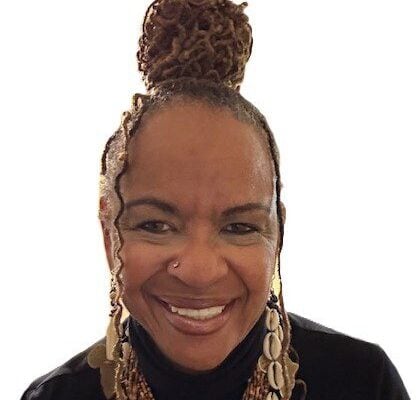
Maxine Bryant, Ph.D., is the founder of GriotSpeaks, an author, and an African American culture keeper. For more information, visit www.drmaxinebryant.com.

MAXINE BRYANT
Maxine Bryant, Ph.D. is the founder of GriotSpeaks, author and African-American culture keeper. Dr. Bryant replaces mythology with truth about Africa and the African Diaspora experience. Learn more about her at www.drmaxinebryant.com and email her at mlb@drmaxinebryant.com.