Warning: Expect nuclear-level spoilers.
The second season of Fallout didn’t just expand the map; it deepened the ‘atomic sands’ of its own philosophy. After the explosive finale, it’s clear that showrunners are leaning heavily into the franchise’s most enduring theme: that war doesn’t just change the landscape — it rewires the human soul.
The stars of the Mojave
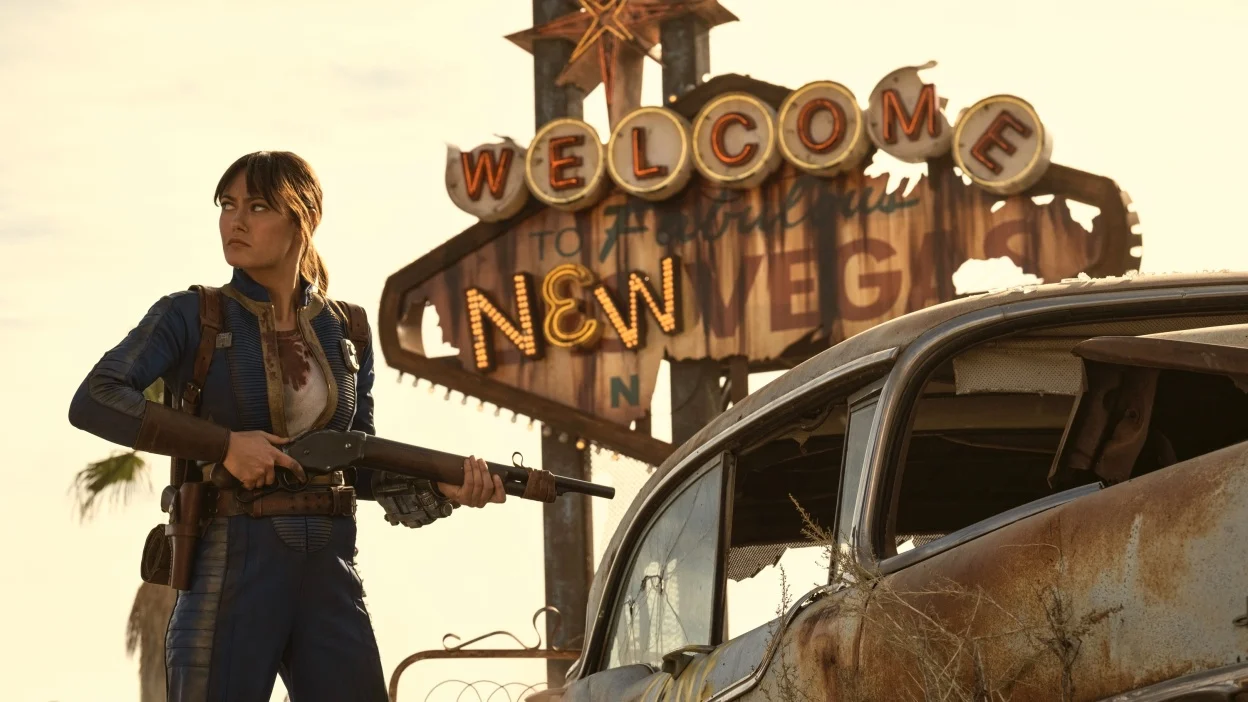
The transition to New Vegas and the Mojave Wasteland was handled masterfully. The aesthetic remains pitch-perfect — a dystopian tapestry of rust, brick and vibrant, irradiated hues. However, the true anchors of this season were Justin Theroux’s Mr. House and, once again, Walton Goggins’ Cooper Howard (The Ghoul).
Theroux’s digital resurrection of House was captivating, and his chemistry with Goggins provided the season’s narrative engine. They are “The Stars” of Season 2, carrying the lore with gravitas that never wasted a second of screen time.
The warped moral compass of Lucy MacLean
One of the most compelling arcs this season was the crescendo of Lucy MacLean (Ella Purnell). Seeing her become warped by the wasteland is a visceral experience. She hasn’t abandoned the “Golden Rule” so much as she has learned to apply it with the brutality of the surface — returning the favor of a severed finger in a literal eye-for-an-eye evolution.
Her philosophical clash with her father, Hank (Kyle MacLachlan), regarding the Black Box, a device that essentially can make the wearer under the operator’s control, serves as the season’s intellectual heartbeat. It is a tragic, albeit realistic, descent; the bushy-tailed rabbit has been snared by nuclear reality, and the peace she once knew feels permanently out of reach.
Burden of brotherhood: Maximus
While Lucy’s journey was one of moral descent, Maximus’ (Aaron Moten) arc in season two was a deep dive into internal conflict, docked by a powerhouse performance. Moten held his own onscreen, bringing a grounded, human vulnerability to a character constantly surrounded by the cold, metallic rigidity of the Brotherhood of Steel.
This season, Maximus moved beyond being a mere aspirant and stepped into a complex role as a reluctant leader. His chemistry with Lucy remains the emotional core of the show, providing a flickering light of hope amid the Brotherhood’s increasingly extremist politics. Moten’s ability to portray both the strength of a knight and the hesitation of a man who has lost everything makes Maximus one of the most relatable — and essential — pieces of the Fallout puzzle.
Flashbacks and world-building
The dual-timeline structure remains the show’s greatest asset. The 2077 sequences featuring Cooper and Barbara (Frances Turner) aren’t mere filler; they are essential tissue. By fleshing out the most costly mistake, Howard’s attempted deception, regarding cold fusion, the show justifies The Ghoul’s cynical demeanor. It provides a layer of depth that a post-war-only timeline simply couldn’t achieve.
Faction friction
While much of the season succeeded, the introduction of Macaulay Culkin’s Legate felt somewhat jarring. Despite Culkin’s ‘crazy-genius’ energy, the character felt rushed — a force-fed reveal in the finale that lacked the steady build-up given to the Vault-Tec elites. Similarly, while the appearance of NCR Power Armor was a treat for long-time gamers, its impact may have been lost on casual viewers who haven’t spent years in the isometric or first-person trenches built by Bethesda.
The verdict
Technically, the show is a marvel. The Deathclaw designs were terrifyingly beautiful, and the sound design perfectly echoed the haunting themes of the original games. The inclusion of Ron Perlman (the original “War Never Changes” videogame opening narrator) was a poetic touch, giving the legendary actor his flowers in a world he helped define.
Season two manages a rare balance: it juggles vault exploration, surface-level politics and deep-dive character studies without dropping the nuke. Aside from a few pacing issues with the Legion and a missed “Gary” joke, this is a stellar adaptation.
“War never changes,” but Fallout certainly knows how to evolve.
Rating: 8.5/10
Contact Multimedia Reporter Noral Parham at 317-762-7846 or email at noralp@indyrecorder.com. Follow him on X @3Noral. For more, visit indianapolisrecorder.com.

Noral Parham is the multi-media reporter for the Indianapolis Recorder, one of the oldest Black publications in the country. Prior to joining the Recorder, Parham served as the community advocate of the MLK Center in Indianapolis and senior copywriter for an e-commerce and marketing firm in Denver.