
Habari Gani!
That means ‘What’s the News?” in Swahili. The news during Kwanzaa is the principle for each day. Of all the holidays observed in December — Hanukkah, Christmas, and Kwanzaa — Kwanzaa is probably the least understood
Kwanzaa was created in 1966 by Maulana Karenga, a professor at California State University. The name Kwanzaa comes from the Swahili phrase “matunda ya kwanza,” which means “first fruits.”
Observance of Kwanzaa is not to replace Christmas or any other faith-based holiday. Rather, it is a 7-day non-faith-based observation to honor and appreciate African-American heritage through focusing on seven principles or values that reaffirm our community and culture. It is based on seven Swahili principles and is observed Dec. 26-Jan. 1. On the 6th day, a community feast is held called the Karamu.
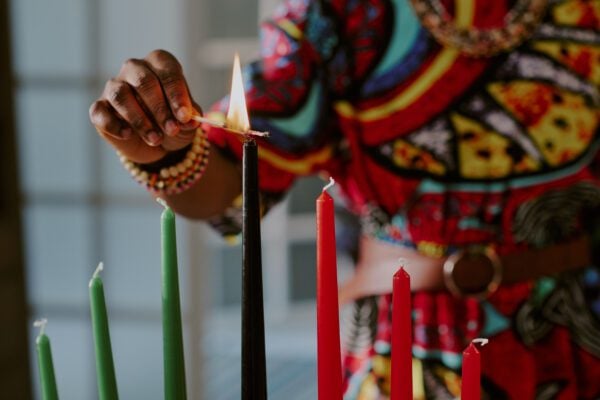
The seven principles are called Nguzo Saba:
Umoja – Unity – “to strive for a principled and harmonious togetherness in the family community, nation and world African community.” It is foundational and all the other Principles stand on it and stem from it.
Kujichagulia – Self Determination – “to define ourselves, name ourselves, create for ourselves, and speak for ourselves.” This requires knowing and believing who we are and refusing to let others define us.
Ujima – Collective Work and Responsibility – “to build and maintain our community together and solve our problems together.” This is a commitment to look beyond ourselves and see the needs of others and join together to solve problems facing our community.
Ujamaa – Cooperative Economics – “to build our own businesses, control the economics of our own community and share in all its work and wealth.” The commitment to buy Black and to support Black businesses is the key to building wealth in the Black community.
Nia – Purpose – “to make our collective vocation the building and developing of our community in order to restore our people to their traditional greatness.” – When you don’t know your purpose, others will create a purpose for you. The greatness of Black-Americans lies in our ability to live in our original purpose.
Kuumba – Creativity – “to always do as much as we can, in the way we can, to leave our community more beautiful and beneficial than we inherited it.” This principle invites each of us to use our gifts, talents and passion to create a better world!
Imani – Faith – “to believe with all our heart in our people, our parents, our teachers, our leaders, and the righteousness and victory of our struggle.” We must believe in ourselves and in our ability to persevere, survive and thrive!
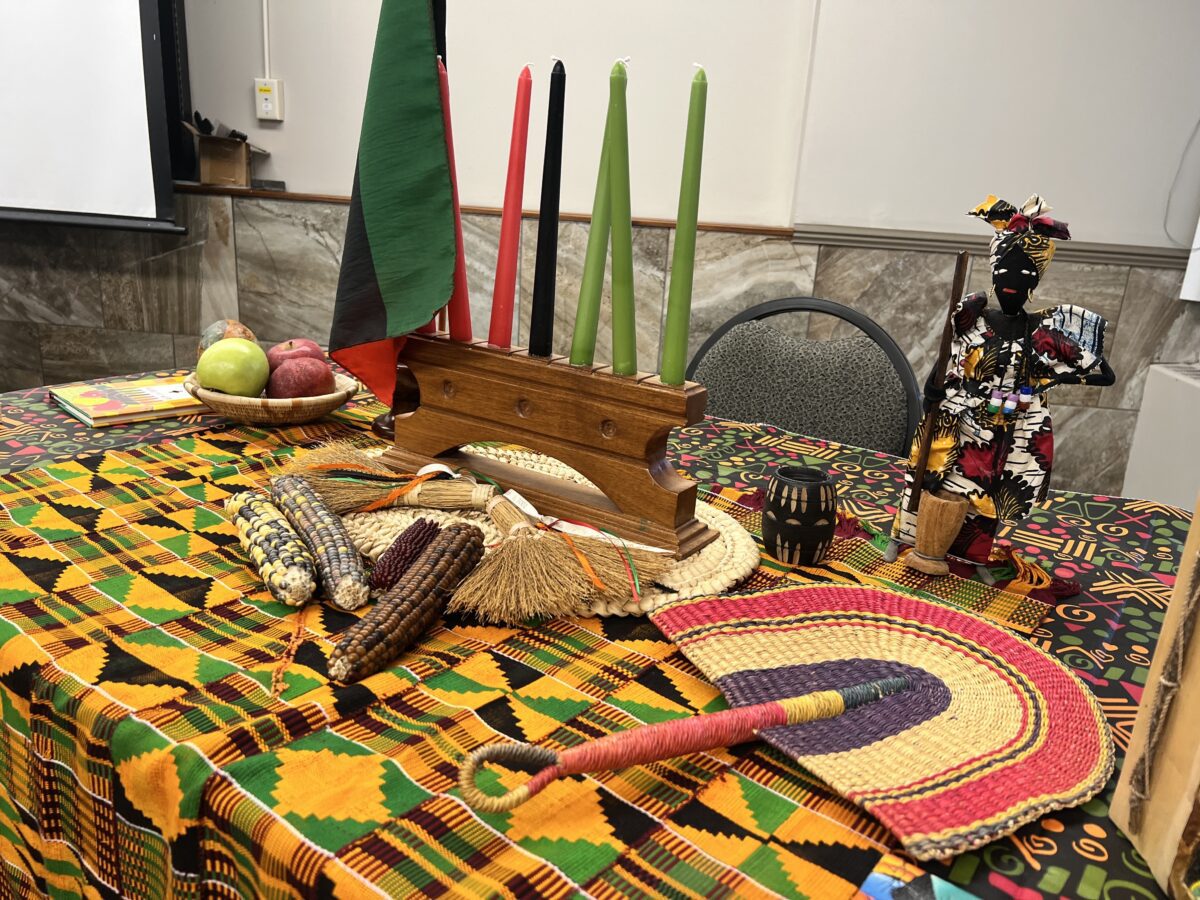
In addition to the principles are the seven symbols of Kwanzaa which are a part of the 7-day observance:
The crops (mzao) which represent the historical roots of African-Americans in agriculture and the reward for collective labor.
The mat (mkeka) lays the foundation for self- actualization.
The candle holder (kinara) reminds us of the ancestral origins in the continent of Africa.
Corn/maize (muhindi) signifies children and the hope associated in the younger generation.
Gifts (Zawadi) represent commitments of the parents for the children.
The unity cup (Kikombe Cha Umoja) is used to pour libations in remembrance of the ancestors.
Finally, the seven candles (mishumaa saba) remind us of the seven principles and the three colors in flags of African liberation movements – red, black and green.
I consider Kwanzaa as an opportunity to re-ignite our inner genius for the incoming year. When I taught my African-American Studies class in the fall semester, I incorporated the Kwanzaa Principles. I required students to make a presentation to the class that connected their selected Kwanzaa principle with something that needed to be addressed in our contemporary society.
Several years ago, a student from Liberia was in the class. He was very ashamed of his name, heritage and culture — so much so that he did not call himself by his African name. He chose kujichagulia and shared his story of transformation from shame to self-determination. At the end, he re-introduced himself — using his African name. He said it with pride and confidence because he decided to stop allowing others to define him!
There is power in words. The words used for the seven Kwanzaa principles are designed to empower, embolden and re-engage the Black community specifically, and can do the same for all communities.
Kwanzaa principles can be embraced by everyone, everyday! Habari Gani!
Maxine Bryant, Ph.D., author and African American culture keeper, is the founder of GriotSpeaks, author, and African American culture keeper. For more information, visit www.drmaxinebryant.com.

MAXINE BRYANT
Maxine Bryant, Ph.D. is the founder of GriotSpeaks, author and African-American culture keeper. Dr. Bryant replaces mythology with truth about Africa and the African Diaspora experience. Learn more about her at www.drmaxinebryant.com and email her at mlb@drmaxinebryant.com.









