
As we observe Black History Month, 2026, it is imperative to address two truths.
First, “they” did not give us the shortest month of the year. Carter G. Woodson started Negro History Week in 1926 and chose February to commemorate Abraham Lincoln and Frederick Douglass’ birthdays. In 1976, under President Gerald Ford’s administration, the week was expanded to a month. During this month, we celebrate Black contributions to the world. This leads me to the second truth I wish to address.
This country has long elevated Martin Luther King, Jr. as the admirable voice of peace, while positioning Malcolm X as dangerous, divisive and radical. This contrast was never accidental. One man was celebrated because his message could be softened, extracted from its urgency and folded neatly into the mythology of American progress. The other was feared because he spoke truths that refused to be delayed, diluted or controlled.
Yet history has a way of circling back. Many of the conditions Malcolm X warned us about — misinformation, institutional control, and generational oppression — are not relics of the past. They are the realities we are experiencing today.
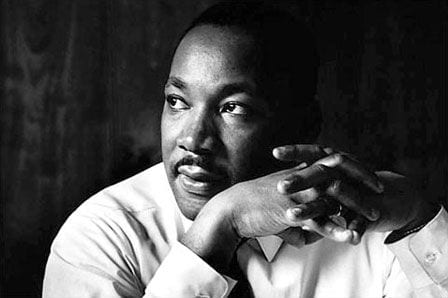
Even King, near the end of his life, began to question the trajectory of the movement he helped lead. In “Where Do We Go From Here: Chaos or Community?,” he warned of the “fierce urgency of now,” reminding us that there is such a thing as being too late. His haunting reflection — wondering whether he had led Black people into a “burning house” — was not a rejection of nonviolence, but an acknowledgment that integration alone, without power, protection and truth, was insufficient.
“Integration placed Black children into white systems that were neither prepared nor willing to see them fully.”
Integration placed Black children into white systems that were neither prepared nor willing to see them fully. Black students were taught by white institutions that did not understand their culture, their history, or the realities they would face as Black adults in a white world. These systems could not teach Black children how to be successful as Black people — only how to approximate whiteness closely enough to survive. This was assimilation dressed up as progress.
Malcolm X offered an alternative framework — one that centered self-definition, historical truth and urgency. His words warned us that a people who do not control their own story will always be trapped inside someone else’s narrative. He explained why miseducation is so dangerous: when the wrong history is taught, the wrong conclusions are drawn, and entire lives are misdirected. He cautioned us that if we only study today without examining how yesterday was engineered, we miss how oppression stretches itself across generations, evolving quietly while appearing patient.
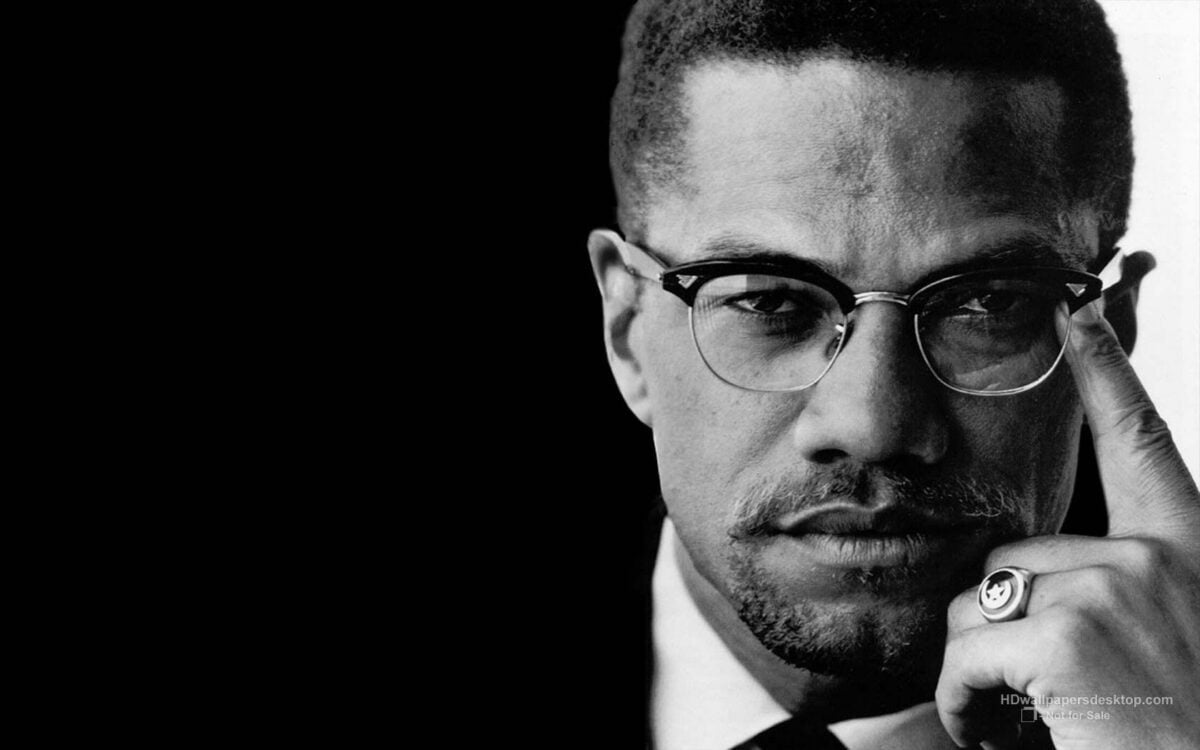
Malcolm X also understood power in ways this country did not want Black people to grasp. He knew that oppression survives on hesitation — that the moment people stop waiting, stop asking permission, power begins to shift. Systems do not fear resistance as much as they fear urgency. That is why patience is preached to the oppressed while injustice continues to move forward uninterrupted.
Malcolm X warned that media messages are a weapon that can bamboozle us and leave us confused — misleading us to hate the oppressed and love the oppressor. In that confusion, the demand for justice is reduced to a whisper.
However, he was clear: revolution is never a whisper. It is a demand. Change happens when we stand up, speak up, and collectively decide we have had enough. King agreed and cautioned us, “Our lives begin to end the day we become silent about things that matter.”
Malcolm X reminded us that discipline turns anger into power, and organization turns power into change. Knowing the truth, he argued, is only the beginning. There comes a moment when awareness alone is no longer enough. At that point, a people must decide whether they will act — or remain controlled. Newsflash: we are at that point.
“Black History Month should be a time when we, as a people, use our past to propel us forward.”
Black History Month should be a time when we, as a people, use our past to propel us forward. To honor both King and Malcolm X honestly is to recognize that nonviolence without urgency becomes stagnation, and integration without self-awareness and determination becomes erasure.
Malcolm X was not the opposite of King; he was the necessary counterweight to a movement at risk of being absorbed by the very system it sought to change.
The question before us is the same one King posed: will we choose chaos, or will we finally choose community rooted in truth, power, and most importantly — action?
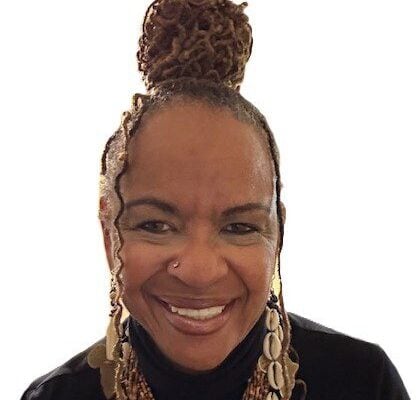
Maxine Bryant, Ph.D., is the founder of GriotSpeaks, an author, and an African American culture keeper. For more information, visit www.drmaxinebryant.com.

MAXINE BRYANT
Maxine Bryant, Ph.D. is the founder of GriotSpeaks, author and African-American culture keeper. Dr. Bryant replaces mythology with truth about Africa and the African Diaspora experience. Learn more about her at www.drmaxinebryant.com and email her at mlb@drmaxinebryant.com.









