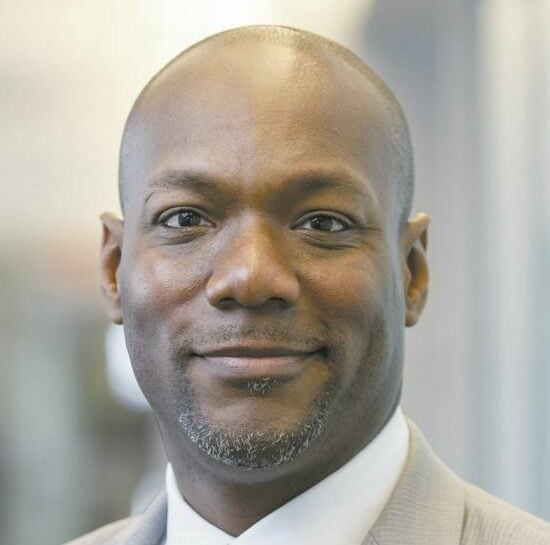
President Ronald Reagan is known for strictly adhering to his dictum, “Thou shalt not speak ill of any fellow Republican.” Notably, Reagan credited this so-called “11th Commandment”, which he began promoting during his first California gubernatorial run, to Gaylord Parkinson. (At the time, Parkinson was California’s Republican Chairman.)
Reagan believed that criticizing other Republicans gave Democrats an opening through which they could exploit intraparty policy differences, and even personal animosities, that existed in the GOP. Reagan especially emphasized this doctrine during primaries, which often devolved into mudslinging fests. His power, personality and popularity ensured that his commandment became an article of faith among Republicans.
To be clear, Reagan’s stance was not solely based on principle; it was also born of practicality. He had presidential aspirations early in his political career, and he knew that his road to the White House would be filled with potholes if he were to be bruised by rivals. It’s also instructive to know that the Republican Party was very fractious in the mid- to late-1960s. Reagan understood that unity – though not unanimity – would be essential to their collective success.
Republicans were still riding high in the post-Reagan era, beginning with the ascension of George H.W. Bush to the presidency in 1988, through Newt Gringrich’s “Republican Revolution” in 1994, and culminating in the two-term presidency of George W. Bush. A few internecine skirmishes aside, the GOP generally held to its 11th Commandment.
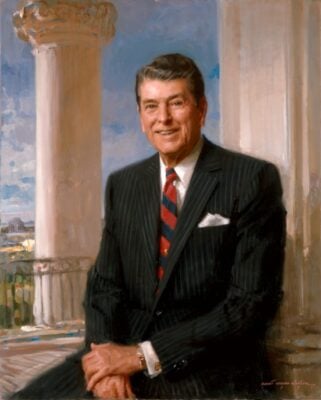
Then came Donald Trump in 2016.
While Trump was not new to the political scene, he wasn’t a politician. That fact, along with his bombastic personality, gave him license to discard his party’s fraternal gentility. When he was even slightly criticized, Trump didn’t take the gloves off; he put brass knuckles inside them and came out swinging.
Overall, Trump discarded traditional political conventions, trash-talking his way through the primary. He established himself as the top dog in a party establishment that was full of ankle-biting puppies. Luckily for Trump, he was much more in line with his party’s increasingly combative base than the old guard was.
Early on, Trump’s supporters often described him as a “counter-puncher” who simply hit back at his attackers. Yet, Trump proved to be an effective offensive pugilist who punched down, up, and sideways depending on his opponent. And, after his victory in 2016, the 11th Commandment gave way to a 12th one: “Thou shalt not speak ill of Donald Trump. Or else.”
For this president, loyalty is merely a marker on the road to absolute fealty. Thus, in fashioning the Republican Party into the Imago Trump, he allows no deviation from his wishes, his whims, or his worries. In fact, his 12th Commandment spawned a new type of catechism. Instead of a recitation of questions and diverse answers, this catechism is one in which the answer to every question is the same: Donald Trump.
All this has culminated in a movement whose greatest strength is also its greatest weakness. Trump’s cult of personality has become a cult-in-fact. There are many tool metaphors that might apply to MAGA, the most important of which is “hammer.” In short, party unity has come at the expense of any identity that might compete with Donald Trump.
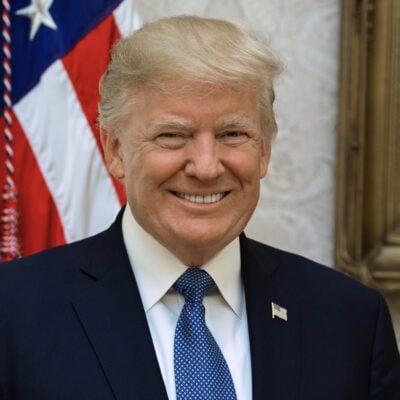
Today, the Republican Party faces a stark dilemma as regards its relationship with Jewish Americans specifically, and its relationship with Israel more broadly. While Trump is widely seen as being very pro-Israel, there is an increasing divide regarding the extent to which his party should stand behind him on this topic.
Part of this divide is based upon a battle between evangelical Christians, who tend to staunchly favor supporting Israel, versus a growing insurgency of openly anti-Semitic right-wingers, of whom Nick Fuentes is the lead antagonist. Recently, political rabble-rouser Tucker Carlson interviewed Fuentes, which caused quite a firestorm in Republican ranks.
Carlson pushed back on Republicans who want to distance their party from Fuentes, who is, among other things, a Holocaust denier. Carlson only cares about whether people pull the “R” lever instead of the “D” one. In his worldview, apparently, there are no actions or moral lapses that disqualify anyone who is on the “red” team. Of course, Carlson is merely extending the 11th and 12th Commandments to their logical conclusion.
This is a center that cannot hold. Trump is a transactional person who has fully embraced populism and nationalism in his successful quest for power. However, whether in Europe or in America, nationalism inevitably leads to racism and anti-Semitism. Or, perhaps more accurately, nationalism is built upon racism and anti-Semitism.
Either way, the Republican Party is in the midst of a reckoning. As all saints and sinners know, commandments tend to be hard to keep.