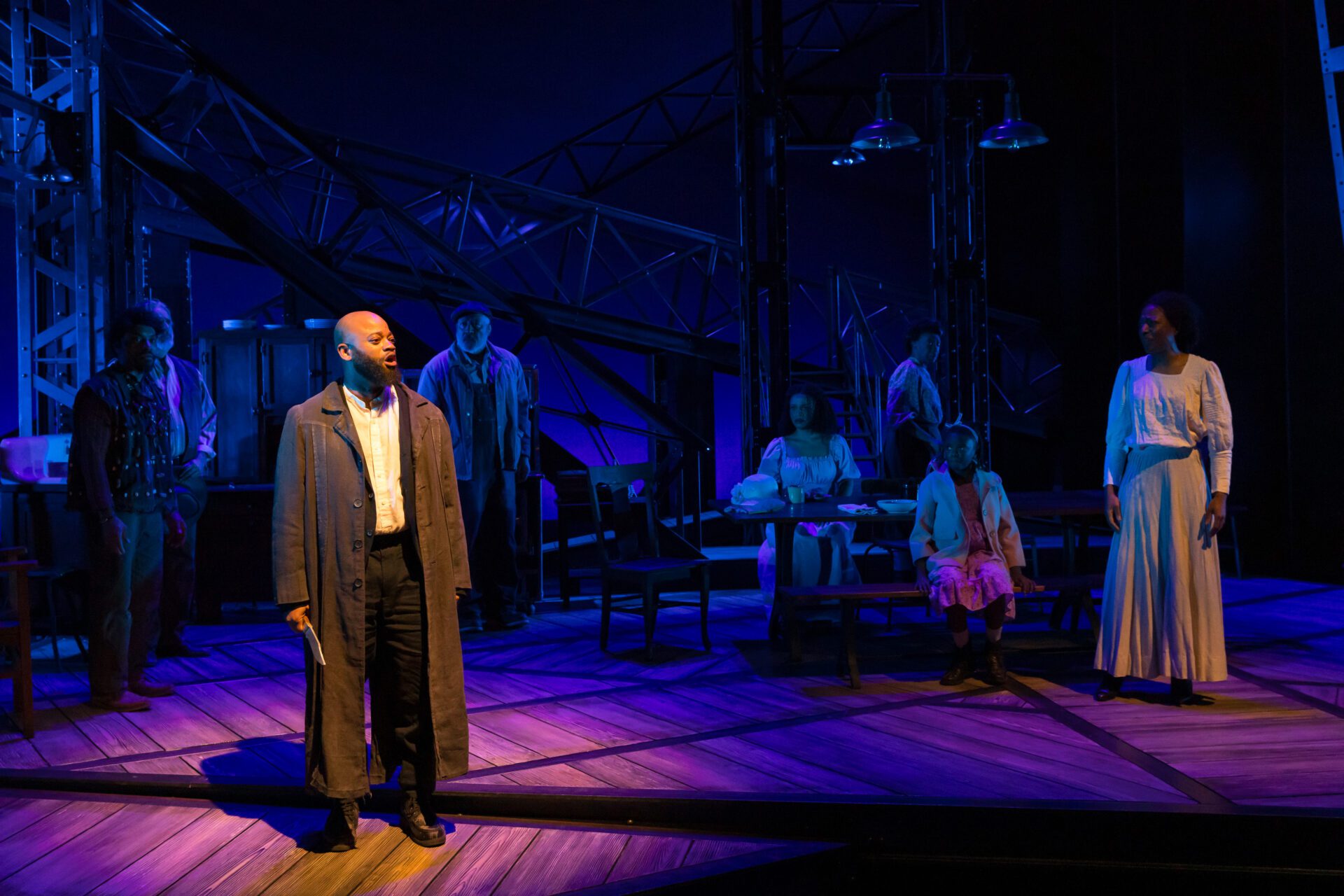
To continue sharing Black stories, The Indiana Repertory Theatre’s production of “Joe Turner’s Come and Gone” is sure to leave a lasting impression on Hoosier audiences.
Written by the iconic, award-winning African American playwright August Wilson, “Joe Turner’s Come and Gone” premiered in 1986 as the second work in The Pittsburgh Cycle; it later opened on Broadway in 1988. Set in a Pittsburgh boarding house in 1911, the story follows the lives of the descendants of formerly enslaved African Americans — including Herald Loomis (Shane Taylor) — who have traveled North in search of purpose, hope and new beginnings.
Directed by Timothy Douglas, August Wilson’s “Joe Turner’s Come and Gone” is onstage at the IRT Jan. 27-Feb. 22.
Truthfully, I needed a moment to breathe after seeing this show. It’s powerful, but the subject matter is heavy with few moments of reprieve. There were many moments where you could hear a pin drop in the theatre, and others that were met with genuine laughter.
READ MORE: Steward Speakers kicks off 2026 with Erika Alexander, Soledad O’Brien
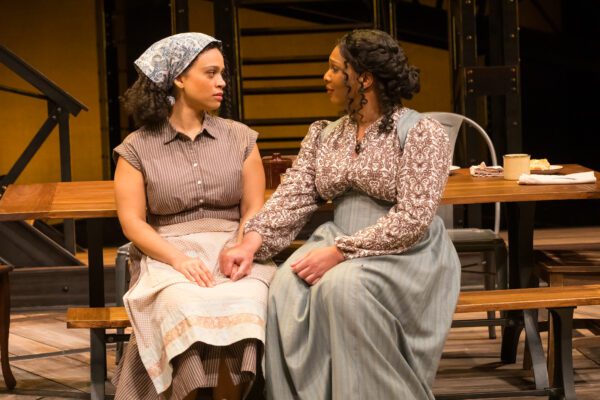
“Joe Turner’s Come and Gone” is another one of Wilson’s slice-of-life type plays. It’s a window into the lives of Black Americans amid the Great Migration and their struggles to make a living in a society actively working against them. Blend in themes of religion and spirituality, differing socioeconomic statuses, simple pleasures and loss and you have a story that resonates beyond 1911.
Seth Holly (Keith Randolph Smith) and his wife, Bertha (Stephanie Berry), own a boarding house that is home to a variety of characters who come and go as they please, unintentionally (or intentionally) stirring drama while just trying to get by. Seth and Bertha share a mutual affection, a partnership marked by trust and respect despite constant playful bickering. Money may not be their issue, but every dollar matters.
Tenants like Bynum Walker (DeShawn Harold Mitchell), a “conjure man” and rootworker, and Jeremy Furlow (Jaques Jean-Mary), a loverboy musician, have been in the Holly home for years and, as such, are subject to the honest opinions of their landlords. What initially sounds like a repetitive critique of their lifestyle choices or disdain for their behaviors and choices actually comes from a place of concern. Because who else will look out for you in this world, if not your own community?
Other boarders, such as Mattie Campbell (Kaitlyn Boyer) and Molly Cunningham (Dane Figuera Edidi), come and go throughout the show. Where seemingly soft and demure Mattie comes in search of temporary comforts and a love charm, she finds herself taking up residence with Jeremy instead. However, Molly, a powerhouse of a woman, arrives seeking only temporary refuge and quickly departs with Jeremy in tow, having already made a plan for her life.
It’s in Harold Loomis that the story finds its heart. A troubled man, having been ripped from his family by old Joe Turner, has been on a years-long journey to find his missing wife and the mother of his child, Martha Pentacost (Lilian A. Oben). He shows up at the Holly house with his young child, and immediately everyone is skeptical of his uneasy demeanor — well, everyone but Bynum. As the story unfolds, more ugly truths are unraveled and judgements are made.
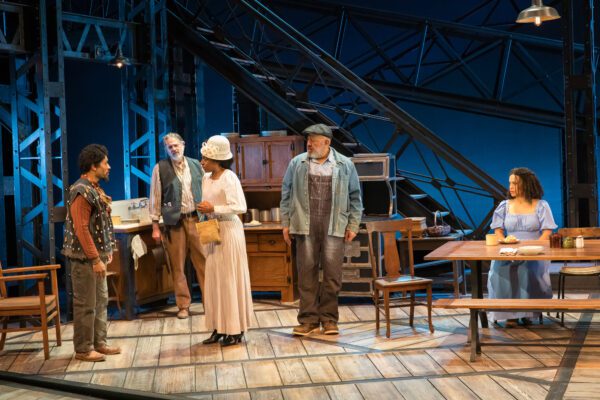
The set of “Joe Turner’s Come and Gone” is beautifully simple and yet so incredibly detailed. Upon first glance, it’s industrial meets rustic — giant steel columns reach across the stage, up into the rafters upstage, setting your focus to a humble kitchen downstage. It’s a contradiction almost, of the cold, unyielding city outside, and the warm, forgiving comfort of a home; of a community.
The majority of the show takes place in that kitchen, revolving around that wooden dining table. The coming and going of characters through the front and back doors add to the dance of the story, of each character’s hopes and fears, and of conversations at the sink and stove, circulating around the table as easily as food and coffee do.
Hoodoo, an African American spiritual practice, is prevalent throughout the show — not just as a theme but as a tried-and-true belief, a remnant of those who came before. There’s ongoing tension between those who still cling to the old traditions and those who no longer believe, instead placing their faith in Christianity. It draws a line between them, but not quite a divide.
I think stage lighting might be my new favorite thing to talk about. There are at least a dozen different ways lighting designer Jason Lynch creates and then subsequently kills a mood using nothing but lighting in this show. Just as the set contradicts itself, so does the juxtaposition between night and day; reality and fantasy throughout “Joe Turner’s Come and Gone.” The lines occasionally blur between the natural world and the spiritual, between what is memory and a vision of the future.
The costume design also came across as a subtle yet brilliant nod to the era and the realities of Black Americans. Despite how worn the fabrics looked, there was an abundance of color and patterns on each character and a distinction between work clothes and nicer dress — as clothing would have been a source of pride for African Americans living and working in a major city like Pittsburgh.
Some stories show rather than tell; “Joe Turner’s Come and Gone” doesn’t leave anything to chance. It’s a story that tells and tells and tells again. It tells of pain and trauma, hope and rebirth. There are moments for laughter and a few instances of irony, though in its entirety, it’s not easy to stomach. Though no one said it would be.
Like much of Wilson’s work, this play is dialogue-heavy, with characters repeating lines in a call-and-response style known as “the echoes.” The idea is that these lines, heard three, four and five times in one conversation, will linger with the audience. Personally, I think this effect is hit or miss. Some lines just stick with you, regardless of how often they’re repeated.
Another thing that stood out to me is that I couldn’t actually tell if everyone on stage was mic’d. Unusual, I know. I don’t think anyone but the two children, Rueben Mercer (Christian Makai Lucas) and Zonia Loomis (Kerah Jackson), had a mic on. In truth, it added another layer of intimacy to the show, giving audience members their own seat at the Holly house dining table, inviting us to lean in and listen and learn.
Not all is what it seems with those living in the boarding house, but a little understanding goes a long way, and eventually, everyone finds a little bit of what they’re searching for.
August Wilson’s “Joe Turner’s Come and Gone” is on stage at the Indiana Repertory Theatre, 140 W. Washington St., Jan. 27-Feb. 22. The play is approximately two hours and 45 minutes with one 15-minute intermission. The show is recommended for 9th grade and up.
Tickets start at $27. For more information, supplemental programming or to view a full performance schedule, visit, irtlive.com.
Contact Arts & Culture Reporter Chloe McGowan at 317-762-7848. Follow her on X @chloe_mcgowanxx.

Chloe McGowan is the Arts & Culture Reporter for the Indianapolis Recorder Newspaper. Originally from Columbus, OH, Chloe has a bachelor's in journalism from The Ohio State University. She is a former IndyStar Pulliam Fellow, and has previously worked for Indy Maven, The Lantern, and CityScene Media Group. In her free time, Chloe enjoys live theatre, reading, baking and keeping her plants alive.