It’s no secret that women have always played an important role in the arts — both as working artists and behind the scenes in executive, curatorial and philanthropic positions.
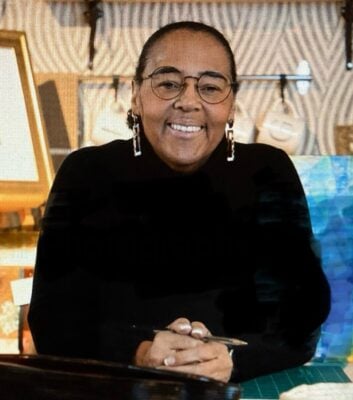
However, when we talk about building a thriving community through the arts, what exactly does that entail? For mixed-media collage artist India Cruse-Griffin, it means access to the arts, joy and a supportive community from an early age.
Growing up in Richmond, Indiana, Cruse-Griffin said art was an active part of her life — from visiting museums to taking drawing classes with her mother. Art is also the reason she pursued a career as an art educator.
“I believe that art makes everyone thrive anyway,” Cruse-Griffin said. “Art on the wall has always been something I think gives people, children and the community an opportunity to think beyond.”
Art is a necessity, Cruse-Griffin added; art and design are a “string” connecting everything from the cars people drive to the clothes on their back and the color of their house.
Still, it’s not enough for artists to simply create for their communities. Building community through art requires, well, an active community — including curators and patrons.
That’s where the Indy Arts Council comes in.
Indy Arts Council Director of Public Art Julia Muney Moore does much of the behind-the-scenes work to ensure art is not only produced in public and private spaces accessible to the public but properly maintained. She also does a lot of project management and policy work, including connecting artists to jobs, resources, and professional development opportunities, and ensuring they’re paid.
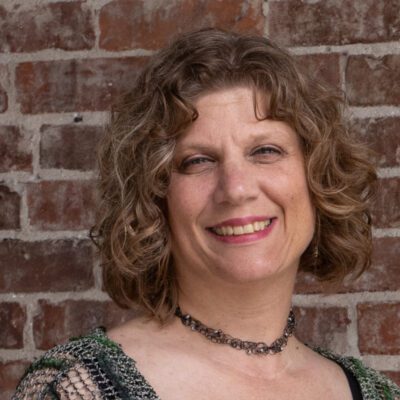
Without a Director of Public Art, Moore said the Indianapolis art sector would be “a kind of wild west.” People wouldn’t look for artists equitably; artists would be competing against each other in a low-bid market, and public art wouldn’t be maintained.
READ MORE: REVIEW: IRT’s ‘English’ might be the most timely show you see this year
Moore jokes that the Indy Arts Council does “the mom work,” or the work that nobody sees.
“A lot of it is dirty, as in it is just sort of thankless,” Moore said. “It’s difficult, it’s very fraught, and it’s work that is largely unacknowledged. I mean, just stuff that your mom does that you don’t even think about whether you know who’s done it, until you realize somebody did it.”
However, artists “need champions” to thrive, Joanna Taft, executive director of the Harrison Center, said. Artists need support from patrons, curators and philanthropists, and part of Taft’s job is to help open doors and make those connections.
“We learned a long time ago that artists are not going to thrive if their neighborhoods aren’t thriving,” Taft said. “We partner with neighborhoods to make them stronger, and we believe that a way to make them stronger is by listening to their stories and elevating their stories through art and helping our neighbors feel known and loved.”
One way the Harrison Center facilitates neighborhood development is through the Polk Museum, an oral history museum at CoHatch designed to “use the power of art to preserve culture.”
Embracing creatives
Another way The Harrison Center is prepared to support artists within their own communities is through wraparound services and access to resources that will help them flourish — including, but not limited to, providing places to create art, exhibit, sell and engage in professional development.
After 25 years of doing this work, Moore said she’s usually familiar enough with an artist to understand what their work is about and can then look at an opportunity and know whether it will be a match for them or not.
“I used to say that I speak fluent artist, which it makes people laugh, but it’s actually true,” Moore added. “I spend a lot of time relating between the world of the artist and the world of whoever wants to hire the artist, because often they’re coming from two totally separate places.”
Cruse-Griffin is featured in a permanent collection at Gainbridge Fieldhouse, and has shown work at the Hoosier Art Salon, Newfields, BUTTER and BUTTER LA. Since retiring, she’s spent more time in Indianapolis as one of The Harrison Center’s resident artists.
“I feel like I’ve been very embraced as well, but I’ve also embraced the community,” Cruse-Griffin said. “Having people who are close to you, even having Joanna at the Harrison Center and the people at the State Museum … I feel like I’m always growing as a person, and I can learn something new all the time.”
Paying it forward
Public art is a very small world since there are only a few people doing it in any given geographical area, Moore said. There have been a handful of people she’s looked up to, including Jack Becker, Joyce Summers and Alpha Blackburn, and has taken on an apprentice of her own every year for the last 6-7 years.
Taft is originally from Washington, D.C., and had a mentor named Thelma Brown during her first few jobs there. Brown was “a firm and beautiful mentor” who came alongside Taft and said all the hard things, and Taft said some of the work she does today is a direct result of that mentorship.
Part of that work includes a mentorship program at the Harrison Center, which accepts about 50 interns each year.
“That means we get to come alongside and help grow the next generation of arts leaders,” Taft added. “We take that work really seriously.”
For budding young artists — especially artists of color — just starting out or more seasoned artists ready to turn a hobby into a career, Cruse-Griffin said to just keep doing it. It doesn’t have to make someone else happy, but “it does have to give you room to be who you are,” she said.
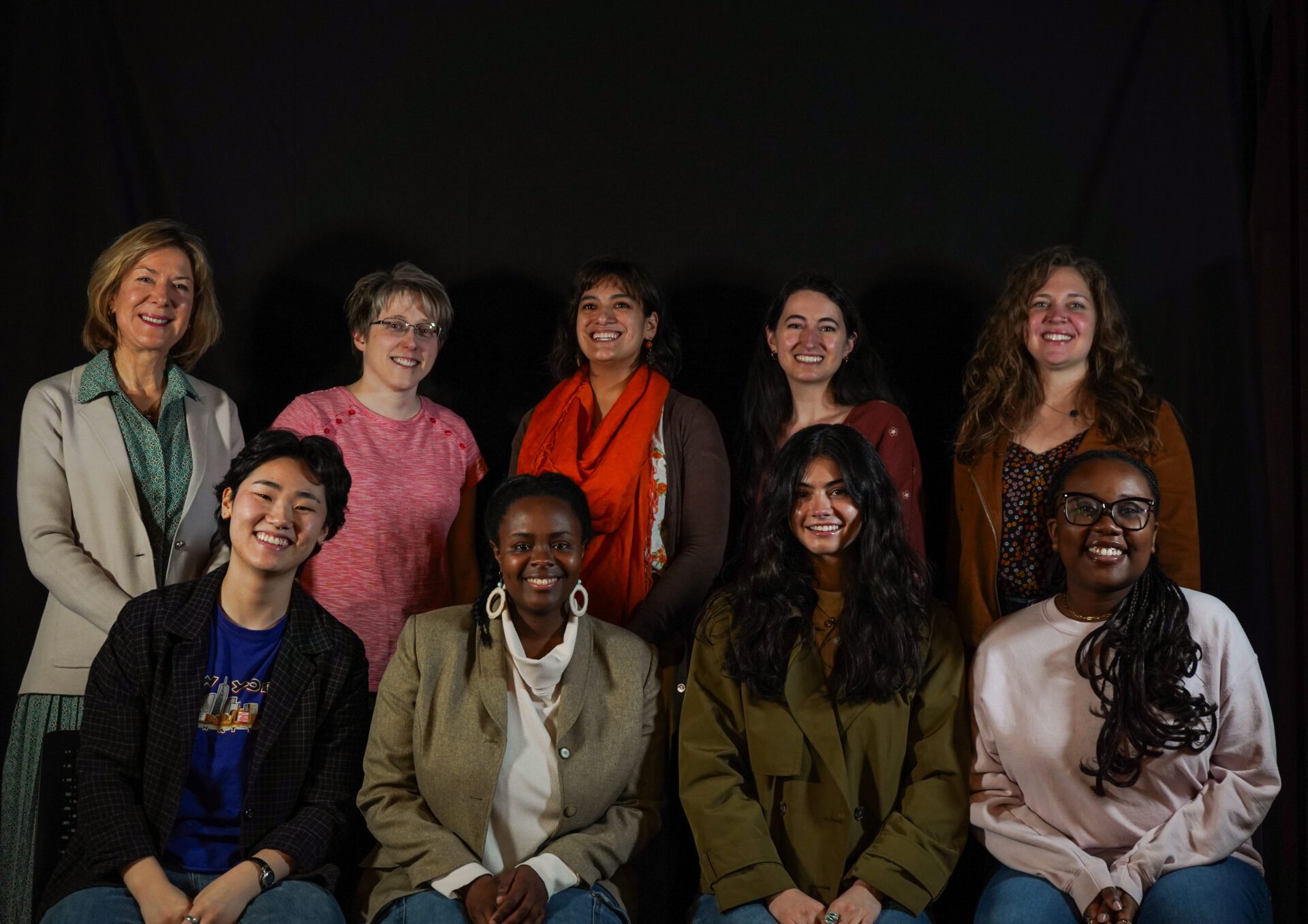
“I do think that the arts can feel like a man’s world, and so I love the fact that every single Harrison Center employee is a woman,” Taft said. “We do have contractors that are men, but every employee is a woman. And so we have a team of eight wonderful, strong women that are just rocking it for the arts here in Indianapolis.”
However, Taft’s advice to young women interested in pursuing a position in arts leadership, curatorial or advocacy: “Go to galleries, ask questions, get to know artists, find out their needs.”
“I started thinking I knew some of the answers, and I didn’t always ask the right questions,” Taft said. “I learned pretty quickly that you can’t plan programs for artists unless you talk to artists and find out what their needs are.”
For more information about the Indy Arts Council or The Harrison Center, visit indyarts.org or harrisoncenter.org.
Contact Arts & Culture Reporter Chloe McGowan at 317-762-7848. Follow her on X @chloe_mcgowanxx.

Chloe McGowan is the Arts & Culture Reporter for the Indianapolis Recorder Newspaper. Originally from Columbus, OH, Chloe has a bachelor's in journalism from The Ohio State University. She is a former IndyStar Pulliam Fellow, and has previously worked for Indy Maven, The Lantern, and CityScene Media Group. In her free time, Chloe enjoys live theatre, reading, baking and keeping her plants alive.