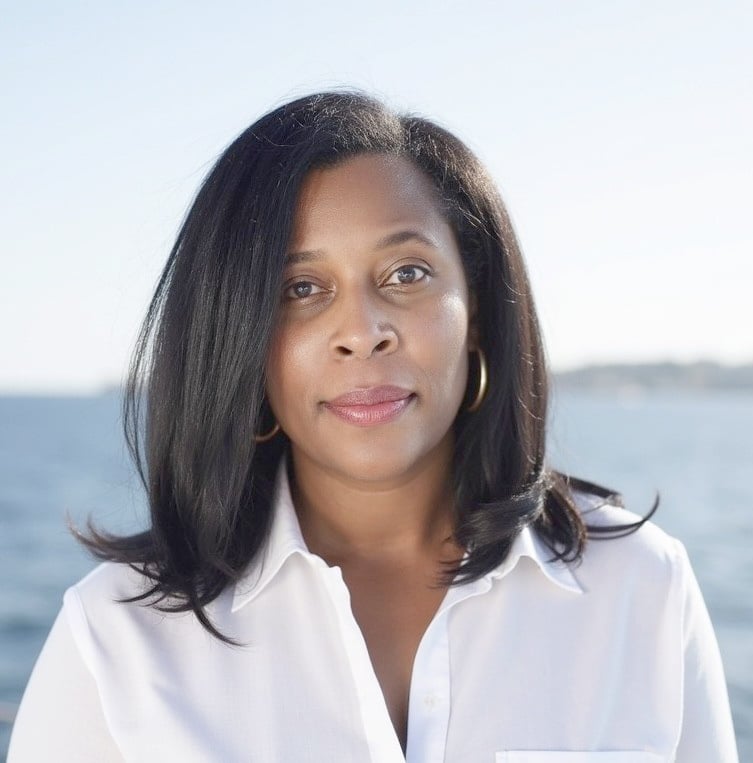
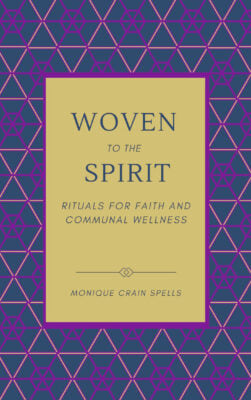
Reverend Monique Crain Spells is an ordained minister and executive in the Christian Church, Disciples of Christ in the United States and Canada. Now she is adding author to her list of achievements. In her new book, “Woven to the Spirit: Rituals for Faith and Communal Wellness,” Crain Spells explores the connection between spiritual practices, ancestry and culture.
As a former praise and worship leader, Crain Spells said that worship arts at Light of the World Christian Church in Indianapolis were her introduction to ministry and they have since been dear to her heart. It’s where she found her voice in ministry, and it’s now the foundation of her debut book.
This interview has been edited for length and clarity.
In this book, you’re weaving in spiritual practices with ancestral rituals and culture. How did you come about this idea and why was it important?
Monique Crain Spells: So, I was doing my doctoral research around how to fleece consumerism from our worship posture. We come to church (and) it’s like you pass the tray, we pay our admission, we sit there and expect the preacher to perform, the choir to perform, we clap on cue, and then we go home. And that is not how our ancestry engaged worship. It is certainly a Western way of engaging worship. And the pandemic exasperated that when we all went to logging on for two years.
I was led to study one of the strongest nations of people in the continent, which are the Zulu. I reached out and built some connections with some ministers in South Africa, interviewed them and asked them about some of the practices that happened there that have happened since they were a people and what do they attribute to their communal strength and their enduring strength.
They shared those things and I drew from their wisdom and then syncretized the intentions, the structure, some of the structures of their rituals and some of the intentions of their rituals alongside what I would call modern day African American culture.
And so, there’s a ritual, it’s called Opening of the Mouth that’s tied to a ritual that they do. If a man is trying to marry a woman, he must go to her father and uncles and he must continue to say all the things that he will offer for her. They will not speak to him or allow him to enter the door until he has communicated something they find worthy enough to even start the conversation.
So, I took Opening of the Mouth and made it a communal ritual, whereas when we’re welcoming people into our fold … those who are new … must share what they intend to contribute to that circle and share that they are committed to the safety of that circle before they are allowed entry into that circle.
There are about five really strong rituals that people can implement in their communities, but they’re all syncretic in that they draw from an ancestral practice either from our African ancestors or our enslaved African ancestors. And they meld that together with our modern lived experience to create something, a beautiful bonding experience.
As you’re sharing these rituals, what do you hope that readers will do with them?
Crain Spells: My hope is that one, people will be absolutely inspired by a little walk through history to realize that we are connected to something wider than our immediate experience. We’re a link in a long chain of people who gather and use their bodies and their voices and the scents and the smells and nature to commune with God.
There was a breach that happened to us. We were brought here because of our relationship with nature, right? But then being made to work created a breach between us and sun and a breach between us and wind and fire and dirt and trees and grass.
When you’ve experienced lynching, it’s hard to look upon trees with beauty, right? And so, my hope is to reconnect us with who we were before we were harmed in such a terrible way. And for us to say we can go back and reclaim what has been good and beautiful and bring it into our living together today.
Rituals get the whole of the community that’s present involved and gets the whole of the community that’s present in communion with God. Rituals remove the veil.
In this moment in our country and our culture, what scripture has been on your mind and heart lately and why?
Crain Spells: There are two. When the angel came to Mary and told her that she would, she was carrying (God’s child), it says she was perplexed (Luke 1:26-30; NRSVUE). And I think what would bring a lot of peace and calm, particularly into the spirits and the bodies of women, is that we understand that we’re not wrong to be perplexed. We are not wrong to be perplexed by the circumstances of this life. We are not wrong to be perplexed by the hand being dealt to us by society and government.
If one can be approached by an angel, a direct representative of God (who spoke) in proxy for God, and still be perplexed, then certainly all of this is perplexing. And I can be perplexed and not fix it. She didn’t try to fix it.
So that, and the fact that she went from there and ran off to be with her girl, she needed to, she ran off to be with Elizabeth. And our sisters give us the strength that we need to accept what is.
Then the other text, is when Jesus said that we will do greater works (John 4:14-22; NRSVUE). Greater means greater. And he did some great stuff. He fed a lot of people. He healed some folks. He raised some folks from the dead. He built a ministry on mutual aid. He didn’t do it by himself. He got 12 friends and decided to resist and not just resist the existing regime of Rome, but to create a new reality.
The ‘Greater Works’ encourages me on hard days. It encouraged me in writing this book because I just thought God is still speaking and God is still speaking through me. And my voice is no less powerful or important than Paul’s or Moses. I’m no less valuable than Peter or John or Mark. They just got their books in the canon.
‘Greater works’ includes me. And so, I want people to know that ‘greater works’ includes them. It’s not some aspiration for just preachers. It’s not some aspiration for just presidents, elected officials and presidential candidates, it’s not. Greater works includes us all.
And so, in order to really get that, we have to have more embodied experiences of time with God. And that’s what the book encourages us to do, that we don’t just kind of arrive at spirit. We’re woven through one another, through experiences, through history, through culture, through triumph, through valleys; we are woven to God’s spirit. And that tapestry is ever evolving. It’s never complete.
“Woven to the Spirit: Rituals of Faith and Communal Wellness” by Monique Crain-Spells is available at barnesandnoble.com.
Contact Editor-in-Chief Camike Jones at 317-762-7850.

Camike Jones is the Editor-in-Chief of the Indianapolis Recorder. Born and raised in Indianapolis, Jones has a lifelong commitment to advocacy and telling stories that represent the community.