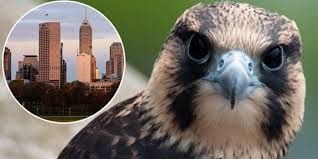

The National Wildlife Federation (NWF) has named Indy a top 10 city for wildlife in 2015. NWF made the announcement of America’s most wildlife friendly cities as part of their celebration of National Wildlife Week 2015.
NWF ranked America’s largest cities based on three important criteria for wildlife – the percentage of parkland in each city, citizen action to create wildlife habitat, and school adoption of outdoor learning in wildlife gardens. Indy was recognized along with Albuquerque, Atlanta, Austin, Baltimore, Charlotte, New York, Portland, Seattle, and Washington DC.
Indy boasts more than 900 Certified Wildlife Habitats, the 2nd most of any major city in the U.S. The City has a robust rain garden and native planting area program to reduce runoff and provide urban habitat.
”The Indiana Wildlife Federation (IWF) is excited to see that Indy has been named as one of the country’s Top 10 Cities for Wildlife in 2015,” Steve Cecil, IWF President said. “Programs like IWF’s “What’s Wild in Your Backyard” point out that, with a little help, everyone’s backyard, school grounds or pocket park can become a safe haven for healthy and diverse urban wildlife populations.”
Indy is also an Urban Bird Treaty City and provides habitat for migratory birds traveling the Mississippi Flyway. In 2013, the City launched the Indy Birding Trail . The trail is designed to guide residents and visitors to 35 of the City’s best areas for bird watching. Through the Indy Birding Trail, city parks, green spaces, and environmentally conscious institutions throughout the city are celebrated as havens for biodiversity within an urban setting. The Indy Birding Trail is supplemented by the BirdIndy website, mobile application and trail guide, which will be available online and at sites along the trail.
“Our partnership with the U.S. Fish and Wildlife Service allowed us to create the BirdIndy program,” Melody Park, Director of the City’s Office of Sustainability said. “BirdIndy helps to connect families with wildlife in an urban setting, and the program helps people to better understand the need to preserve and enhance the natural areas in our City that wildlife use as their habitat.”
Indy’s reputation as a wildlife friendly city is also bolstered by its well-respected Land Stewardship program. The City’s Land Stewardship division restores and protects natural areas in Indy Parks properties and along the City’s greenways to ensure that these areas are a sustainable resources for people and wildlife. Land Stewardship cares for more than 1,200 acres of woodlands, prairies and wetlands across 45 Indy Parks properties that serve as home to many wildlife species. Land Stewardship also coordinates invasive species control, wetland restoration, reforestation, and native planting efforts across Indy.
“Environmental Education is a primary focus at the Eagle Creek Park Earth Discovery Center and Ornithology Center, Holliday Park Nature Center, Southeastway Park and the Garfield Park Conservatory, offering more than 5,000 acres of wildlife and plant experiences just minutes from Downtown Indianapolis,” said John Williams, Director of Indy Parks and Recreation.” Nearly 40,000 students and citizens participate annually in hands on nature programs, such as the Eagle Creek Park Geo-Thermal pond, a living outdoor classroom that teaches the importance of how baby dragonflies, tadpoles, water beetles, zooplankton, snails, and leeches each have a role enhancing our wildlife environment.”
Indy Parks naturalists also devote time to training volunteers to allow for further wildlife experiences for the public in assisting with pond studies, teaching, live bird of prey programs, and leading nature hikes. Volunteers participate in bat surveys, reptile and amphibian studies, summer breeding bird surveys,Christmas bird counts, the Great Backyard Bird Count, and International Migratory Bird Day.
Visit indy.gov/dpr to learn about seasonal outdoor conservation opportunities such as monthly invasive plant removal efforts and the upcoming Great Indy Clean-up at Eagle Creek Park on April 11.