

Each March, advocates across the country observe Brain Injury Awareness Month, a national effort aimed at educating the public about traumatic and acquired brain injuries and the long-term challenges survivors face.
Health organizations say brain injuries are more common than many realize and often go undiagnosed. The campaign seeks to bring visibility to what advocates call an “invisible injury,” while encouraging people to learn the signs, support survivors and expand access to treatment and rehabilitation services.
“Every March, the Brain Injury Association of America leads the nation in observing Brain Injury Awareness Month,” the Brain Injury Association of America states on its public awareness page.
“Brain injury is often called the ‘invisible injury’ because the effects are not always easy to see,” said Rick Willis, who sustained a traumatic brain injury in a 1979 car crash and later became a national advocate for survivors. “Too often brain injury survivors are defined by an injury. An individual with a brain injury is more than a brain injury.”
Health experts say raising awareness is critical because many people do not realize they have experienced a brain injury or fail to seek treatment.
“Traumatic brain injury is a major cause of death and disability in the United States,” said Debra Houry, an emergency physician who previously led injury prevention efforts at the Centers for Disease Control and Prevention.
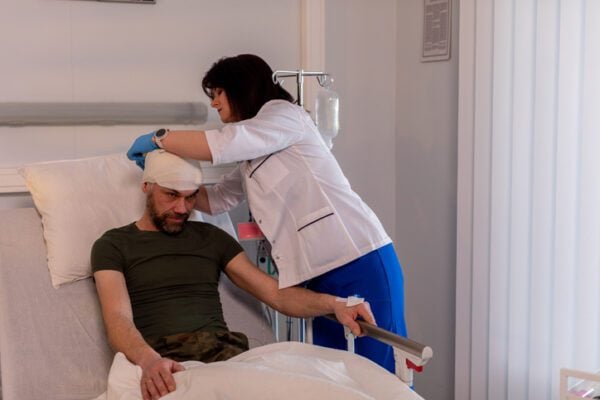
In Indiana, advocates and health providers are using the awareness month to educate residents about resources for survivors and caregivers. The Brain Injury Association of Indiana connects Hoosiers with rehabilitation services, support groups and advocacy programs.
“Brain injury is something that affects not only the survivor but their entire family,” said Sue Wilson. Wilson led the Brain Injury Association of Indiana, a nonprofit that advocates for Hoosiers living with brain injuries and works to expand access to rehabilitation services, education and community support programs across the state. “Raising awareness helps people understand that recovery can take time and support.”
“People often think if someone looks fine, they must be fine, but brain injury doesn’t always show on the outside,” said Wendy Waldman. Waldman works as a neuroresource facilitator with the Indiana NeuroResource Facilitation Program, helping individuals with brain injuries and their families navigate rehabilitation services, community resources and long-term support after injury.
Symptoms of brain injury vary depending on severity and the area of the brain affected. Common signs include headaches, dizziness, memory problems, difficulty concentrating and mood changes. Some symptoms appear immediately, while others develop days or weeks later.
Advocates also emphasize prevention. Falls remain the leading cause of traumatic brain injuries nationwide, particularly among older adults, while car crashes and sports injuries are also common causes. Wearing helmets, using seat belts and taking steps to prevent falls can significantly reduce the risk of brain injury.
For Indiana families affected by brain injury, Brain Injury Awareness Month is about ensuring survivors are seen, heard and supported. By sharing stories, expanding education and connecting people with resources organizations hope to improve understanding of brain injuries and the long-term challenges survivors face.
For more information about brain injuries and resources for survivors in Indiana, visit the Brain Injury Association of Indiana at biaindiana.org.
This reporting is made possible by a grant from the Indianapolis African-American Quality of Life Initiative, empowering our community with essential health insights. https://iaaqli.org/
Contact Health & Environmental Reporter Hanna Rauworth at 317-762-7854 or follow her on Instagram at @hanna.rauworth.

Hanna Rauworth is the Health & Environmental Reporter for the Indianapolis Recorder Newspaper, where she covers topics at the intersection of public health, environmental issues, and community impact. With a commitment to storytelling that informs and empowers, she strives to highlight the challenges and solutions shaping the well-being of Indianapolis residents.









