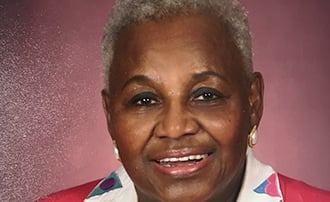
It is the eve of Juneteenth, and I am listening to Attorney Fay Williams teach history on Indianapolis radio, AM 1310. The first Black woman to graduate from what is now the IU Robert H. McKinney School of Law (1971), Fay Williams is the master teacher, unfurling an emancipation curriculum.
The lesson is not planned.
There is no syllabus.
No textbook.
No quiz at the end, but there is an assignment: each one teach one.
It is an educational philosophy as old as emancipation itself. Knowledge is not accumulated for personal gain alone; it is carried forward as a communal responsibility.
Williams, born and raised in Galveston, Texas, where Juneteenth originated, spent decades researching and teaching its history before it became a federal holiday. She tells history with pride and precision.
What strikes me most is that Williams is not merely recounting history; she is modeling a tradition. Before Juneteenth was a federal holiday, before school districts debated how slavery should be taught, Black communities built their own classrooms. They gathered knowledge wherever they could find space and passed it forward. Freedom demanded literacy, but it also demanded memory.
Throughout the broadcast, Williams does not lecture. She listens, affirms, corrects, and contextualizes. She reminds callers that freedom did not arrive complete. She explains that emancipation ended slavery, but not inequality. She challenges listeners to learn the mechanics of citizenship — how voting works, how local government functions, how power is organized. At one point, she imagines churches hosting civic nights where neighbors learn not only scripture, but the responsibilities of democracy.
She does not let the celebration obscure the unfinished work. When callers worry aloud that history might be revised — erased, softened, reclassified — Williams does not offer comfort. She says it plainly: “The Constitution, the 13th Amendment, stopped us from being 3/5 of a person, but it didn’t make us whole.” Reparations were never part of the agreement. You cannot erase what people carry in their bodies and their families. But you have to keep carrying it.
That is the assignment beneath the assignment.
In that moment, the conversation becomes bigger than Juneteenth.
It becomes a lesson about self-education and a responsibility we cannot afford to leave solely to schools and classrooms.
Williams reaches back further than legislation. She speaks of growing up on the island. She does not reach for the language of deprivation. “I knew what I had,” she says. Her own school. Her own beach. Her own church. What mattered was not what had been withheld. What mattered was what the community possessed, and that it was theirs to run.
“I never resented white people, ’cause I never saw them having any fun.”
For generations, Black Americans understood that if they waited for institutions to tell the whole story, they might wait forever. So, they became historians of their own lives. They preserved family records: births, deaths, and marriages were recorded in family Bibles. They repeated stories around kitchen tables. They remembered the names of counties, rivers, plantations, and hometowns. They braided routes in hairstyles. They taught the children where they came from and what had been preserved.
What Williams demonstrates on the radio is that history is not only stored in archives. It resides in people—in the details families pass across generations, in stories that begin with “my grandmother told me” or “my father used to say,” and in recollections that survive even when official narratives leave them out.
Callers offer fragments of memory. Tennessee. Arkansas. Kentucky. Virginia. Galveston. A grandfather who marched with Sherman. A grandmother whose story survived slavery. A father who celebrated Emancipation Day before Juneteenth became a federal holiday.
Again and again, the conversation returns to a simple truth: most of what these callers know did not come from school.
It came from somebody.
A parent.
A grandparent.
A church member.
A neighbor.
A community elder.
Long before Juneteenth was recognized by the nation, Black Americans created a freedom curriculum of their own. They carried history through stories, celebrations, churches, family
gatherings, HBCUs, newspapers, and radio programs. If roads and bridges are physical infrastructure, then language and memory are cultural infrastructure. They carry knowledge from one generation to the next.
Consider what Mobile never built. Union forces captured that Alabama city on April 12, 1865 — more than 10 weeks before Gordon Granger arrived in Galveston. Same campaign. Same officer. But Mobile has no Freedom Day. No annual observance rooted in that April morning. No tradition that survived long enough to become a holiday.
Texas did. Beginning in 1866, one year after the fact, Black Texans gathered and said the date out loud. They repeated it. They brought food. They brought family. They came back the following year. Memory does not preserve itself. It requires maintenance—deliberate, communal, recurring.
Perhaps that is another miracle of Juneteenth: not that freedom finally arrived, but that generations of people preserved the story long enough for freedom to remember its own name.
Quotes and details in this piece are drawn from Attorney Fay Williams’s appearance on Community Connection with Tina Cosby, AM 1310, Indianapolis, during Juneteenth week 2026.
The show re-airs on Juneteenth from 1–3 p.m.

Tasha Jones is a poet, writer, researcher, and educator whose work explores language as a tool for liberation and resistance. She hosts In the Beginning: The Spoken Word Podcast, the #1 spoken word podcast on Apple and Spotify. Tasha is also the Poems & Parables Literary Journal editor and is currently writing Pyramids. Plantations. Projects. Penitentiaries. You can follow her on social media: @iamtashajones, @itbspokenwordpod, and @poemsandparables.