
Glaucoma Awareness Month is drawing attention to a vision condition that often progresses quietly, sometimes without noticeable symptoms until significant vision loss has already occurred.
Staff at Bosma say regular eye exams and early detection are critical for protecting vision and connecting individuals to support services.
“A lot of times you don’t recognize the symptoms,” said Marsha Egan, vice president of Program Services at Bosma. “So that’s why we always encourage that people need to go forward and maintain a good relationship with their eye care provider, because glaucoma affects your vision, reducing your peripheral all the way down to where it’s like you’re looking through a tunnel or a straw.”
Egan said glaucoma can cause cloudiness and other vision changes that may not be immediately noticeable in daily life.
“There can be cloudiness, just a number of different things that affect your vision, and a lot of it’s due to, I’m not a doctor, but the pressure that is created,” she said. “It’s not curable, but if you catch it early, you can slow the progression of the disease.”
Treatments often focus on managing eye pressure, which can help reduce further vision loss.
“A lot of times they do treatment with drops to either affect perhaps more drainage of fluid or reducing that pressure, because that’s what’s having the effect on the vision loss,” Egan said.
Jared Woodard, program services supervisor at Bosma and an orientation and mobility specialist, said glaucoma develops when fluid inside the eye does not drain properly.
“Essentially, what happens is it’s a problem with drainage in the eye, which causes fluid buildup, increases the pressure of the eye and that fluid can put pressure on the optic nerve, ultimately damaging the optic nerve, then causing vision loss because the optic nerve is damaged,” Woodard said.
Woodard said glaucoma can be difficult to detect without routine eye care and can develop in different ways.
“There’s one that’s more gradual and it’s just over time there’s stuff building up that’s causing that drainage to be blocked from the fluid leaving the eye,” he said. “And then there’s one that’s more quickly moving where it closes quickly.”
Glaucoma is not a single disease but a group of eye conditions that damage the optic nerve, often due to increased pressure in the eye. The most common form, primary open-angle glaucoma, develops slowly over time as fluid does not drain properly, causing pressure to build gradually and peripheral vision loss that may go unnoticed at first. Angle-closure glaucoma occurs when the eye’s drainage angle becomes blocked suddenly, leading to a rapid increase in pressure and potentially quick vision loss. Congenital glaucoma is a rare form present at birth caused by abnormal development of the eye’s drainage system, while secondary glaucoma develops as a result of another eye condition, injury, inflammation or medical issue. While glaucoma is not curable, early detection and treatment can help slow vision loss and protect remaining sight.
Because symptoms may not be obvious, both Egan and Woodard stressed the importance of regular eye exams.
“You may not notice the symptoms, and so when you go into like your eye care provider, a lot of times they will do a test to really look, so they can really see in the back of things that are affecting perhaps the optic nerve,” Egan said. “So, you don’t notice it like some of the other eye conditions that may show symptoms earlier.”
Woodard added that skipping eye appointments can allow damage to occur without a person realizing it.
“If somebody skips a few of those eye visits and they don’t get that puff to check their pressures, then they could be basically having damage at that time,” he said.
Woodard said glaucoma disproportionately affects certain populations.
“It’s one of the leading causes of blindness for African Americans and Hispanic Americans, Asian Americans,” he said.
Egan also pointed to age and family history as risk factors.
“And there are certain age groups that seem to be a little bit more prone,” she said. “So, I think getting the message out, especially to recognize, hey, I’m over 40, I need to make sure I’m having regular vision, you know, checks with my vision, my eye care professional.”
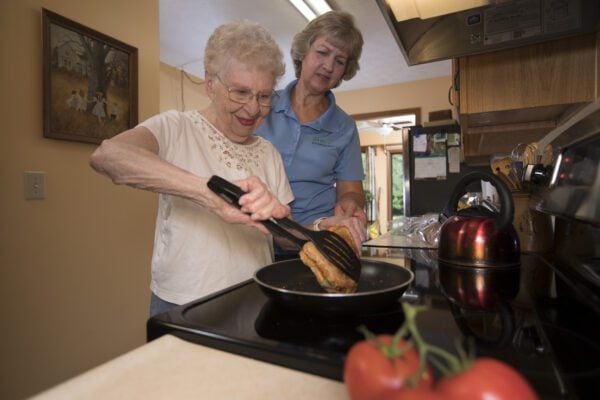
For individuals living with glaucoma or other vision loss, Bosma provides a wide range of services focused on maintaining independence. Egan said many of those services are delivered in the community.
“We really kind of assess, kind of, what their level of vision loss is as far as do they have some functional vision or no functional vision,” she said. “But we can introduce different low vision and unsighted techniques.”
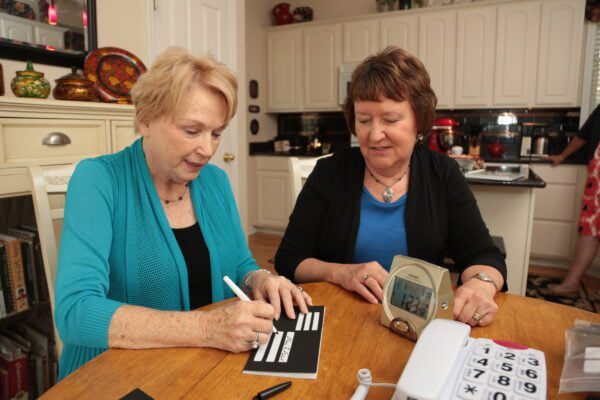
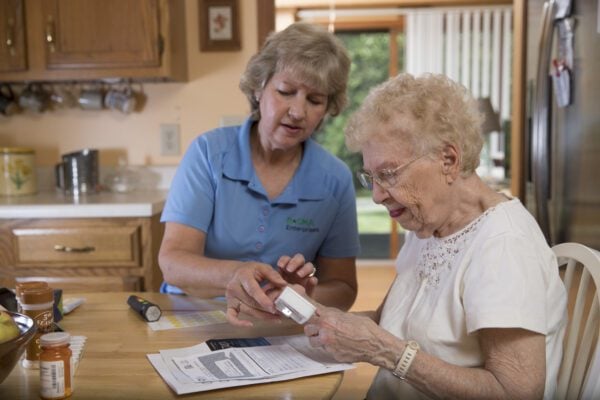
Services may include tactile indicators for appliances, magnifiers, talking clocks, lighting adjustments and medication management.
“You don’t realize that even with vision loss, lighting is a key factor,” Egan said.
Woodard said Bosma also offers center-based rehabilitation programs with a focus on “performing independent living tasks” and employment, with the goal of going back to work
Bosma serves individuals across Indiana and works to connect people with appropriate resources and a supportive community.
Egan said Bosma offers an emotional support line.
“It gives you a person to talk to,” she said. “By coming and connecting with Bosma, you realize there is a whole community out there and available.”
Woodard said connecting with others who share similar experiences can help people adjust.
Individuals seeking services can contact Bosma through its website or by phone. Egan said all services are provided at no cost to clients.
As Glaucoma Awareness Month continues, both speakers encouraged people to prioritize eye care and seek support early.
“We don’t want Bosma to be a secret,” Egan said. “We want people to take care and know that there’s resources out there and they don’t have to be on that journey by themselves.”
For more information visit bosma.org.
This reporting is made possible by a grant from the Indianapolis African-American Quality of Life Initiative, empowering our community with essential health insights. https://iaaqli.org/
Contact Health & Environmental Reporter Hanna Rauworth at 317-762-7854 or follow her on Instagram at @hanna.rauworth.

Hanna Rauworth is the Health & Environmental Reporter for the Indianapolis Recorder Newspaper, where she covers topics at the intersection of public health, environmental issues, and community impact. With a commitment to storytelling that informs and empowers, she strives to highlight the challenges and solutions shaping the well-being of Indianapolis residents.