This story was originally published by Chalkbeat.
In a move with potentially profound consequences for Indianapolis education, a state-backed task force has told lawmakers they should establish a new agency to oversee both the city school district and charter schools.
The Indianapolis Local Education Alliance voted 8-1 on Wednesday to recommend the creation of the Indianapolis Public Education Corporation that could set and enforce standards for both district and charter schools. The new agency would consist of nine members appointed by the mayor: three IPS board members, three charter leaders, and three at-large members, all of whom would have to live within IPS boundaries.
The new corporation would have the power to impose property taxes for both charter and IPS schools. It would also manage the district’s buildings and transportation services through its own staff, establish a framework for school accountability, and manage a unified enrollment system.
If state lawmakers agree to turn the ILEA’s recommendations into law, the vote would mark a monumental shift in the city’s educational landscape. It would represent a significant loss of power for IPS and a qualified victory for charter supporters, after years of rising conflict between the two sectors. The GOP-run state legislature has become increasingly skeptical of IPS while passing legislation favorable to charters when it comes to issues like property taxes.
In addition, the Indianapolis Local Education Alliance voted to restrict the number of charter school authorizers to the mayor’s Office of Education Innovation, the Indiana Charter School Board, and the IPS school board, which this week said it will seek to become a charter authorizer. The recommendations also require all schools to offer transportation to students living within the IPS boundary, and exempt IPS buildings from a state law that requires districts to make unused buildings available to charter schools for the sale or lease price of $1.
Under the recommendations, school boards would retain the power to set certain policies, hire leaders — including the superintendent — and approve budgets and contracts. The recommendations, which will be in a final report, were outlined to the public in a presentation.
ILEA member Tina Ahlgren, an IPS parent and teacher, was the sole no vote.
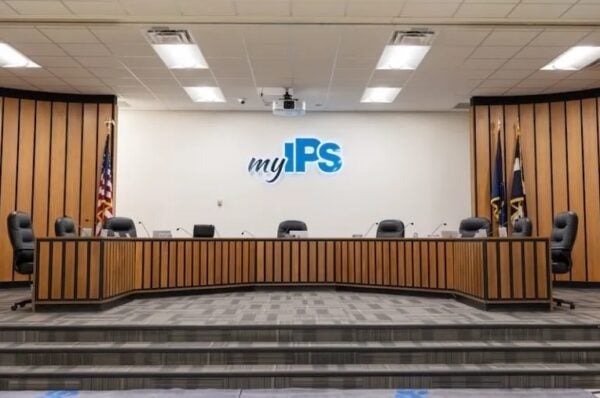
The ILEA’s recommendations come amid struggles by both IPS and charters to address structural challenges.
The district has been losing students for years. IPS also has significant long-term financial problems as well as underutilized buildings. Charters, meanwhile, have struggled to acquire buildings and provide transportation services as their enrollments have grown, and roughly 1 in 3 Indianapolis charters closed from 2001 to 2023.
The ILEA’s recommendation to reduce the power of the IPS board matches the desire among many charter supporters for less power to rest with the elected school board.
But supporters of traditional IPS schools have not only opposed efforts to diminish the elected school board; they’ve also pushed for the board to exercise power over charters as well as district-run schools. They’ve criticized the growth of charters, calling for more accountability in that sector, and said that the elected school board should serve as the only charter authorizer.
In a statement before the vote, Superintendent Aleesia Johnson — who is an ILEA member and voted yes — said she championed many of the recommendations.
But not all the details of what the ILEA has recommended are clear yet, she noted. She urged the public to keep pressure on state lawmakers to ensure any new authority is transparent and values community input.
“In my most pessimistic moments, I can assume that those details will be filled in ways that intentionally bring harm to families, staff and students in IPS,” Johnson said. “However, because the details aren’t filled in, I actually do — naively or not — hold some level of optimism.”
The Mind Trust, a nonprofit that’s supported many Indianapolis charter schools, celebrated the “bold, structural changes” in the ILEA recommendations.
“Separating the education of students from the management of real estate and transportation is a nationally unique innovation that The Mind Trust has long supported,” Brandon Brown, the group’s CEO, said in a statement Wednesday. “This approach will expand access to transportation for thousands of students, ensure that facility access is tied to school quality, and create a path to full funding parity by ensuring capital funds are available to charter schools that opt in.”
Some speakers say elected board should maintain power
Several people expressed hostility to the ILEA’s plans on Wednesday, and some didn’t wait until the task force’s meeting began to do so.
Roughly 60 people supportive of traditional IPS schools gathered outside of the City-County Building ahead of the vote to urge the ILEA to consider a Central Indiana Democratic Socialists of America proposal that would expand the power of the elected IPS board. They also attacked how charter schools operate and the private interests that support them.
“We’re told, ‘This is for the kids,’ but if that was true, the money and political will behind privatization could have fully supported public schools serving mostly Black and brown students decades ago,” said Brianna Dines of the Central Indiana DSA.
In a public comment period at the meeting before the ILEA voted, many speakers chastised the task force for diluting the school board’s power. Pastor Clyde Posley Jr. said the ILEA’s process amounted to political overreach.
“To remove the voices of elected board officials and replace them with other overt or private agendas — which do not benefit our children in the short or long term, but only invite scavengers and investors to pillage off the plight of a broken school system — is not only wrong, it is vicious toward the well being of our children and their future,” Posley Jr. said.
Meanwhile, organizations that back charter schools celebrated the recommendations minutes after the vote.
“While the ILEA’s final plan differs somewhat from advocates’ ideas, parents celebrated the focus on stronger school accountability, a growing transportation system and a more unified and coherent approach to school facilities,” Stand for Children Indiana, a parent advocacy group that has pushed to expand certain charter models, said in a statement.
Universal ratings could guide school closure decisions
Under the recommendations, the new corporation would create an advisory board that would collaborate with charter authorizers and IPS to develop unified accountability standards. Those would be based on measures such as test scores and student discipline practices.
Both charter and district schools would need to commit to use the standards to make decisions about closing chronically low-performing schools — provided that struggling schools are given time to make improvements.
The task force also recommended that the legislature fund the full cost of educating students with disabilities. The ILEA noted that IPS spends millions more to educate students with disabilities than what the state provides.
It’s unclear whether the new authority would assume control of both IPS school buildings and those owned by charters.
The task force also noted that details on how exactly to collect and distribute property taxes would need to be ironed out with fiscal experts at the statehouse. Other topics, the group noted, also require further legal review.
Ahlgren highlighted the lack of details in the recommendations as a key reason why she could not support them.
“I find these recommendations falling into this bizarre zone of simultaneously feeling both too much and not enough, bold in some areas, but overly timid in others, with vague promises that the ecosystem will sort itself out,” she said. “I’ve done enough policy work … to understand the dangers of leaving important elements up to chance — or worse, a legislature which historically has not aligned with the values of this community.”
Before his vote of support, ILEA member Andrew Neal acknowledged to the crowd that “this is an imperfect plan.” But he said he was proud the group recommended mandating transportation, and called on the legislature to adequately fund students with disabilities.
Lawmakers will return to the statehouse on Jan. 5 to resume the legislative session.
This story has been updated to include additional details about the Indianapolis Local Education Alliance’s recommendations and comments from officials and members of the public.
Amelia Pak-Harvey covers Indianapolis and Lawrence Township schools for Chalkbeat Indiana. Contact Amelia at apak-harvey@chalkbeat.org.
Chalkbeat is a nonprofit news site covering educational change in public schools.