
As 2026 approaches, the Indianapolis area and the state of Indiana are poised to remain central to a broader surge in data center development, even as local communities and policymakers navigate concerns about utilities, land use and quality of life.
Data centers, facilities that house large banks of servers powering cloud computing, artificial intelligence and digital services, are now a fixture of the regional economy. A mix of established operators, expansions and new proposals mark a transition from isolated facilities to dense computing hubs.
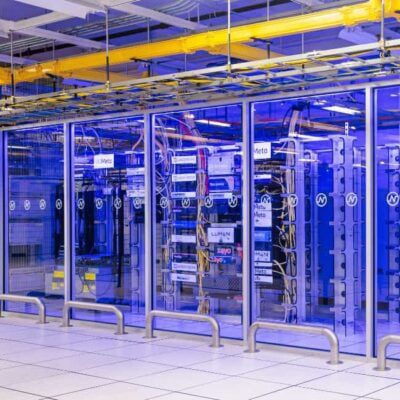
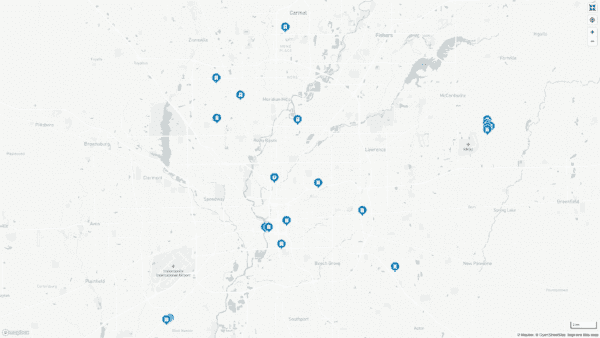
Major facilities and planned developments
Within the Indianapolis metropolitan area, a range of companies already operate or are planning data centers:
- Metrobloks at 2505 N Sherman Drive.
- Databank’s downtown facility on W Henry Street.
- Netrality’s Indy Telcom Center at 733 W Henry St.
- US Signal on Morenci Trail.
- Lifeline Data Centers on N Shadeland Ave.
- American Tower on Walnut Drive. Plans for a 4-megawatt edge facility adjacent to its cell tower site in north Indianapolis.
- Expedient, OTAVA, Cogent, Windstream, LifeGrid, Global Access Point and multiple Lumen facilities.
- Sabey Data Centers is planning a major campus in Decatur Township with groundbreaking expected in 2026 and phased openings extending into 2028–2030.
Several larger hyperscale announcements and ongoing projects will also shape the state’s data center landscape in 2026:
- Amazon Web Services (AWS) has committed to expanding data center campuses in northern Indiana, with historic investment totals and gigawatt-scale capacity expansions planned.
- While Google’s Project Flo was withdrawn in Indianapolis after local opposition, the broader hyperscale trend continues across the region.
Industry experts say more data centers are likely to be built in 2026 because people and companies are using more online services and technology. Some of these new data centers, like the one American Tower is planning, are designed to be closer to users so information can move faster and more efficiently.
Community reaction and policy debates
Across the Indianapolis area, reactions to proposed and existing data centers have been strong and, at times, sharply divided. Many residents have expressed concerns about utility costs, water use, quality of life, transparency, and long-term effects on their neighborhoods.
Franklin Township, where a proposed Google data center was under consideration, saw some of the most vocal opposition. Hundreds of residents packed council chambers for public hearings, chanting and holding signs in protest.
When Google withdrew its rezoning petition in September, hundreds of people cheered inside the City-County Building. Organizer Meredith Sharp of Protect Franklin Township described the moment as “overwhelming joy. This has been a six-month fight. 40 hours a week, full-time, unpaid job.”
Video footage shared on social media captured residents celebrating, with one exclaiming, “We beat Google. For a long time, we felt like four people with cardboard swords fighting a monster, but tonight shows that people power still rings.”
Resident petitions articulated concerns about flooding, water strain, energy usage and a lack of transparency due to nondisclosure agreements.
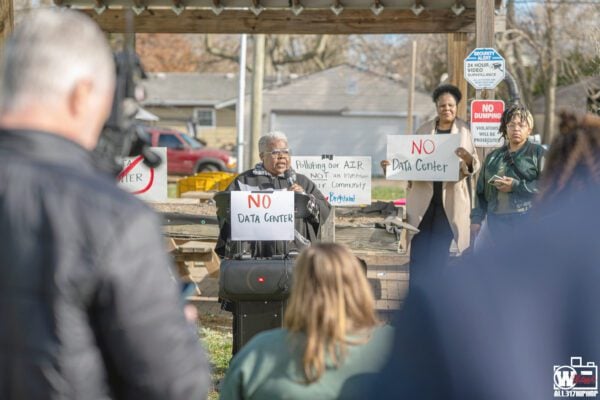
One petition letter stated, “Franklin Township residents overwhelmingly oppose this project … We want growth that strengthens our community — not one that sacrifices our water, land, and future.”
Local Reddit threads echoed these worries, with users warning that data centers could drive up utility bills and consume vast amounts of water and energy, potentially creating “lost opportunity zones” that limit other forms of development.
Decatur Township has also seen significant community engagement.
At a November 2025 open-house meeting about the proposed Sabey data center, hundreds of residents gathered in a school gym, many holding signs opposing the project.
Resident Ethan Hunt summed up the prevailing sentiment, saying, “I hope that what we did here tonight matters,” reflecting uncertainty about whether community voices would influence the outcome. At the meeting, residents raised concerns about rising utility costs, environmental impacts, and potential declines in property values.
Similar discussions in local Facebook groups encouraged neighbors to attend meetings, warning that data centers could substantially increase electricity and water consumption.
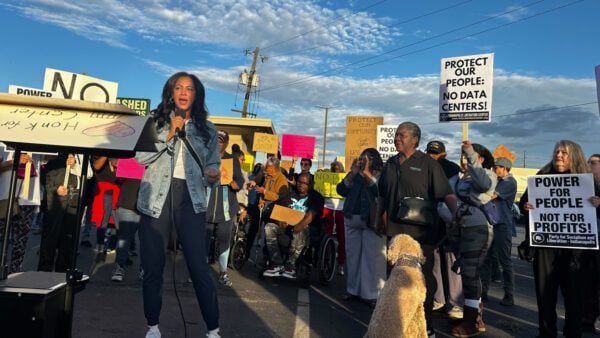
Other neighborhoods, such as Martindale-Brightwood, have seen direct activism. Community groups organized protests that temporarily stopped traffic to voice opposition to a proposed Metrobloks data center near the former Sherman Drive-In site.
Leaders in the neighborhood, including Cierra Johnson, vice president of One Voice, argued that the proposal could “derail years of community-led revitalization” and undermine efforts to improve residents’ quality of life.
Social media platforms and neighborhood forums further amplified these voices, with posts warning that utility rates could rise significantly and urging residents to hold city officials accountable. One commenter wrote on Reddit, “Contact your city leaders to voice your concerns … we’re going to be paying hundreds per year extra to pay for the electricity of trillion-dollar companies.”
Energy, infrastructure and expert outlooks
Looking into 2026, data centers are expected to remain a major driver of electricity demand, infrastructure planning and regulatory discussions.
- Experts and industry reports indicate that power constraints, grid capacity and energy costs will be central challenges as facilities scale up to support AI workloads.
- At the Statehouse, 2026 legislative sessions are anticipated to include debate about utility regulation, infrastructure funding and how to balance data center growth with household energy needs.
- Utilities and economic development officials acknowledge the importance of data center investment for jobs and tax bases, but critics warn that if grid upgrades lag demand, customers could face higher costs.
A recent construction forecast also suggests that data centers will remain a key segment of overall megaproject activity in 2026, even amid broader economic uncertainties.

What 2026 could bring
As the calendar turns, Indiana is likely to see:
- Continued investment from hyperscale and colocation operators.
- Ongoing community debates over site selection, environmental impacts, and local benefits.
- Policy discussions at the city and state level about energy use, water resources and incentives.
- Technological shifts toward AI-optimized facilities and edge computing.
For residents and leaders alike, 2026 will test how rapidly digital infrastructure growth can be integrated with local priorities and resource constraints.
Contact Health & Environmental Reporter Hanna Rauworth at 317-762-7854 or follow her on Instagram at @hanna.rauworth. Additional reporting by Staff Writer Malik Simon.

Hanna Rauworth is the Health & Environmental Reporter for the Indianapolis Recorder Newspaper, where she covers topics at the intersection of public health, environmental issues, and community impact. With a commitment to storytelling that informs and empowers, she strives to highlight the challenges and solutions shaping the well-being of Indianapolis residents.