The second Sunday in May is recognized throughout the U.S. as Mother’s Day. In 1910, West Virginia became the first state to formally recognize the holiday. Four years later, on May 8, 1914, Congress passed a law designating the second Sunday in May as Mother’s Day and requested a presidential proclamation. The next day, Woodrow Wilson issued that proclamation, establishing the first national observance. Originally, the day honored mothers whose sons had died in war; over time, it has grown into a celebration of all mothers.
This month, as we honor mothers, I borrow from the wisdom of the Sankofa Bird of Ghana, West Africa. Sankofa teaches: “It is not wrong to go back for that which you have forgotten.” It moves forward while looking backward — reminding us to reclaim what was lost. The bird carries an egg in its beak, symbolizing our youth and our future, urging us not to dwell in the past, but to recover truth so the next generation can inherit wisdom and possibility.
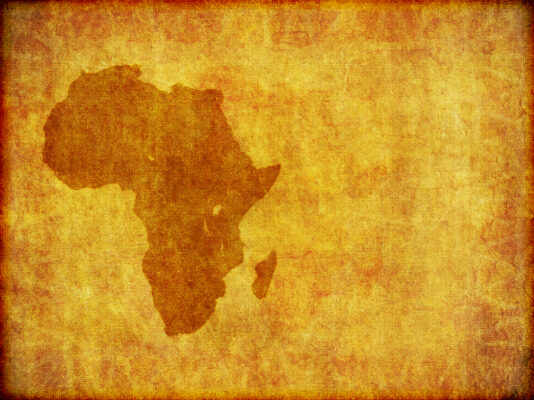
So, as a contemporary griot — a keeper of history and truth — I will take you back. Far back — to tell you truth — back between 100,000 and 200,000 years ago, to East Africa. There, according to the field of human genetics, we encounter the matrilineal most recent common ancestor of all living humans.
“Some call her Mother Eve. Science calls her Mitochondrial Eve. Today, I refer to her as the mother of mothers…”
Some call her Mother Eve. Science calls her Mitochondrial Eve. Today, I refer to her as the mother of mothers (genetically speaking).
Mitochondrial Eve is the most recent woman from whom all living humans descend through an unbroken maternal line — mother to child, generation after generation. This lineage is traced through mitochondrial DNA (mtDNA), which is passed almost exclusively from mothers to their children. By analyzing mutations in mtDNA across populations worldwide, scientists have traced every living person’s maternal ancestry back to this one woman.
It is important to understand what this does — and does not — mean. She was not the only woman alive in her time, nor was she the first woman. Rather, she is the one whose line of daughters continued uninterrupted to the present, while other maternal lines eventually ended. Her existence does not belong to myth; it is supported by decades of genetic research. And it affirms a powerful conclusion: all modern humans share a common ancestry rooted in Africa.
Why does this matter?
First, it grounds humanity in a shared origin. At a time when division — racial, cultural and political — often defines our public life, the science of human genetics reminds us that we are, quite literally, family.
The differences we see today — skin color, hair texture, facial features — are adaptations to the environment, not markers of separate beginnings. Beneath those variations lies a shared biological inheritance. One thing I have frequently said is that it is not our differences that make a difference; rather, it is the judgments we place on those differences!
Second, it restores Africa to its rightful place in the human story. For too long, dominant narratives have minimized or distorted the centrality of Africa in world history. The concept of Mitochondrial Eve, supported by global scientific consensus, affirms that the human journey begins on the African continent. This is not ideology; it is evidence. It invites a re-centering of historical understanding — one that honors truth over tradition.
Third, it challenges the logic behind racial hierarchy. Systems that rank human value based on race depend on the assumption of fundamental differences. But if all humans trace their maternal line back to a single African woman, the idea of inherent superiority collapses under the weight of scientific fact. There is no genetic basis for racial ranking — only for human connection.
“… the science of our shared history tells a different story; diversity is not a threat to unity; it is evidence of it.”
This is where the conversation intersects with contemporary debates, including those around diversity, equity, and inclusion (DEI). Anti-DEI arguments often frame difference as division or treat equity as unnecessary. But the science of our shared ancestry tells a different story: diversity is not a threat to unity; it is evidence of it. Equity is not artificial; it is what truth requires after generations of imbalance.
To know about Mitochondrial Eve is to see ourselves differently. It demands humility from those who have mistaken skin color for superiority, and it restores origin, dignity, and place to those whose story has been diminished.
In the spirit of Sankofa, we do not look back simply to remember. We look back to reclaim truth — so that our children inherit the truth of shared history, not myths of division. And perhaps that is one of the greatest ways we can honor mothers: by telling the full story of where we come from, and by ensuring that every generation knows that if we all come from her, then every system built on the lie of separation must be questioned, and every belief that depends on human hierarchy must answer to TRUTH.
Happy Mother’s Day!
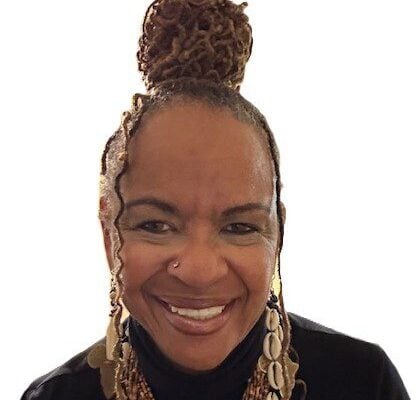
Maxine Bryant, Ph.D., is the founder of GriotSpeaks, an author, and an African American culture keeper. Learn more at drmaxinebryant.com.

Maxine Bryant, Ph.D. is the founder of GriotSpeaks, author and African-American culture keeper. Dr. Bryant replaces mythology with truth about Africa and the African Diaspora experience. Learn more about her at www.drmaxinebryant.com and email her at mlb@drmaxinebryant.com.