Following the passage of Public Question 1 on Nov. 3, Indiana voters approved a constitutional amendment that fundamentally alters the state’s criminal justice landscape by expanding judicial authority to deny bail.
While proponents view the measure as a critical safeguard for community safety, residents, business owners and advocates are now turning their attention to implementation, expressing a mix of concern about judicial bias and frustration with voter education.
The constitutional amendment allows judges to withhold bail for individuals accused of violent or dangerous offenses if the state demonstrates, by clear and convincing evidence, that the defendant poses a substantial risk to public safety or to specific individuals. Previously, the Indiana Constitution restricted non-bailable offenses primarily to capital cases such as murder and treason.
For Camille Walker, an Indianapolis business owner of Lamiro Wellness LLC, the ballot measure highlights a complex tension between protecting vulnerable crime victims and safeguarding civil liberties.
“When I was looking into the public questions, I was really thinking about how could this be used to benefit our community or weaponized against our community,” Walker told the Indianapolis Recorder.
Walker noted that her perspective is shaped by her professional background working with youth as well as her husband’s experience working alongside Marion County prosecutors and the Department of Child Services. She pointed to domestic violence cases as a scenario where restricting bail can provide necessary protection for victims and children.
“A lot of times when we’re dealing with domestic violence situations and children that are witnessing it, these people who are hurting our children are being put back into society on bail, which then allows for them to reoffend and go after the women and children,” Walker said. “In cases like that, where someone gets released on bail and then commits an offense again immediately, I can see how it will benefit and why people voted yes.”
Despite understanding the safety arguments, Walker chose to vote against the measure at the polls.
“I voted no because I do believe that they shouldn’t have all of that power to decide that,” Walker said, pointing to the risk of judicial overreach and bias. “Being a community activist and educator, I can see how it could be weaponized against vulnerable populations because of biased judges.”
Across Marion County and the broader state, post-election discussions have frequently centered on what Walker calls the “weaponized wording” of the ballot prompt. Some voters reported feeling swindled or confused by the language, expressing concern that the amendment opens the door to arbitrary bail denials for minor, nonviolent offenses.
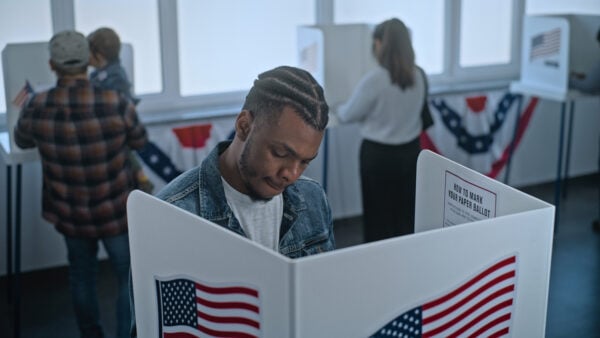
Walker emphasized that avoiding such outcomes requires active civic participation before stepping into the voting booth.
“If you are going to enact your civic duties by voting for the policies that you believe in, sometimes that takes additional research,” Walker said. “If you voted yes or no on that first question, well, then how did you vote for the judges? Because if we elect a bunch of biased judges, now we’re going to have a messy situation. It’s part of our civic duty to be educated and informed so we can make those decisions.”
With the constitutional change officially enacted, community advocates argue that the focus must now shift to holding judicial officers and prosecutors accountable while bolstering local preventative services.
Walker stressed that addressing public safety cannot rely solely on incarceration or judicial discretion, calling instead for holistic community infrastructure, including mental health diversion and wrap-around support services.
“We have to shift focus onto prosecutors and judges to figure out their alignment,” Walker said. “At the same time, we can’t focus entirely on the judges. What are we doing to make sure people are not even ending up in those situations where they have to stand before a judge? Whether it’s mental health crises or domestic conflicts, government agencies and community partners have to step in with preventative care so our jails don’t just become more populated.”
As local courts begin operating under the expanded constitutional framework, community leaders urge residents to remain engaged in judicial retention elections and local policy discussions to ensure the new standards are applied equitably across all neighborhoods.
Contact Staff Writer Noral Parham at 317-762-7846 or noralp@indyrecorder.com. Follow him on X @3Noral. For more political coverage, visit indianapolisrecorder.com.

Noral Parham is the multimedia and senior sports reporter for the Indianapolis Recorder, one of the oldest Black publications in the country. Before joining the Recorder, Parham served as the community advocate at the MLK Center in Indianapolis and as a senior copywriter for an e-commerce and marketing firm in Denver. He is also a business owner.