
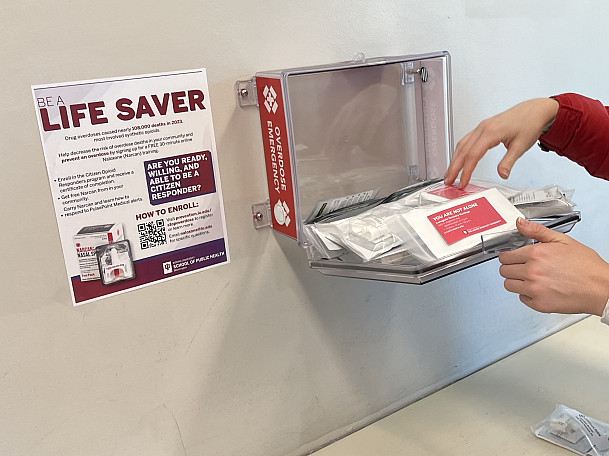
Indiana University and the Marion County Public Health Department are expanding access to free naloxone training in an effort to strengthen overdose prevention efforts across Central Indiana.
The Citizen Opioid Responders (COR) program, developed through Indiana University’s Prevention Insights, is a free online training course designed to teach community members how to recognize an opioid overdose and administer naloxone, commonly known by the brand name Narcan. Marion County residents and workers who complete the training can receive naloxone at no cost from the Marion County Public Health Department by presenting their certificate of completion.
Cris Henderson, director of the Citizen Opioid Responders Online Naloxone Training Program at IU, said the expansion was driven by growing community interest and the need for greater access to overdose prevention resources.
“It’s really been a goal of ours to be able to expand the program,” Henderson said. “What I was able to find out in that year one is that there was a great deal of interest in the program, not only on campus, but off campus.”
With funding support from the Indiana University Foundation, the program initially expanded to five IU campuses before later growing to all nine IU campuses and surrounding communities.
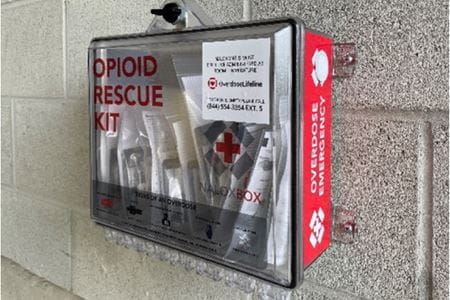
Henderson said the second year of funding also allowed IU to install two NaloxBox units on each campus to increase access to naloxone in high-traffic areas.
“So, we’re increasing education and we’re also increasing access,” Henderson said.
The COR training was originally developed in 2020 and later tested in a randomized control trial in Indiana in 2021. Henderson said the goal was to create a program accessible to people without medical training or emergency response backgrounds.
“We want to normalize this just like we’ve normalized CPR and first aid training,” Henderson said. “The key to this is really thinking about increasing awareness and engagement in normalizing, destigmatizing access to naloxone and training.”
The self-paced online training takes about 20-30 minutes to complete and is available 24 hours a day on any device. Participants complete eight interactive modules featuring knowledge checks and adult learning techniques designed to reinforce information retention and build confidence.
“We want people to feel more ready, willing and able to intervene,” Henderson said. “And we have data that shows that people that complete this training do report that they feel more ready, willing, and able to intervene and more likely to carry naloxone as a result of completing the training.”
According to Henderson, recent research highlights the need for broader overdose prevention education among young adults. They referenced a 2024 study that surveyed more than 7,000 college students and found that one in three knew someone who had overdosed, while only one in seven knew how to administer naloxone.
“That study really highlights a need for us to be thinking about how we engage more people in overdose prevention, particularly college students,” Henderson said.
While opioid overdoses are often associated with substance use disorder, Henderson emphasized that accidental overdoses can affect anyone.
“Accidental overdoses can happen anywhere,” Henderson said. “They can happen in our homes because a senior takes too much medication. Children get into medicine cabinets. College students take something at a party that they think is safe, but it’s laced with fentanyl.”
The Marion County Public Health Department is partnering with IU to help distribute naloxone and encourage residents to complete the training.
“Naloxone is not just for first responders,” Dr. Virginia A. Caine, director and chief medical officer of the Marion County Public Health Department, said in a statement. “Anyone who is at risk or who knows someone at risk for an opioid overdose can be trained on how to give naloxone, similar to learning CPR or first aid.”
The COR program is currently active in 11 Indiana counties and has prepared more than 1,500 Hoosiers to respond to overdose emergencies over the past 20 months.
Henderson said one of the program’s biggest advantages is its accessibility and convenience for participants who may feel uncertain or uncomfortable discussing overdose prevention.
“We’ve done a lot of work here to make it as friendly and easy as it can be to engage more learners,” Henderson said. “We hope more people will take the training and share that with other folks and their friends and family and community members as possible.”
Community members can learn more or enroll in the free training at go.iu.edu/stopoverdose.
This reporting is made possible by a grant from the Indianapolis African-American Quality of Life Initiative, empowering our community with essential health insights. https://iaaqli.org/
Contact Health & Environmental Reporter Hanna Rauworth at 317-762-7854 or follow her on Instagram at @hanna.rauworth.

Hanna Rauworth is the Health & Environmental Reporter for the Indianapolis Recorder Newspaper, where she covers topics at the intersection of public health, environmental issues, and community impact. With a commitment to storytelling that informs and empowers, she strives to highlight the challenges and solutions shaping the well-being of Indianapolis residents.