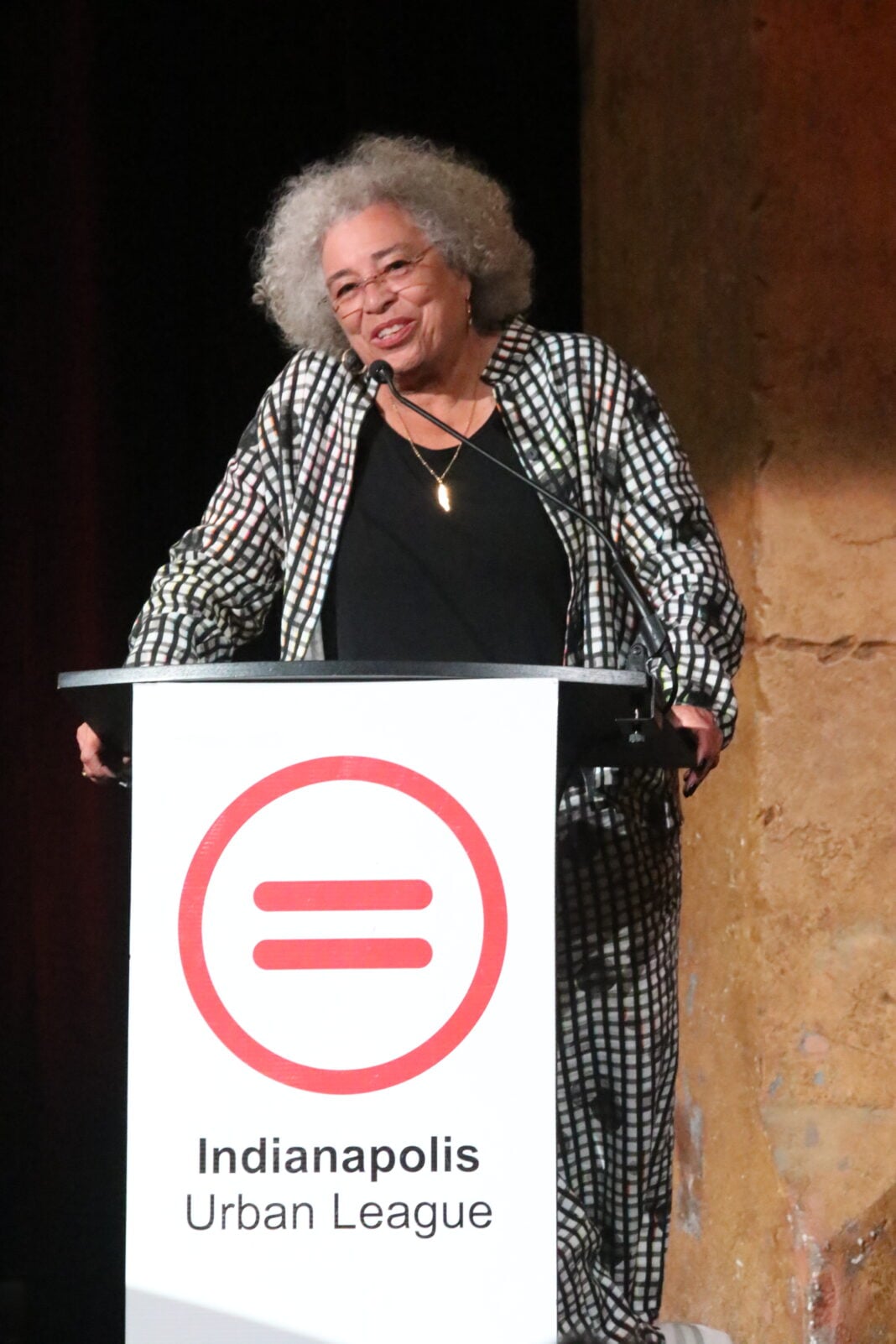
Society often asks whether people coming home from prison are ready to return. On Oct. 2 in Indianapolis, Angela Davis was asked the reverse: Is society ready to receive them?
“That is the question,” Davis said during a conversation with “Community Connections” broadcaster Tina Cosby at the Madam Walker Legacy Center in Indianapolis.
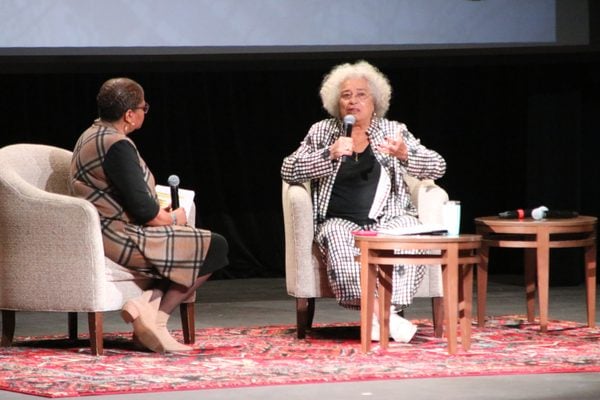
The exchange came near the end of a morning organized by the Indianapolis Urban League (IUL) around “Beyond the Record: The Intersection of Resilience, Stability, and Economic Justice.”
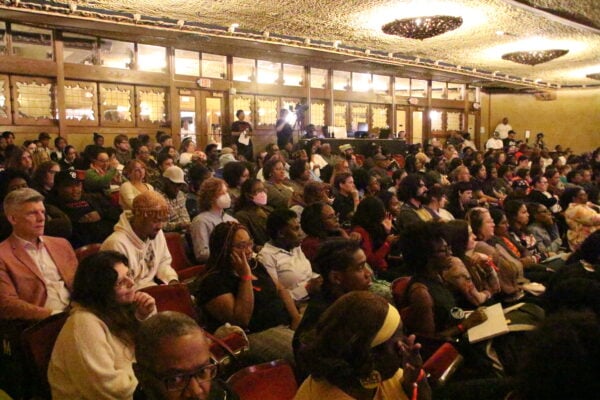
Before Davis took the stage, IUL President and CEO Anthony “Tony” Mason told the audience, “Opportunity over exile.” He then asked how many people in the room had been affected by incarceration. Nearly every hand rose, including that of Mayor Joe Hogsett, who sat in the front row.
The morning’s panelists called on the audience to widen the view and see the whole person, placing employment, housing, health, family and community support alongside the criminal record.
At 11 a.m., Davis received a standing ovation that lasted nearly a minute.
A longtime abolitionist, scholar and author, Davis began by reminding the audience that public conversations about incarceration were not always possible.
“These conversations today that you’re witnessing should not be taken for granted,” Davis said. Decades of activism, she said, had made it possible to discuss incarceration publicly, including the experiences of families whose loved ones are imprisoned.
Davis said she has been part of the anti-prison movement for most of her life and that, before she was born, her mother worked to free the Scottsboro Boys, nine Black male teenagers accused or raping two white women in 1931.
She questioned whether prisons can accomplish what society often says they are designed to do.
“The prison was never designed to reform,” Davis said. “It was designed to take rights away.”
“How is it at all possible to imagine people becoming better equipped to engage in the practice of freedom under conditions of absolute unfreedom?” she asked.
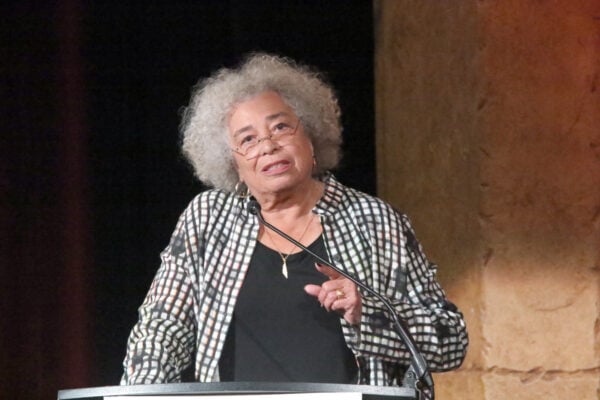
Cosby later asked Davis how often society considers what incarceration itself changes in people, rather than simply asking how people should change while incarcerated.
Davis said incarceration is not designed to promote positive change.
The transformations often seen among incarcerated people, she said, “are in spite of the predicament, in spite of the institution.”
People take it upon themselves to create meaningful lives under those conditions, Davis said.
“Oftentimes, the only way you can do that is through education, through learning,” She said. “That is the only way to get a glimpse of and experience the possibilities of freedom.”
Asked what assumptions keep people from being welcomed back into society, Davis said attitudes have changed. She then told the audience about her cousin.
He spent 38 years behind bars, including time at San Quentin, and was released a couple of years ago, Davis said. She and her sister took him to Men’s Wearhouse because he did not have clothes.
In a mall parking lot, a woman recognized Davis and asked for a photograph. When Davis told her that her cousin had just been released from prison, the woman looked at him and said, “Oh, welcome home, my brother.”
The moment stayed with Davis.
She said it represented the kind of change activists have long worked toward, even as she acknowledged that things have not changed structurally.
“We need to take the small victories that we win and claim them,” Davis said. “Because we need to know that the work we are doing is making a difference in the world.”
Davis described abolition as more than eliminating prisons, police or detention facilities.
“It’s about imagining and building new institutions that will better help us create health and safety and security in our society,” Davis said. “The police won’t do that. The prisons won’t do that. We all have to ask ourselves the question, ‘What will?’”
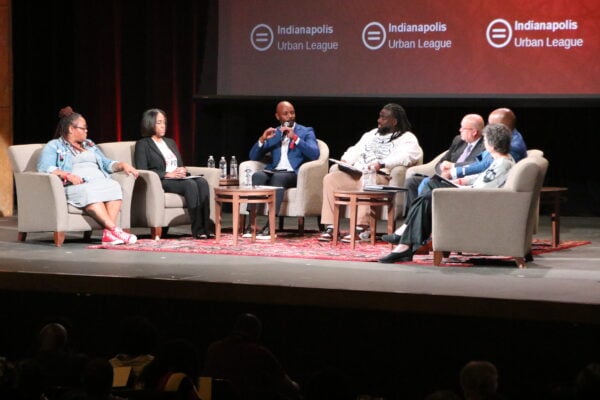
That question echoed the Indianapolis Urban League’s morning discussion, where panelists discussed reentry through employment, community corrections, family services and community development. They were Lena Hackett of Community Solutions Inc. and the Marion County Reentry Coalition; Bianca Harris of The Phoenix Nicholas Center LLC; Scott Hohl of Marion County Community Corrections; Glenn Johnson of Keys2Work; Raymond Powell of the Mumineen Community Development Corporation; and Kimberly H. Simmons of the Indianapolis Urban League.
Davis returned to the idea of what happens after incarceration.
She called it “kind of bizarre” that recidivism was once a term “used all the time” because, she said, “the institution of the prison is designed to produce recidivism, or what they call recidivism … It’s designed to have people continually return.”
In her opening remarks, she described the same pattern as “a strange contradiction,” saying prison conditions “are pretty much designed to produce the very criminality that imprisonment is supposed to reform.”
What we have to ask, she said, is how to create “new guarantees, new institutions.”
But she also pointed to people who have experienced incarceration and educated themselves as people whose knowledge can help shape a different future.
“They not only lock up bodies, but they lock up the minds that we need in order to guarantee a better future for coming generations here in this so-called free world,” Davis said.
Cosby’s question, and Davis’s answer, left the audience with another: What happens when the person returning home is no longer viewed only through the record they carry?
And what happens when the community is prepared to receive the person beyond it?
Contact Health and Environmental Reporter LaTasha Boyd Jones at tashaj@indyrecorder.com or follow her on social media @iamtashajones.

Tasha Jones is a poet, writer, researcher, and educator whose work explores language as a tool for liberation and resistance. She hosts In the Beginning: The Spoken Word Podcast, the #1 spoken word podcast on Apple and Spotify. Tasha is also the Poems & Parables Literary Journal editor and is currently writing Pyramids. Plantations. Projects. Penitentiaries. You can follow her on social media: @iamtashajones, @itbspokenwordpod, and @poemsandparables.