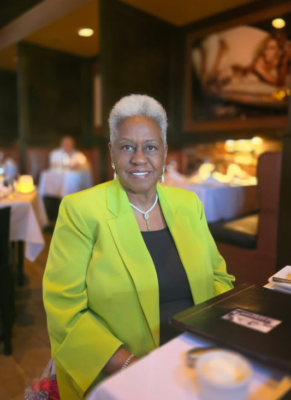
When Mary Ann Andrews collapsed during a workout with her YMCA exercise group on the Monon Trail, her survival depended on how quickly the people around her recognized the emergency and responded.
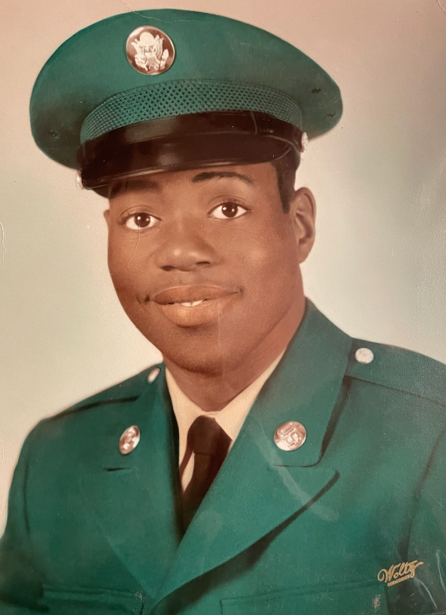
A year earlier, her family had faced a different kind of cardiac emergency. Her husband, Rome Andrews, had a heart attack that went unrecognized until later, according to relatives.
For the Andrews’ granddaughter, Amber Candis, the two experiences revealed a distinction she had not fully understood: knowing that cardiac emergencies happen is not the same as knowing what to do when one unfurls.
“I think there was a lot of naivety,” Candis said, reflecting on what she knew about heart emergencies before her grandfather became ill.
Rome Andrews’ symptoms did not resemble what the family understood a heart attack to look like. His daughter, Pamela White, said he felt unwell for weeks before seeking emergency care.
“They can look very different, very different,” White said.
Another daughter, Safiya Bell, recalled urging him to seek medical attention. According to Bell, his symptoms were not initially recognized as a heart attack by emergency doctors, and the family kept pressing for answers.
“I cannot stress it enough. Advocacy. We have to speak up,” she said.
The family’s account alone does not establish why the diagnosis was delayed, but it illustrates how uncertainty can compound the stress of a medical emergency. Rome Andrews died of a silent heart attack.
Not every heart attack announces itself. According to the American Heart Association (AHA), some cause no obvious symptoms, especially in people with diabetes, older adults and women, and are discovered only through tests after the event.
Mary Ann Andrews’ emergency unfolded differently.
She was exercising with a group when she collapsed. The YMCA staff began CPR and who used the AED — bystanders called 911. Bell arrived at the YMCA as medical personnel worked to revive her mother.
“They shocked her a couple times to bring her back,” Bell said. “And I just kept saying, ‘Mom, I’m here. I’m here.’”
Mary Ann Andrews survived.
The two events were different medical emergencies. A heart attack is a circulation problem: a blocked artery cuts off blood to part of the heart, which usually keeps beating. Sudden cardiac arrest is an electrical problem: the heart suddenly stops, according to the AHA. A heart attack calls for 911 and medical care. Cardiac arrest calls for someone nearby to act within minutes.
About 1 in 10 people who experience cardiac arrest outside a hospital survive, according to the AHA. CPR performed immediately can double or triple a person’s chance of survival.
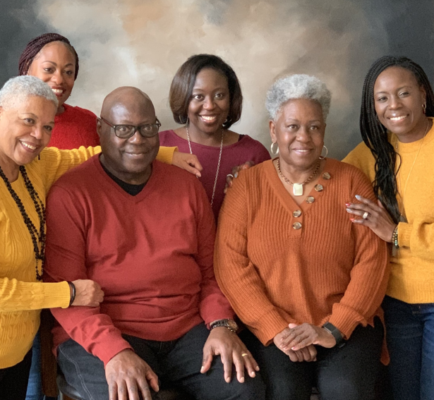
The two experiences changed how the family approached its own health. White began paying closer attention to her heart health, pursued screening and sought CPR and automated external defibrillator (AED) training through her workplace.
Scholar Idjagboro, development director of impact campaigns at the AHA, said the family’s experience also reflects broader concerns about cardiovascular health disparities affecting Black communities. Black Americans have the highest incidence of cardiac arrest outside the hospital and are less likely to survive or to receive bystander CPR, according to the AHA.
Idjagboro said people should understand their family histories, know their health numbers and feel empowered to ask questions about their care.
But preparation must extend beyond the doctor’s office.
When someone collapses from sudden cardiac arrest, bystanders should call 911, begin CPR when the person is unresponsive and not breathing normally, and use an AED as soon as one is available, following its prompts. The AHA promotes hands-only CPR for adults: pushing hard and fast in the center of the chest until help arrives.
Idjagboro said the association is working to make that knowledge more accessible through community education and training.
“Imagine if we actually had a drill for a cardiac emergency response plan,” Idjagboro said.
Fire drills and tornado drills give people an opportunity to practice what to do before a crisis occurs. Idjagboro suggested that cardiac emergency responses deserve similar attention, particularly in places where large numbers of people gather.
Such preparation involves more than having an AED somewhere in a building. People need to know where the device is, how to access it, whom to alert and how to coordinate a response while emergency services are on the way.
Survival may depend on circumstances no family can control. However, preparation and practice can begin long before the emergency.
Candis hopes her family’s experience will help bring that preparation into more Indianapolis-area communities.
The family will host a free hands-only CPR awareness event from 3-4 p.m. Oct. 31 at the clubhouse in the Villages of Oak Manor, 17130 Drummond Place, Westfield. The event is free and open to the public. Candis said the event will introduce participants to lifesaving techniques and connect them with additional training resources. Registration is required at https://www.eventbrite.com/e/hands-only-cpr-workshop-tickets-2002525779513?aff=oddtdtcreator.
Candis wants people to use what they learn, share it with their families and take practical steps to protect their health and the people around them.
“You can have the knowledge but not use it,” she said.
Anyone interested in learning more or connecting with the American Heart Association can contact Scholar Idjagboro at scholar.idjagboro@heart.org.
Contact Health and Environmental Reporter LaTasha Boyd Jones at tashaj@indyrecorder.com or follow her on social media @iamtashajones.

Tasha Jones is a poet, writer, researcher, and educator whose work explores language as a tool for liberation and resistance. She hosts In the Beginning: The Spoken Word Podcast, the #1 spoken word podcast on Apple and Spotify. Tasha is also the Poems & Parables Literary Journal editor and is currently writing Pyramids. Plantations. Projects. Penitentiaries. You can follow her on social media: @iamtashajones, @itbspokenwordpod, and @poemsandparables.