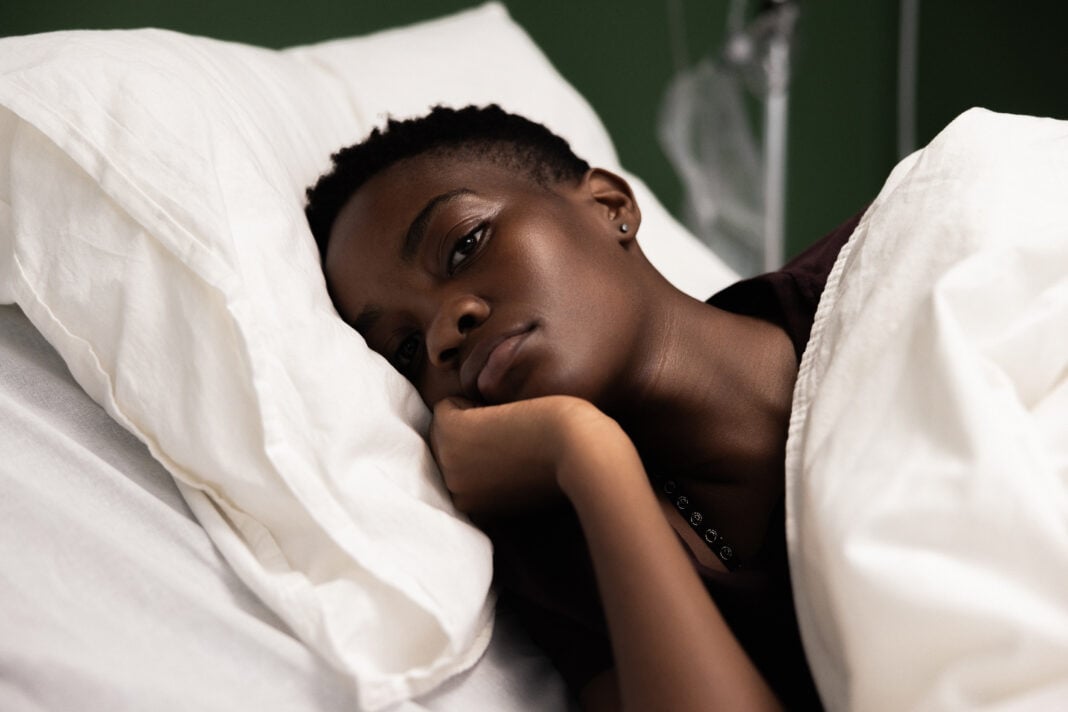
“Health and healing: Five concerns, one county” is a series examining these priorities and their implications for Marion County residents, particularly Black and brown communities. This first installment explores how cultural expectations surrounding Black women’s strength can become barriers to mental health care.
Editor’s note: This article includes the reporter’s personal experience with depression.
Black women are often considered too strong, too independent, too angry to be depressed. Black women may even feel they are too busy to be afforded the luxury of depression; there is always something to do, someone to care for, something to survive. But what happens when the woman everyone expects to endure can no longer get out of bed?
This idea of being “too” much of everything is rooted, in part, in what researcher Cheryl Woods-Giscombé calls the “Superwoman Schema” (SWS). The framework describes the perceived obligations of African American women to project strength, resist vulnerability, suppress emotions and succeed despite limited resources while prioritizing caregiving over self-care.
Woods-Giscombé’s work situates SWS within the historical, cultural and sociohistorical factors that shape African American women’s experiences such as racism, economic disparities and gendered expectations that can compound stress, making it difficult for Black women to acknowledge distress or seek support. The pressure to appear resilient can also complicate how symptoms are communicated and understood in health care settings.
In Marion County, mental health and well-being ranked first among residents’ five leading health concerns in the 2025 Community Health Assessment, released by the Marion County Public Health Department in March 2026. Additional concerns included access to health care, housing, trauma and injury prevention, and infant mortality.
When strength becomes a burden
The myths that Black women are too strong, too independent or too angry to be depressed are not simply stereotypes. They can shape how women interpret their own distress and how others interpret them.
The expectation of strength can make vulnerability feel like failure. The expectation of independence can make asking for help feel unnecessary or even shameful. And when anger becomes the lens through which a Black woman’s behavior is viewed, emotional distress may be misunderstood.
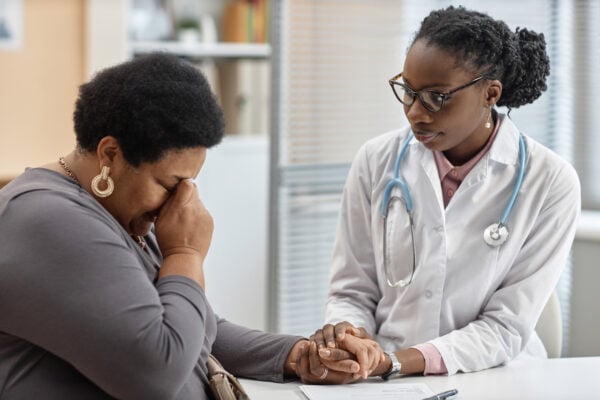
A 2022 study published in “Nursing Research,” involving investigators from New York University Rory Meyers College of Nursing and Columbia University School of Nursing, examined depression symptoms among Black women. The research highlights symptoms including self-criticism, sleep disturbances and irritability, which are far different than the persistent sadness, hopelessness and depressed mood usually found in white women.
Nicole Perez, a psychiatric-mental health nurse practitioner and postdoctoral associate at NYU Rory Meyers College of Nursing, said, “Based on our findings, it’s possible that health care providers may miss depression symptoms in Black women, resulting in underdiagnosis and undertreatment.”
Depression does not look the same in every person, and when patients’ experiences are filtered through narrow expectations of what depression looks like, important symptoms may be overlooked.
Until I wasn’t strong enough
I know this fight because I have been in it.
When I was first diagnosed with depression, I was extremely critical of myself. I had grown up with a limited understanding of mental health, often hearing about conditions such as schizophrenia and bipolar disorder without understanding the breadth of mental health challenges people experience.
I believed Black women were not afforded the luxury of depression with all the stuff that had to be done.
I learned how to pray, the salve I had been taught to turn to for all issues. I learned to tell myself I was stronger than this, until I wasn’t.
For almost two years, I struggled to get out of bed. I could not verbally explain what was happening. After my father, Reginald L. Jones, died, moving forward became extraordinarily difficult.
Grief counseling helped me begin to understand my experience, including that grief could extend beyond the death of a loved one to the loss of people, places and the life I had known. Counseling led me to my doctor, who helped me work through barriers surrounding mental wellness and mental health.
The U.S. Department of Health and Human Services Office of Minority Health describes mental health as affecting how people think, feel, connect with others, manage stress and make decisions. Those everyday functions can become difficult when someone is struggling, even if the people around her see only the responsibilities she continues to carry.
I had to learn that needing help did not mean I had failed. I also had to learn that prayer and professional care did not have to be competing answers.
Black women should not have to reach a breaking point before their suffering is taken seriously. Nor should they have to prove their strength by enduring pain in silence.
Depression is not a luxury, nor is the opportunity to receive care.
Where to get help
- 988 Suicide & Crisis Lifeline: Call or text 988, available 24 hours a day, seven days a week. Indiana information is at 988Indiana.org.
- Black Emotional and Mental Health Collective (BEAM): A national organization working to remove barriers Black people face in getting emotional and mental health care. Its Black Virtual Wellness Directory is at beam.community.
- NAMI Greater Indianapolis: Serving Marion and surrounding counties. namiindy.org, 317-257-7517.
- Sandra Eskenazi Mental Health Center, Eskenazi Health: Serves anyone in Marion County seeking mental health or substance use treatment, with same-day access. No one is denied services for inability to pay. Access Line: 317-880-8491.
This reporting is made possible by a grant from the Indianapolis African-American Quality of Life Initiative, empowering our community with essential health insights. https://iaaqli.org/
Contact Health and Environmental Reporter LaTasha Boyd Jones at tashaj@indyrecorder.com or follow her on social media @iamtashajones.

Tasha Jones is a poet, writer, researcher, and educator whose work explores language as a tool for liberation and resistance. She hosts In the Beginning: The Spoken Word Podcast, the #1 spoken word podcast on Apple and Spotify. Tasha is also the Poems & Parables Literary Journal editor and is currently writing Pyramids. Plantations. Projects. Penitentiaries. You can follow her on social media: @iamtashajones, @itbspokenwordpod, and @poemsandparables.