The observation of Halloween signals the approach of two of this country’s most traditional and popular holidays: Thanksgiving and Christmas. Recently, I found myself pondering the origin of Halloween itself — and wondering whether there was any connection to African beliefs and traditions.
What I discovered was less a connection than an interesting contrast.
Halloween has a layered history, developed from ancient Celtic traditions, Christian observances, European folk customs and, eventually, practices that evolved in the United States.
The Celtic roots
Halloween is often traced, in part, to Samhain, an ancient Gaelic festival observed in Ireland and other Celtic regions around Oct. 31 and Nov. 1. It marked the transition from the harvest season into winter — a boundary between seasons. Later Irish traditions associated this period with supernatural beings and the dead. Fires, feasting, divination and disguises became associated with Samhain observances.
Christianity added another layer. All Saints’ Day, also called All Hallows’ Day, came to be celebrated on Nov. 1, followed by All Souls’ Day on Nov. 2, commemorating the dead. The evening before All Hallows’ Day became known as All Hallows’ Eve — eventually shortened to Halloween.
Medieval European customs included souling, in which people went from house to house asking for food in exchange for prayers for the dead, and guising, which involved dressing in disguise and visiting homes in exchange for food or gifts. These customs became predecessors of modern trick-or-treating.
Coming to America
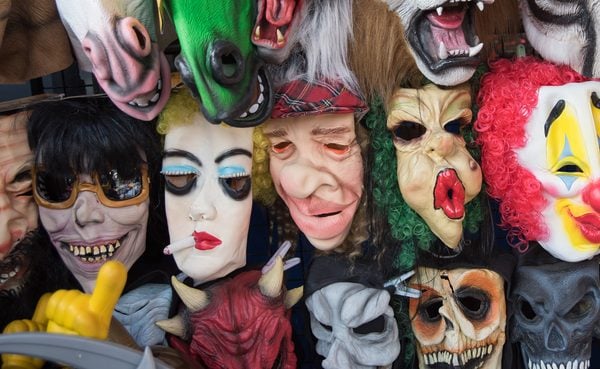
Halloween gained popularity in the United States during the 19th and 20th centuries, influenced particularly by Irish and Scottish immigration. Over time, it increasingly became a community and children’s celebration, complete with parties, costumes, games and, of course, trick-or-treating.
But there is another story worth telling.
Africans brought to the Americas their own traditions for understanding ancestors, death, spirits and relationships between visible and unseen worlds. They did not arrive culturally empty, as the hunter would have us believe.
They carried cosmologies, burial practices, stories, music, healing traditions and ways of remembering their dead. Under slavery, those traditions encountered Christianity, Indigenous traditions and European folk beliefs. Some survived. Some changed. Some blended with other traditions. Their influence can still be found throughout the African Diaspora.
Across many African societies, death did not necessarily mean that one’s relationship with the community ended. Ancestors could remain part of the spiritual and social world of the living — remembered and honored through ceremony.
That difference can even be seen in something as familiar as a mask.
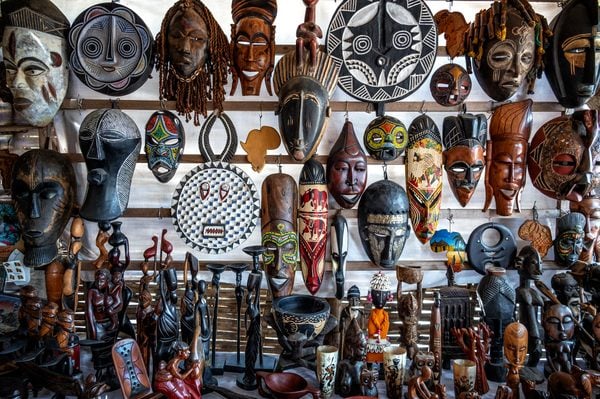
In contemporary America, masks are frequently associated with Halloween costumes. But in some African ceremonial traditions, a mask is much more than a costume. Masking can carry religious, communal, political or ancestral meaning. The person wearing it may be participating in a tradition connecting the community to something larger than themselves.
And that brings me to Sankofa.
This West African concept invites us to “go back and fetch”— to retrieve what is valuable from the past so that we may carry it forward. One example of ancestral remembrance can be found in libation ceremonies practiced in various forms throughout Africa and the African Diaspora.
The pouring of liquid may serve as an act of remembrance, acknowledgment or spiritual connection with those who came before. Echoes of pouring liquid for the deceased can even be seen in some contemporary African American mourning practices. Traditions can survive long after people have forgotten where they began.
So, on Oct. 31, children will put on masks. They will become ghosts, witches, superheroes and creatures from worlds both imagined and unseen. They will knock on doors, collect candy and continue traditions assembled across centuries.
But for those of us whose ancestors survived the Middle Passage, enslavement, Jim Crow and countless attempts to separate us from our history, remembering the dead carries another meaning.
“Our ancestors are not costumes … They are evidence of our survival.”
Our ancestors are not costumes. They are not ghosts summoned for one night of entertainment. They are evidence of our survival. They are the keepers of stories, traditions, struggles and genius that traveled across an ocean and survived.
Perhaps, when the costumes have been put away, the pumpkins have begun to fade and the last piece of candy has disappeared, we should ask ourselves a different question:
Do we know the names, stories and traditions of the ancestors whose lives made our own possible?
If we don’t, perhaps it is time to go back and fetch them. Because remembering our ancestors is not about living in the past.
It is about knowing what — and who — we are carrying forward.
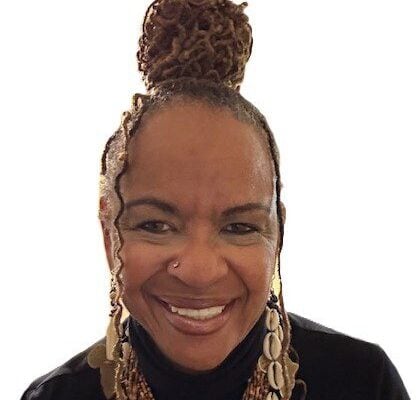
Maxine Bryant, Ph.D., is the founder/curator of GriotSpeaks, author, and African American culture keeper. Contact her at mlb@drmaxinebryant.com or visit www.drmaxinebryant.com.
Maxine Bryant, Ph.D. is the founder of GriotSpeaks, author and African-American culture keeper. Dr. Bryant replaces mythology with truth about Africa and the African Diaspora experience. Learn more about her at www.drmaxinebryant.com and email her at mlb@drmaxinebryant.com.