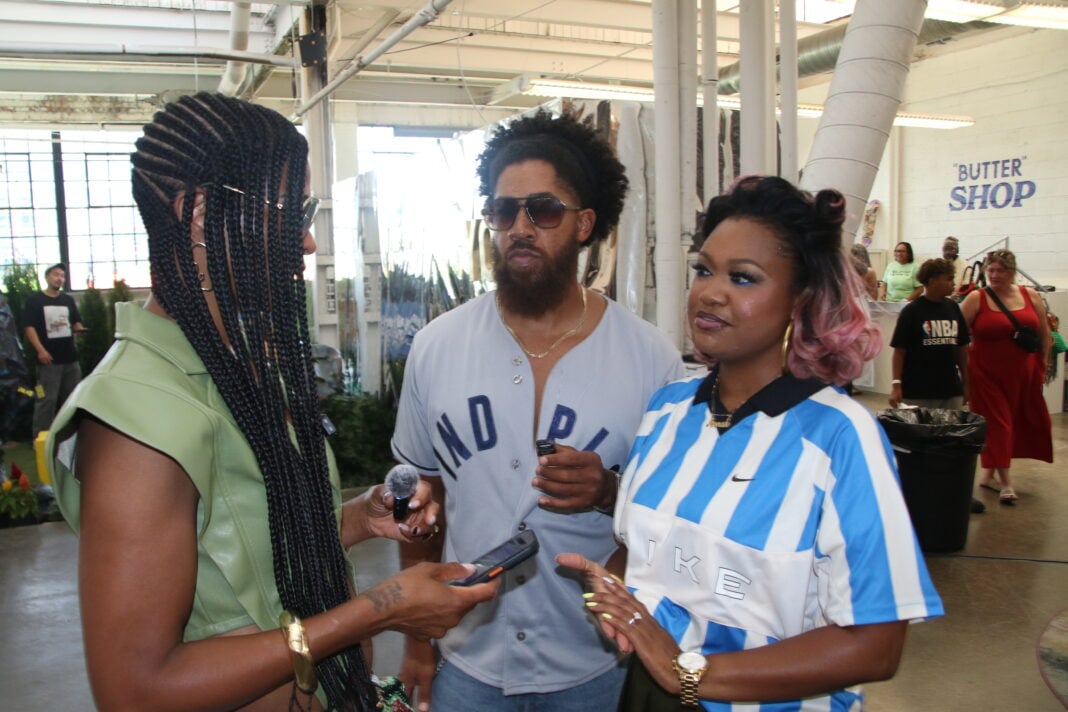
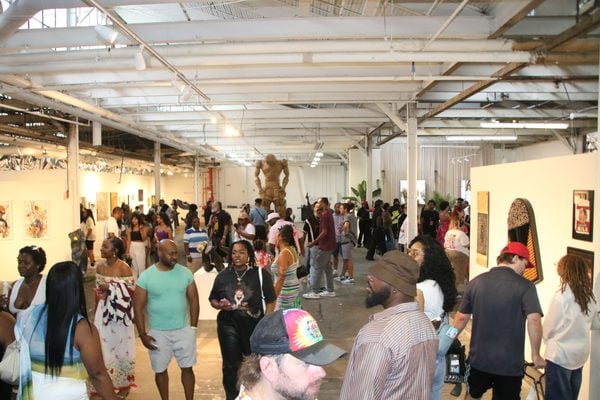
When asked to complete the sentence, “Fine art is …,” artists, collectors and cultural builders in Indianapolis gave answers that differed in wording but agreed on who decides.
“Fine art is whatever the creator says that it is,” said Ess McKee, an artist, placing authority with the maker.
McKee answered Sept. 5 at BUTTER, the fine-art fair centered on Black artists. Others answered Sept. 20 at the opening of GIANTS: Art from the Dean Collection of Swizz Beatz and Alicia Keys, which brings 134 objects to the Indianapolis Museum of Art at Newfields.
The answers come as Indiana begins measuring the creative sector as an economic force. The Indiana Economic Development Corp. has announced the state’s first Creative Economy Month, citing a $10.1 billion annual contribution from the arts and culture sector.
They also draw on more than a century of Black cultural production in Indianapolis.
By the early 20th century, Indiana Avenue had become the center of Indianapolis’ African American community. Black-owned businesses lined the corridor. The Indianapolis Recorder gave the community a publishing institution. Madam Walker built a beauty and manufacturing empire. The Cotton Club at Sunset Terrace became a musical destination for artists including Ray Charles, Louis Armstrong, Fats Waller, Count Basie, Dizzy Gillespie, the Hampton Sisters, Jimmy Coe, Freddie Hubbard and Wes Montgomery.
The Indiana Historical Society describes the Avenue as a place where Black publishing, business and music converged, with a musical scene that rivaled Harlem’s.
The Avenue’s physical and economic ecosystem was progressively dismantled through redevelopment, university expansion and highway construction. The Encyclopedia of Indianapolis documents that between “July 1964 and August 1966, IU purchased 401 parcels,” referring to Indiana University.
The cultural infrastructure the Avenue created survived through memory, institutions, archives and the people who inherited it.
In June 2020, as Indianapolis and cities across the country confronted racial unrest following the killing of George Floyd, Mali Jeffers Bacon and Alan Bacon began talking about what artists and cultural entrepreneurs needed. They created GANGGANG, a cultural development firm designed to invest in artists and entrepreneurs, with particular emphasis on Black people and people of color and the infrastructure supporting Indianapolis’ creative economy.
That August, 18 Black artists gathered on Indiana Avenue to paint a 30-foot Black Lives Matter mural. The group became The Eighteen Art Collective. Newfields later described the mural as the beginning of a collective whose work would move from the street into one of the city’s most established art institutions.
The co-founders were serving as guest curators of the planned DRIP: Indy’s #BlackLivesMatter Street Mural exhibition at Newfields in February 2021. That month, the museum published a job description seeking a leader who could attract a more diverse audience while maintaining its “traditional, core, white art audience.”
After a backlash, the museum apologized and changed the language. Charles Venable, then president and CEO of Newfields, resigned days later. The co-founders withdrew as guest curators. They asked the museum to apologize to the artists involved and to commit to exhibiting more Black artists.
In September 2021, GANGGANG launched BUTTER Fine Art Fair. The Indianapolis Recorder reported that artists did not pay to exhibit and that 100% of their sales went directly to them. By 2022, the fair had grown from 24 artists and $65,000 in sales to 42 artists and more than $250,000 in sales, according to Inc. magazine.
Alan Bacon has described the fair as a way to challenge assumptions about the value and worth of Black visual artists, and about what art is and who creates Black art.
Other Indianapolis creative organizations describe a similar move toward infrastructure and compensation. Pattern, a fashion magazine connected artists as a networking engine from 2010 to 2020. Pattern’s Polina Osherov said artists, photographers and writers contributed to the magazine on a volunteer basis for much of its early existence.
“Indiana has the assets in droves… incredibly smart, talented, creative people,” Osherov said Oct. 19, 2023, in a Pattern interview. She said Pattern wanted to help them get from “ideation to monetization.”
At BUTTER, artists answered in their own terms.
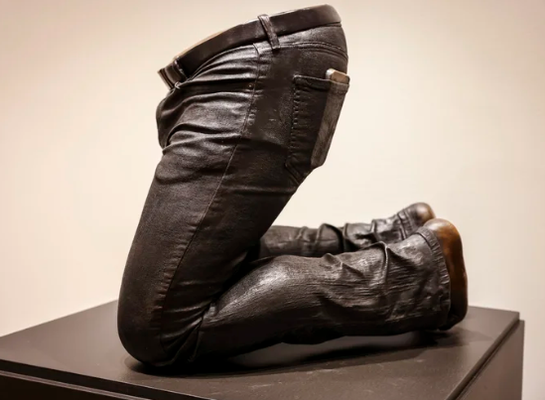
Michael Coppage, an artist whose work engages Black life, identity and representation, described art as an intervention.
“Fine art is an alarm clock … waking people up,” Coppage said.
Angela Levingston, a collector and advocate for the preservation and elevation of Black art and cultural history, answered from another point along the same cultural continuum.
“I think when the artist says, ‘This is what fine art is,’ then that’s enough,” Levingston said.
Fifteen days later, at the Giants opening, Kwame Brathwaite Jr., whose family legacy is intertwined with Black photography, fashion and cultural self-definition, brought the definition inward.
“Fine art is art that comes from the heart,” he said.
Ebony G. Patterson, whose multidisciplinary practice examines Black identity, beauty, visibility and representation, returned the authority to the individual.
“Fine art is whatever you decide,” Patterson said.
Alicia Keys, whose Dean Collection with her husband, Swizz Beatz, forms the basis of Giants, answered collectively.
“Fine art is all of us,” she said.
At BUTTER on Sept. 5, Mali Jeffers Bacon and Alan Bacon, cultural creators and co-founders of GANGGANG, answered from the position of people who have built infrastructure around Black artists and cultural production.
“The work of our hands,” Mali Jeffers Bacon said.
Alan Bacon completed the sentence with five words: “Us, fine art is us.”
Contact Health and Environmental Reporter LaTasha Boyd Jones at tashaj@indyrecorder.com or follow her on social media @iamtashajones.

Tasha Jones is a poet, writer, researcher, and educator whose work explores language as a tool for liberation and resistance. She hosts In the Beginning: The Spoken Word Podcast, the #1 spoken word podcast on Apple and Spotify. Tasha is also the Poems & Parables Literary Journal editor and is currently writing Pyramids. Plantations. Projects. Penitentiaries. You can follow her on social media: @iamtashajones, @itbspokenwordpod, and @poemsandparables.