

As Black History Month highlights the leaders shaping community life and cultural legacy, one Indianapolis organization is creating space for healing rooted in ancestral wisdom and holistic care.
The Sekhem Institute for Holistic Healing, founded by Robin Coleman, offers wellness practices designed to reconnect African Americans with both mental health support and cultural heritage. Coleman, a nurse with 15 years of experience working with underserved communities, said the institute was born from her own journey through burnout and recovery.
“I grew up in Haughville, USA,” Coleman said. “I knew as a youth that I wanted to start my own community center.”
Coleman said her early experiences at Christamore House in the 1990s shaped her vision of community support and opportunity.
“It was my first exposure to higher education,” she said. “That was my introduction to seeing life outside the ‘hood.”
Years later, while working in public health, Coleman said she experienced severe stress that manifested physically.
“I got really burnt out, so much so that I ended up starting to lose my memory, started having issues processing,” she said. “I was having all of these somatic symptoms… that I actually wasn’t even connecting to burnout.”
After anxiety attacks and other unexplained health concerns, Coleman said she began therapy and was taken off work for six months. During that time, she turned toward natural healing modalities.
“I wanted to study like, ‘how can I heal myself naturally?’” she said. “I have a lot of health care trauma.”
That period of learning became the foundation for Sekhem Institute’s mission.
“I decided that it was best for me to not go back to work, but then to share my knowledge with the community,” Coleman said.
Holistic wellness through the nine domains
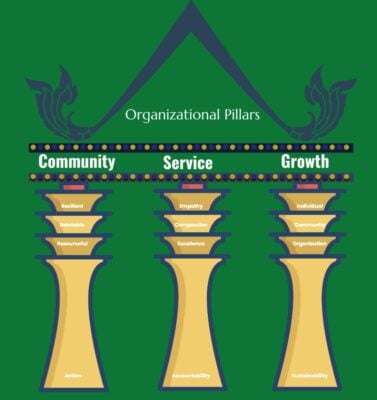
Sekhem Institute’s programming is built around the nine domains of wellness, including mental, physical, spiritual, creative, financial, career, social, intellectual, and environmental wellness.
“Our programs explore the intersectionality of mental health within those things,” Coleman said.
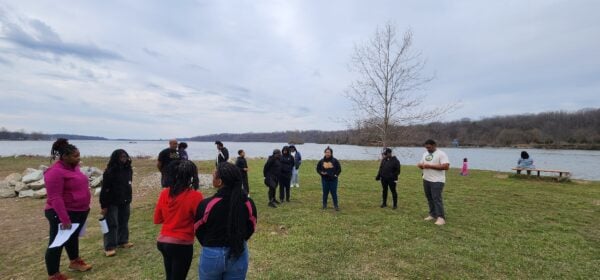
One of the institute’s longest-running efforts is its Nurture by Nature program, which brings participants to Eagle Creek Park for monthly hikes focused on mental health and connection to the outdoors.
“We hike for, you know, one to two hours,” Coleman said.
Coleman said the program is especially meaningful for African Americans who may not have grown up feeling comfortable in natural spaces.
“There’s a lot of African-Americans who really are uncomfortable being in the woods,” she said. “We’re not growing up being exposed to nature, maybe like other cultures.”
Nature-based wellness practices are increasingly supported by research. A Harvard Health review notes that spending time outdoors has been linked to reduced stress and improved psychological well-being, with studies showing significant benefits for those who regularly spend time in green spaces.
During the hikes, Sekhem participants discuss self-care, mental health journeys and grounding practices.
“We talk about forest bathing and grounding and we actually do tree-hugging ceremonies,” Coleman said.
Sound healing and cultural reconnection
Sekhem Institute also offers sound healing sessions using crystal quartz bowls, which Coleman said have multiple benefits.
“They actually calm your nervous system and help to combat stress, anxiety and PTSD,” she said.
Interest in complementary wellness approaches has grown nationwide. The National Center for Complementary and Integrative Health reported a significant rise in Americans using practices such as yoga and meditation in recent decades, reflecting expanding demand for integrative mental health support.
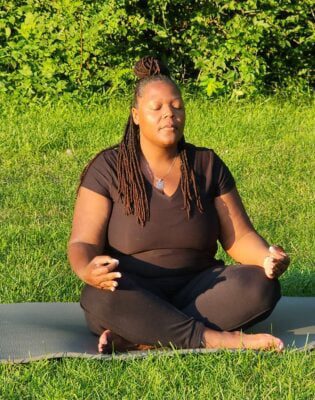
Coleman also teaches Kemetic yoga, a practice rooted in ancient Egyptian traditions.
“Kemetic Yoga is a way for African Americans to tap into our cultural heritage,” she said.
For Coleman, grounding wellness work in Black history and culture is essential.
“One of the biggest barriers… is really centered on our disconnect from our heritage,” she said. “They’re not centered for us. They (weren’t) created for us or by us.”
Healing spaces for the community
Coleman said Sekhem’s programs often provide experiences participants have never encountered before, from grounding exercises to culturally centered healing conversations.
“People are crying during our tree-hugging ceremonies,” she said. “They’re just grateful that we created this space and opportunity.”
The institute is also preparing to launch Emotional Emancipation Circles, a program focused on the impact of anti-Black racism and building resilience through self-care and somatic practices.
“It’s a curriculum that explores anti-Black racism… and then how to build self-care and build resilience,” Coleman said.
Upcoming cohorts will focus on Black barbers and justice-involved men, with the goal of supporting community healers and reducing recidivism.
From surviving to thriving
Coleman sees wellness as deeply connected to Black history and the future.
“Our ancestors did [the work] to survive slavery and overcome and to build resilience,” she said. “But… we want to move from surviving to thriving.”
Ultimately, Coleman hopes participants leave Sekhem Institute empowered to heal themselves.
“You don’t need, really, an external modality to heal,” she said. “You just got to know how to tap into what’s already inside of you.”
For more information about Sekhem Institute for Holistic Healing, visit sekheminstitute.org.
This reporting is made possible by a grant from the Indianapolis African-American Quality of Life Initiative, empowering our community with essential health insights. https://iaaqli.org/
Contact Health & Environmental Reporter Hanna Rauworth at 317-762-7854 or follow her on Instagram at @hanna.rauworth.

Hanna Rauworth is the Health & Environmental Reporter for the Indianapolis Recorder Newspaper, where she covers topics at the intersection of public health, environmental issues, and community impact. With a commitment to storytelling that informs and empowers, she strives to highlight the challenges and solutions shaping the well-being of Indianapolis residents.









