
As holiday shopping, travel bookings and year-end charitable giving ramp up across Indiana, financial institutions are warning residents to stay alert against a surge in seasonal scams.
To mark its nationwide Fraud and Scam Prevention Month in November, JPMorgan Chase hosted a free community fraud prevention workshop at its Castleton branch on Nov. 17, breaking down common holiday schemes and practical steps consumers can take to safeguard their money.
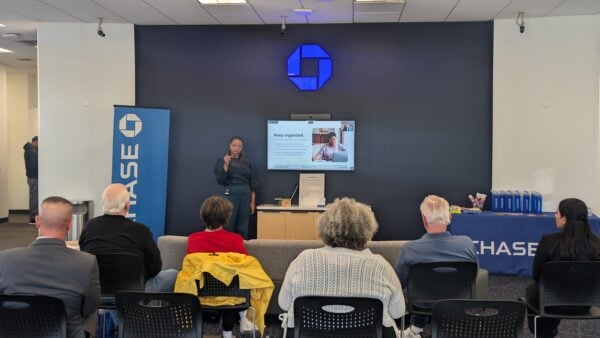
According to Felicia Williams, vice president and community manager for Chase in Indianapolis, the stakes are particularly high for Hoosiers. According to information provided by JPMorgan Chase, Indiana residents reported more than $150 million in losses due to fraud and scams in 2026.
“November is our Fraud and Scam Prevention Month here at Chase, and so I have been hosting workshops throughout the month just talking about trends that we’re seeing as well as what to do if you’re impacted,” Williams said. “The purpose of the workshop today was just to bring awareness around that and also provide the trends that we’re seeing.”
While financial scams happen year-round, Williams noted that bad actors capitalize on the rush and emotion of the holiday season, targeting shoppers, travelers and donors across every age group — from youth and working adults to older and retired residents.
According to Chase’s holiday fraud prevention guidance, three common schemes tend to spike between November and December:
Online shopping scams: Scammers create fake retail websites or pose as sellers on social media platforms, advertising deeply discounted merchandise that either does not exist or arrives nothing like advertised. Red flags include misspelled web addresses, deals that appear too good to be true and sellers demanding payment upfront through non-traditional methods. Consumers are advised to double-check URLs for typos, stick with trusted retailers and use payment methods with built-in fraud protections, such as credit cards.
Missed delivery scams: Fraudsters send spoofed text messages or emails claiming a package could not be delivered or requires an immediate redelivery fee — even when the recipient has not ordered anything. Warning signs include messages from unofficial domains, urgent demands to act immediately, and links that prompt users to enter personal information or pay a fee. Chase advises consumers never to click links in unexpected delivery texts or emails, and instead check tracking updates directly through a carrier’s official website or mobile app.
Donation scams: Criminals exploit the season of giving by setting up bogus charities and fake online fundraisers. Red flags include high-pressure emotional appeals, vague details about how funds are used and requests to donate via gift cards, wire transfers or cryptocurrency. Donors should verify organizations independently and contribute directly through official charity websites rather than social media links.
“The goal for the workshop in November is just to target some of the trends that we see as our consumers or potential victims are headed into the holiday season, such as charitable contributions as well as travel-related scams,” Williams said. “However, frauds and scams are happening throughout the entire year.”
Beyond spotting specific red flags, Williams emphasized that slowing down before reacting to an urgent message or offer remains the single most effective defense.
“The number one takeaway from the workshop specifically is to pause and think,” Williams told the Indianapolis Recorder. “That gives you time to ask additional questions. If a fraud or scammer has impacted you, completely block them and cease communications with them.”
Williams facilitates free financial health workshops throughout the year for residents of all ages.
“My role as a community manager is to just make sure that I am empowering our community and boosting everyone’s financial health,” Williams said. “The best way to do that is to be able to provide these different types of workshops.”
Residents can attend two free upcoming Chase fraud prevention workshops next month either in person or virtually:
- “Ways to Help Avoid Fraud and Scams” takes place virtually on Dec. 16. Learn more at events.chase.com/300102135.
- “Ways to Help Avoid Fraud and Scams” will be held at the Southport and Bluff branch, located at 1420 West Southport Road in Indianapolis. Community members can also attend this workshop virtually. Registration is available at events.chase.com/300102139.
Additional fraud prevention resources and security tips are also available online at chase.com/security.
Contact Staff Writer Noral Parham at 317-762-7846. Follow him on X @3Noral. For more news, visit indianapolisrecorder.com.

Noral Parham is the multimedia and senior sports reporter for the Indianapolis Recorder, one of the oldest Black publications in the country. Before joining the Recorder, Parham served as the community advocate at the MLK Center in Indianapolis and as a senior copywriter for an e-commerce and marketing firm in Denver. He is also a business owner.