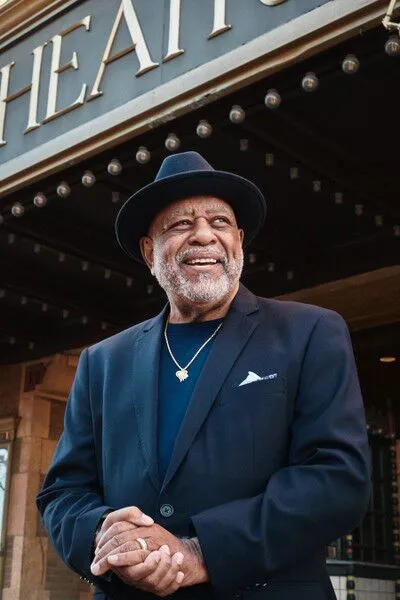
Through the language of memory, a child prodigy’s journey becomes a testament to legacy and place.
Before Rodney Stepp understood the meaning of a child prodigy, he understood the piano.
At 2½ years old, he was drawn to the instrument in his aunt’s home. According to the story his mother and aunt later told, the adults were talking in another room when his aunt heard something unexpected: the little boy was picking out a familiar melody on the piano, one note at a time, with one finger.
It was the theme song from “The Flintstones.”
“I would go straight to that piano as soon as I came in the house,” Stepp recalled. “And I wouldn’t leave it.”
The adults recognized something extraordinary. Stepp was less certain.
“I really didn’t realize that I did have a gift,” he said. “I was just out there playing.”
By age 4½, Stepp recalled being accepted for piano instruction at Butler’s Jordan College of Music, and, at age 9, he was playing with the Indianapolis Symphony Orchestra. Jordan College of Music, he said, usually did not take children until they were 7.
Before Stepp could join his friends outside, he had to practice piano for 30 minutes. His father attended his lessons and monitored his progress at home. His father did not play, but Stepp said he had an ear, and he would point out the passages his son had not played correctly. To this day, Stepp credits him for why he is “such a disciplined musician, and a man.”
“The sooner you get on that piano, the sooner you can go out and play,” Stepp recalled his father telling him.
The routine was firm, but Stepp does not remember his childhood as one consumed entirely by music.
“They let me be a kid,” he said.
But the discipline his father established at home would soon be tested in a different setting: alongside other young musicians learning to turn individual talent into collective performance.
For Stepp, the story of music is inseparable from the people who helped him make it.
His earliest bandmates were neighborhood friends. They began playing together when Stepp was in seventh grade. By 13, they had formed The Diplomats.
“We were friends first,” he said.
Their friendship became the foundation for something larger. As the musicians grew older, they entered a local network that gave young performers structure, professional expectations and opportunities to develop beyond their neighborhood.
Stepp credits Designated Productions (DP), an Indianapolis-based youth management and booking organization that operated from 1966 to 1972, with the professional expectations that prepared him and his high school band, The Diplomats, for work beyond Indianapolis. The rehearsals were serious. Performances required preparation. Mistakes had consequences.
When the band’s drummer kept arriving late, DP punished the entire group. The teenagers had to find their own way across town to rehearsal at 34th Street and Fairfield Avenue.
“They taught us how to be professionals at 14 and 15 years old,” he said.
His habit of sharing the spotlight began with those early groups.
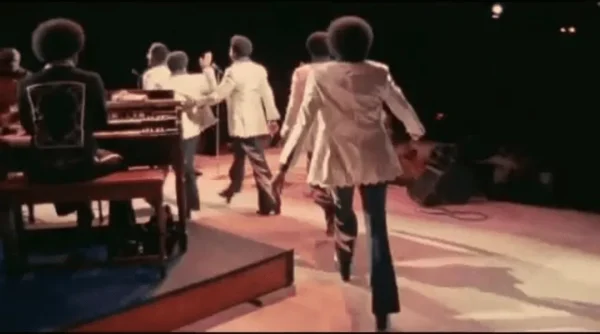
“I’ve been in the forefront, but I’ve always preferred the background,” he said. “I share the stage … not only in music, but in life.”
That approach stayed with Stepp as his opportunities expanded beyond Indianapolis, where collaboration would place him alongside some of the music industry’s established performers.
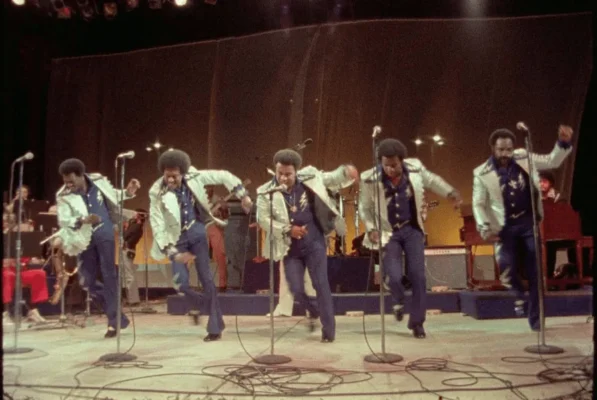
It is a philosophy that complicates the familiar image of the prodigy: a gifted child destined to stand alone in the spotlight. His talent may have been recognized individually, but much of his musical identity was formed collectively.
Built together
Stepp played with The Spinners during the group’s peak years, including three performances at the Grammy Awards.
In 1976, “The Jacksons tried to recruit me as their keyboard player,” Stepp said. He stayed with The Spinners on promises that he would be able to write and produce. “Those promises were not kept, but I don’t consider my choice a mistake,” he said. “I made the choice.”
Yet the opportunities that came with professional success did not replace the creative relationships that had first made music meaningful to him. In Rapture, Stepp found a collaboration that would become both the highlight of his career and one of his greatest disappointments.
“Rapture was the best group I’ve ever been in in my entire life,” he said.
Stepp and the band’s bass player invested money they earned with The Spinners to record Rapture’s music in 1977 and 1978 at Mantra Studios in Chicago.
The emotional collapse came with the departure of a close friend and creative collaborator.
We were John Lennon and Paul McCartney, Stepp said. The friend left while the band was in Los Angeles and took a bus home to Indianapolis.
“I didn’t have the guy that built it with me,” Stepp said. “That was the first time in my life that I was gonna walk away from music.”
The loss of his creative partner and the music they created threatened the group’s future. But another uncertainty would follow: what would become of the music they had worked so hard to record?
The group did not know where its tapes had gone. Years later, a package appeared on his porch.
“One day, I get a UPS box left on my porch with no return address on it, and it was our case,” he said.
Stepp does not know who returned the material.
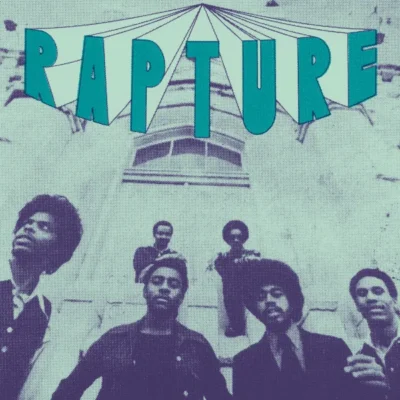
The return of the tapes restored one piece of a musical history that Stepp feared had disappeared. Other pieces, however, have been harder to recover.
Stepp contacted former bandmates and their families, asking for photographs, posters and other memorabilia that might document their work. He offered to scan the photographs and return the originals. He received only about five or six pictures. Much of the material, he said, had been lost over time.
Decades after the sessions, the music was released through a Los Angeles label that specializes in rare recordings popular with collectors in Europe. The release, he said, “meant the world to me.”
Although some of the music and memorabilia from his earlier career proved difficult to recover, Stepp continued creating in Indianapolis, leaving another kind of musical imprint on the city.
Creating at home with desire and discipline
He did the writing and producing he was promised elsewhere at home. Among his compositions is the theme music for the Indianapolis Recorder in 1992. Stepp created the popular jingle alongside longtime vocal collaborator James Walker Jr. through his production company, Rodney Stepp Music Productions.
Stepp said each of his four daughters began learning an instrument. Eventually, all stopped playing. Some later told him he should have insisted they continue.
“If you’re not passionate about what you’re doing, you shouldn’t be doing it,” he said.
The child who once had to finish his piano practice before going outside became a father who understood that musical discipline and musical desire are not necessarily the same thing. It is the same advice he gives young musicians: “If you don’t love it, don’t do it.”
His daughters’ experiences also reflect a distinction Stepp has carried throughout his career: loving music and making a living from it are two different things. The business of music has changed considerably since his early years, and he has had to adapt.
By his estimate, 1 million streams pays about $3,000. Most of what he earns, even now, comes from playing live. Yet he continues to speak about music as something more enduring than recognition or financial success.
“Honestly, I got high on my music,” he said.
The most revealing part of Stepp’s story is not the distance between a child at his aunt’s piano and the professional musician he became.
It is the persistence of the relationship that began there.
For Rodney Stepp, music is more than a record of where he has been.
It is one of the ways he remembers who he is.
Editor’s note: Rodney Stepp composed the Indianapolis Recorder’s theme music.
Contact Health and Environmental Reporter LaTasha Boyd Jones at tashaj@indyrecorder.com or follow her on social media @iamtashajones.
[CJ1]It would be great to get a sidebar of some of his most popular songs or albums.

Tasha Jones is a poet, writer, researcher, and educator whose work explores language as a tool for liberation and resistance. She hosts In the Beginning: The Spoken Word Podcast, the #1 spoken word podcast on Apple and Spotify. Tasha is also the Poems & Parables Literary Journal editor and is currently writing Pyramids. Plantations. Projects. Penitentiaries. You can follow her on social media: @iamtashajones, @itbspokenwordpod, and @poemsandparables.