The floodwaters have receded from Indianapolis, but the health risks have not. After historic flooding hit central Indiana in August, neighborhoods along the White River were inundated. Crews performed nearly 100 water rescues in Marion County, and about 400 people were evacuated from parts of northern Indianapolis, according to the Indianapolis Department of Public Works.
Now comes the less visible part of the disaster. Mold can grow in water-damaged homes. Floodwater can contaminate drinking water and private wells. Health officials are urging residents to get tetanus vaccinations before returning to flooded areas because of contamination risks. And Marion County is confronting them after a dramatic reduction in the state’s funding that supports its public-health infrastructure.
“We will only be receiving $6 million from a drop of $22.8 million,” Dr. Virginia Caine, director and chief medical officer of the Marion County Public Health Department, said. “That’s a huge drop.”
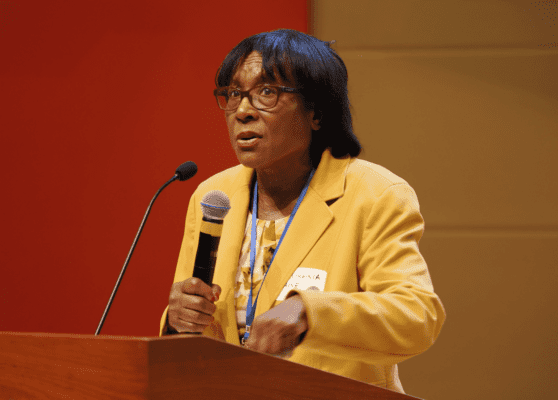
Marion County’s Health First Indiana allocation was $22,789,964.23 in 2025. For 2026, it is $6,175,831.76 — a reduction of roughly 73%, as published on the state’s “Your Community Info” website.
Indiana had 15 known measles cases on Sept. 18, and now there are 21 known measles cases as of Sept. 25, according to the Indiana Department of Health. The cases were concentrated in Adams, Allen, Parke, Randolph, Switzerland and Wayne counties; Marion County was not among the counties listed.
At the same time, Marion County is contending with the aftermath of flooding and a set of chronic health concerns that its own 2025 Community Health Assessment identifies as among the most pressing in the community. The assessment, released in March 2026, drew more than 4,500 completed resident surveys as well as interviews with residents, community members and leaders. The five leading concerns identified were mental health and well-being (depression and suicide), access to health care, housing, trauma and injury prevention, and infant mortality.
The funding reduction changes the resources available to address problems already in existence.
Budget funding
House Bill 1001 established the state’s 2025-2027 biennial budget. The public-health funding at issue flows through Health First Indiana, which allows participating local health departments to use state funding for core public-health services ranging from maternal and child health to food inspections. Health First Indiana funding had reached $150 million in 2025. The 2026 and 2027 appropriations for the program were reduced to $40 million annually. For Marion County, the difference is more than $16.6 million.
The county’s 2026 budget shows where the remaining money is going; of Marion County’s $6.18 million Health First Indiana allocation, $3.87 million is budgeted for preventive services and $2.31 million for regulatory activities. The budget includes funding for access to clinical care, immunization, vital records, food protection and environmental public health. The budget also shows personnel supported by the funding, including nurses, medical assistants, clerical and administrative workers, food-protection inspectors and environmental-health inspectors.
This is where the budget becomes a health story. A measles case is not simply a person who becomes sick. It can require investigation, identification of people who may have been exposed, vaccination efforts and communication with schools, health providers and families.
Indiana is a state with serious maternal and infant health challenges. It is also a state where abortion is restricted except under specified circumstances. Marion County’s health assessment lists infant mortality among the county’s five leading health concerns.
That creates a question larger than the abortion policy itself. If more pregnancies are required to continue, what public-health infrastructure is available to support the women and children who result from those pregnancies? And what happens when the same system expected to address maternal and infant health is operating with dramatically less state funding?
But the deeper question is not whether the contradiction sounds compelling. It is whether the reduction has changed what Marion County can actually do. That answer should be measurable.
How many programs have been reduced? How many employees or positions are affected?
Which services have been eliminated, delayed or moved to another funding source? How quickly could it respond if measles appeared in Marion County tomorrow? And what happens if that outbreak arrives at the same time as another emergency?
Those questions become more consequential because Indiana is not operating without money. The state has billions of dollars in cash balances and reserves. The Indiana Transparency Portal maintains a public dashboard of state cash balances, while cautioning that some balances may already be appropriated for future commitments or may require appropriation before they can be spent. But it does raise a question for the people responsible for the budget: Why reduce local public-health funding so dramatically while the state maintains substantial reserves?
Prevention rarely produces the kind of dramatic images that accompany an emergency. But when prevention capacity is reduced, the consequences may not appear until the emergency has already arrived. The real test of the Health First Indiana reduction may therefore come not from the budget document but from the next event that requires Marion County to mobilize.
The immediate danger from the flood may have passed. For now, the measles cases remain outside Marion County. But public health emergencies rarely announce themselves in advance. The question is whether Indianapolis will have enough people, programs and resources when the next one does.
Contact Health and Environmental Reporter LaTasha Boyd Jones at tashaj@indyrecorder.com or follow her on social media @iamtashajones.
This reporting is made possible by a grant from the Indianapolis African-American Quality of Life Initiative, empowering our community with essential health insights. https://iaaqli.org/

Tasha Jones is a poet, writer, researcher, and educator whose work explores language as a tool for liberation and resistance. She hosts In the Beginning: The Spoken Word Podcast, the #1 spoken word podcast on Apple and Spotify. Tasha is also the Poems & Parables Literary Journal editor and is currently writing Pyramids. Plantations. Projects. Penitentiaries. You can follow her on social media: @iamtashajones, @itbspokenwordpod, and @poemsandparables.