NearSpace Education is partnering with the Indiana State Museum and several other regional institutions to host STEM programming for Hoosier middle schoolers, but they need a little help.
Dream Big: STEPS to Space is a new program designed to reduce barriers to aerospace education by connecting 5th-8th-grade students in Indiana to outer space through STEM-related programming. To get the program up and running, NearSpace Education is seeking educators across the state to lead the course.
“We’re working with regional partners who can help us get in touch with people who might be really good at being teams all across the state,” Tom Foltz, director of education and training for NearSpace Education, told the Recorder. “We want rural and urban, and we want kids from the corn fields, we want kids from Gary, we want kids from all over the place participating in this.”
Formed in 2020, NearSpace Education is a nonprofit organization based in Upland, Indiana, dedicated to integrating innovative space technology developed by its sister organization, NearSpace Launch, into classrooms. The organization strives to give students from pre-K through college the chance to have “authentic aerospace experiences” through various programming, such as summer camps, field trips, robotics clubs, simulated satellite kits and high-altitude balloon flights, Foltz said.
READ MORE: ICO announce 2026-27 season ‘Story Lines’ with two free concerts
Phase I of Dream Big saw NearSpace Education partner with students from the University of Notre Dame, Valparaiso University, Western Michigan University, University of Toledo, Purdue University Fort Wayne and Taylor University to design and launch a half-unit satellite, Foltz said. Phase II, which is Dream Big: STEPS to Space, aims to bring a similar type of authentic spaceflight programming to middle schoolers.
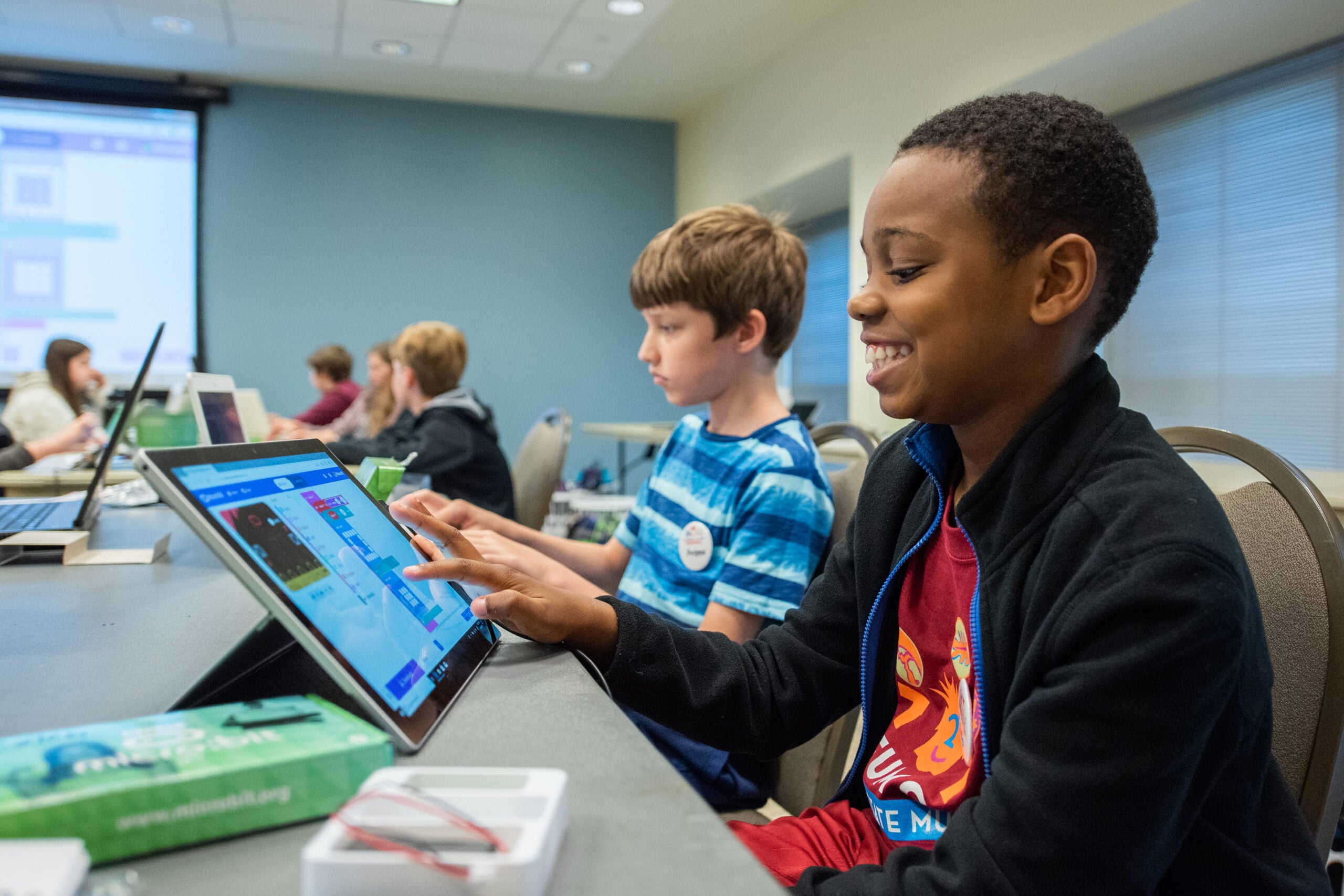
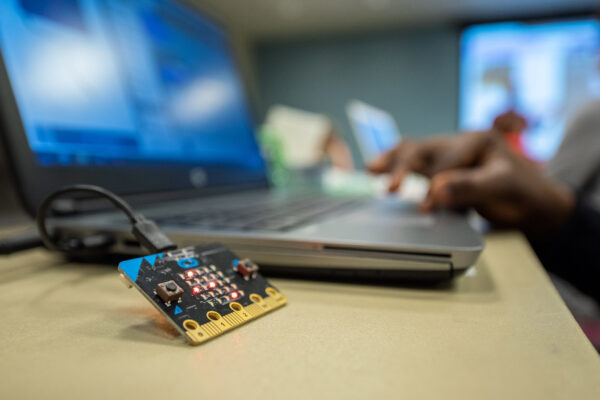
Two years ago, Foltz heard about an opportunity with NASA to fund outreach to informal education centers and wrote a grant for Dream Big: STEPS to Space. STEPS, which stands for scalable testing of electronics and programming by students, would see students learning to code and program Micro:Bit boards, self-contained computer boards designed to teach kids how to create technology.
Each group will receive 31 of these boards, 30 of which will be programmed by each student and then loaded onto high-altitude balloons launched to near space during test flights in early spring 2027. The students will be able to collect and study data from these satellites for further research, while the remaining Micro:Bit board will be sent back to NearSpace Launch and integrated onto a satellite that will be sent into low Earth orbit in October 2027.
“Whatever they want to program it as … I leave it up to them, because the whole point of this is it’s a scalable thing,” Foltz said. “We want to see what they can do with it, and then hopefully roll it out nationwide, so that more and more people get the opportunity to build and launch these boards.”
The program is designed to integrate into the regular school curriculum or in after-school clubs and science centers, Boy and Girl Scout Troops — basically anywhere a team of two educators or two can host regular meetings throughout the year, Foltz said.
The goal is to reach about 900 Hoosier middle schoolers, with about five groups of 20-30 students in each region. The organization recruited five regional partners to host groups, including the Indiana State Museum in Indianapolis, Angel Mounds State Historic Site in Evansville, Science Central in Fort Wayne, STARBASE Indiana in Gary and Terre Haute Children’s Museum in Terre Haute.
Bethany Thomas, vice president of education and engagement for the Indiana State Museum and Historic Sites, told the Recorder thatNearSpaceEducation shares a similar mission regarding accessibility. The museum’s tried-and-true partnership with the nonprofit has included various space-themed programs over the years, including the solar eclipse in April 2024 — which Thomas said played “a key role in piquing student interest.”
“This really allows us to reach the older audience that we still see, but not necessarily at this scale,” Thomas said. “It has us doing more technology than we typically do in our program, so that was another opportunity, and being able to give a very different experience than we would be able to do on our own. … Now we have something that’s going to really add value in our community, something that’s longer term, and something again, pretty extraordinary.”
Looking back on the eclipse and with the recent success of the Artemis II mission, Thomas said there’s been “a resurgence of interest in aerospace.” When institutions like the Indiana State Museum participate in programs like Dream Big: STEPS to Space, they help space exploration feel more real and accessible to kids by not only providing STEM education but helping to build STEM confidence and career pathways for kids.
“We have a rich history of aerospace in Indiana, too,” Thomas said. “So really connecting them (students) to that so that way they can see themselves as maybe future scientists, future researchers, maybe future astronauts — all these possibilities that get them great opportunities for them to learn and really understand.”
Foltz said access to STEM and aerospace-related education “is critical” these days as so much of the world hinges on STEM, from transportation to AI.
“You can either understand it and use it to the best of your ability, like tools for good, or you can just get carried along with the wave and not really know what’s going on,” Foltz said. “We want them (the students) to get a chance to say, ‘Oh yeah, all this technology that’s around us has been designed and shaped by people, and I can do that too.’ We want to just show them that they’re capable of doing these things, and if we can build satellites, if we have a whole space program in tiny little Upland, Indiana out in the middle of the cornfields, why can’t they do big things?”
NearSpace Education is still seeking middle school educators who are “ready to jump on board” to lead programming at each regional partner location. Thanks to the grant, NearSpace Education will provide all the training, curriculum and equipment; educators need only provide the space and the students.
The recruitment deadline is still fluid, as Foltz said NearSpace plans to host a major 2-day training for educators and mentors in Upland, Indiana, over the summer, with the program kicking off in early fall.
Interested educators are encouraged to contact NearSpace Education directly at tomfoltz@nearspaceeducation.org or nse@nearspaceeducation.org. Educators interested in signing up for the Indiana State Museum or Angel Mounds State Historic Site can fill out the interest form at indianamuseum.org/dream-big-and-explore-space.
For more information, visit nearspaceeducation.org.
Contact Arts & Culture Reporter Chloe McGowan at 317-762-7848. Follow her on X @chloe_mcgowanxx.

Chloe McGowan is the Arts & Culture Reporter for the Indianapolis Recorder Newspaper. Originally from Columbus, OH, Chloe has a bachelor's in journalism from The Ohio State University. She is a former IndyStar Pulliam Fellow, and has previously worked for Indy Maven, The Lantern, and CityScene Media Group. In her free time, Chloe enjoys live theatre, reading, baking and keeping her plants alive.