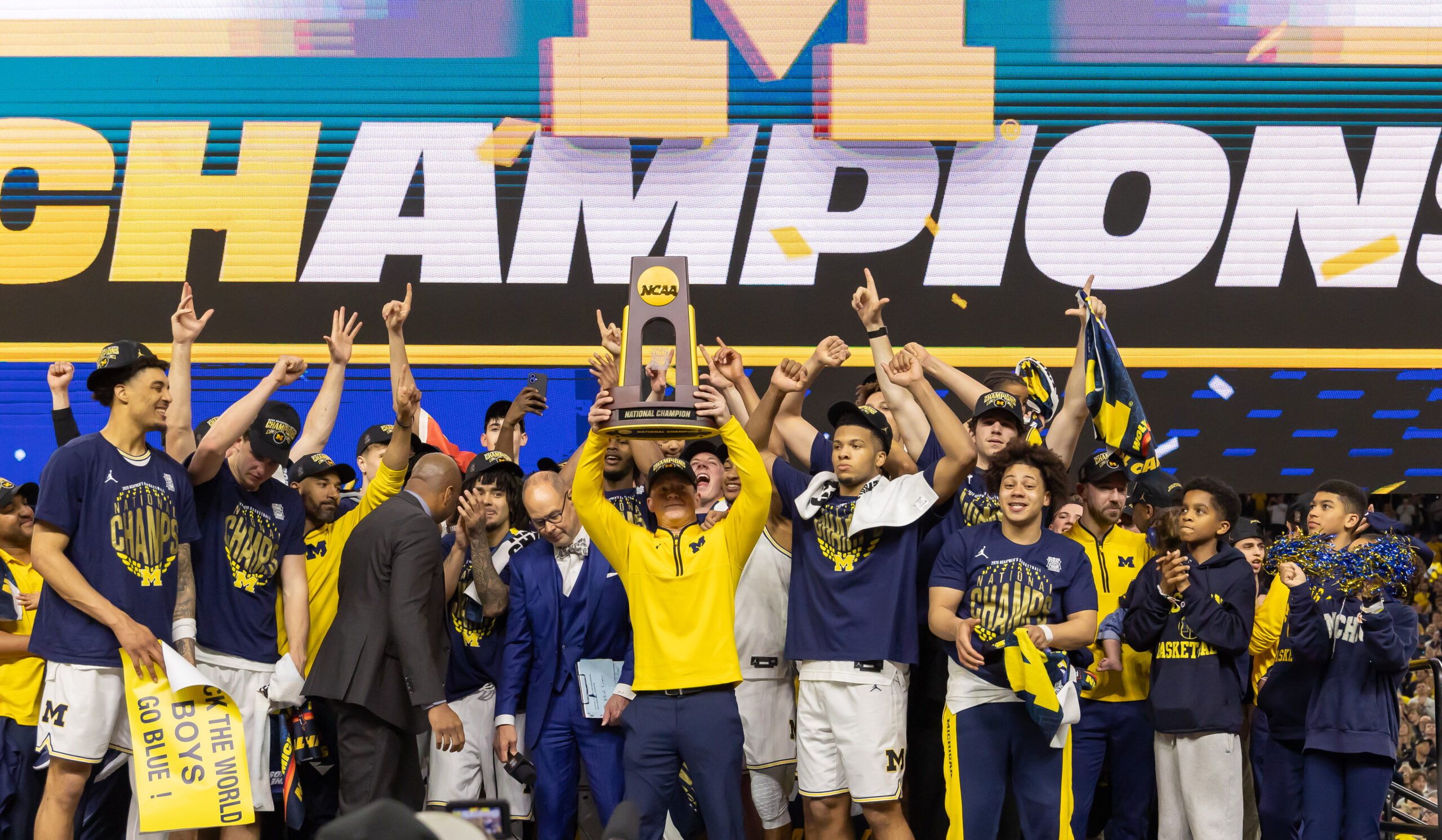
The Michigan Wolverines did not arrive at Lucas Oil Stadium with a pretty script. They shot only 2-of-15 from three-point land, managed just 10 assists and watched one of their lead players, Yaxel Lendeborg, labor through an injury that would have sidelined most athletes.
However, none of it mattered.
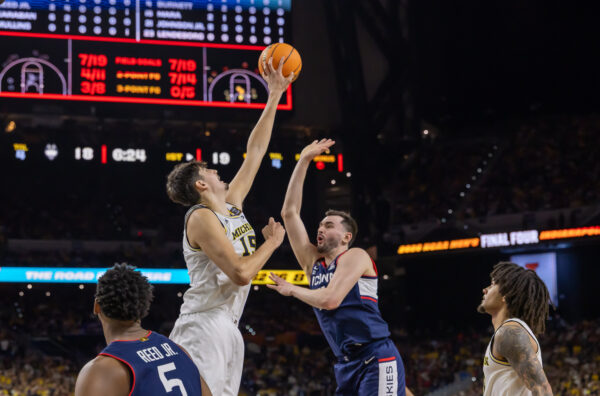
Behind a stifling defensive identity and a super-efficient 25-of-28 performance from the free-throw line, Michigan defeated two-time defending champion UConn 69-63 on April 6, capturing the program’s first NCAA men’s basketball national championship since 1989.
Elliot Cadeau, the North Carolina transfer who orchestrated Michigan’s offense all season, was named the Final Four’s Most Outstanding Player after scoring 19 points, seizing five rebounds and dishing two assists.
But the victory belonged to a team that learned to win ugly.
“We made two threes the whole game,” Cadeau said afterward. “We wasn’t making shots. We had a couple assists, not as many as we usually do, but we constantly just been finding ways to win all year, no matter how everybody is playing.”
A gritty blueprint
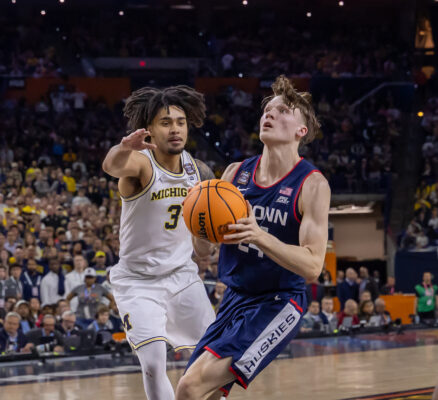
The box score tells a tale of survival. Michigan shot 21-of-55 (38%) from the field and connected on only two three-pointers. However, the Wolverines lived at the free-throw line, attempting 28 foul shots to UConn’s 16. They also outscored the Huskies 36-22 in the paint.
UConn, which had rolled through the tournament, shot only 31% from the field and missed 24 of its 33 three-point attempts. The Huskies grabbed 22 offensive rebounds — a staggering number — but converted those extra chances into just 19 second-chance points.
“You lose the game because we missed,” UConn coach Dan Hurley said. “But it’s hard to be upset with your team when they get 22 offensive rebounds versus that team. That’s just how hard we played.”
Lendeborg, the 6-foot-9 forward who transferred from the University of Arkansas at Birmingham, played through an injury that visibly limited his mobility. He finished with 13 points and two rebounds but was visibly frustrated for long stretches.
“I knew there was no way I was going to miss this game no matter what was going on,” Lendeborg said. “I was very tentative this game. I felt like I was pretty much holding our team down… I kept having opportunities to make plays, and I couldn’t make the play. But these guys stuck with me no matter what.”
A turning point
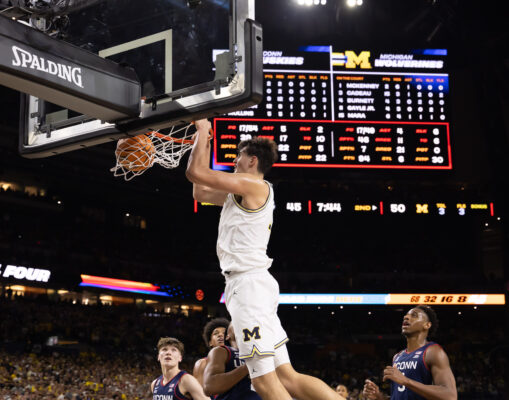
Michigan led 33-29 at halftime, but the game remained in the balance until midway through the second half. With 12:56 remaining, Cadeau drilled a three-pointer — Michigan’s second of the game — and followed with a free throw to cap a personal 6-0 run, pushing the lead to 48-37.
UConn, powered by Alex Karaban’s 17-point, 11-rebound double-double, refused to fold. The Huskies cut the deficit to 56-53 with 5:23 left after a Braylon Mullins three-pointer. However, Michigan answered with a Lendeborg tip-in and a pair of Cadeau free throws, then sealed the game at the stripe.
“I just decided to find a way to do something to help the team out, and eventually it started working out,” Lendeborg said, crediting assistant coach Chris Joyner for reminding him of Anthony Davis’ struggles in an NCAA title game before he impacted winning in other ways.
Season of sacrifice
Michigan head coach Dusty May, who built the Wolverines into a powerhouse through the transfer portal, praised his team’s uncommon selflessness. The roster featured eight players who logged significant minutes, including five transfers.
“When you bring a group this talented together and they decide from the beginning that they’re going to do it this way and they never waver and they never change, that’s probably the most uncommon thing in athletics now,” May said. “It’s a tribute to their character but also those in their circles around them.”
Trey McKenney, a freshman guard who played 29 minutes, echoed the sentiment.
“Throughout the season everybody on this team is extremely talented, and for us to be able to sacrifice something for ourselves,” McKenney said. “I’ve never been around such a talented group of guys that are willing to take a lesser role for somebody next to them.”
End of an era at UConn?
For the Huskies, the loss marked a heartbreaking conclusion to a season that saw them reach their third national championship game in four years. Alex Karaban, the senior forward who started every game, played every minute of the final contest, finishing with 17 points and 11 rebounds in his final college game.
“I came back ultimately to win, fell short,” Karaban said, his voice heavy. “It hurts right now. But I’m leaving UConn in a better place than where I started. I gave it everything I got.”
Hurley, visibly fighting back emotion, defended his team’s effort and rejected the notion that losing the championship is worse than losing earlier.
“A lot of people talk about you’re better off losing in the first game of the Final Four than losing in the championship,” Hurley said. “That is the biggest bunch of crap of all time. This is where you wanted to be.”
Tarris Reed Jr., the former Michigan player who transferred to UConn before the season, shared a poignant moment with his old teammates after the final buzzer.
“I remember Coach May recruited me out of the portal,” Reed said. “I saw some of my old guys, just chopping it up. We came a long way. Everything happens for a reason.”
Now what?
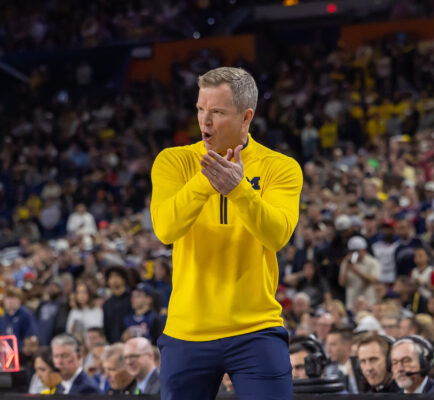
Michigan finished the season 34-5, having won the Big Ten regular-season title and now the program’s second national championship. The Wolverines did it without a single player averaging more than 14 points per game, instead relying on balance, defense and an unshakeable belief in each other.
L.J. Cason, Michigan’s guard who suffered a season-ending injury in February, was celebrated by his teammates as an “assistant coach” who kept spirits high.
“He never one day brought negative energy because he felt sorry for himself,” May said. “That’s very indicative of this team.”
Contact Multimedia Reporter Noral Parham at 317-762-7846 or email at noralp@indyrecorder.com. Follow him on X @3Noral. For more NCAA news, visit indianapolisrecorder.com.

Noral Parham is the multi-media reporter for the Indianapolis Recorder, one of the oldest Black publications in the country. Prior to joining the Recorder, Parham served as the community advocate of the MLK Center in Indianapolis and senior copywriter for an e-commerce and marketing firm in Denver.