

On June 14, police officers responded to a call about an alleged shoplifting incident at a Walmart in Senatobia, Mississippi. Shortly after arriving, Officer Hunter Foster shot into a suspect’s car, striking 1-year-old Kohen Wiley and injuring a woman who was also in the car. Vellesyia Wiley, baby Kohen’s mother, was not shot, but her infant son was pronounced dead a short time later. These are facts on which everyone involved agrees.
However, Ms. Wiley disputes the allegation that she or her friend shoplifted diapers for Kohen. She also disputes the contention that her friend drove toward police officers in an attempt to flee the scene. (Note: The friend’s name had not been released as of this writing.) Wiley has stated that she lifted Kohen up so that the officers would see that there was a baby in the car. Thus, one crucial question is whether Officer Foster fired even though he knew that doing so would endanger a baby.
I don’t know the precise circumstances that led to Officer Foster killing Kohen Wiley. The police have their version. Vellesyia Wiley has hers. Witnesses have theirs. I can only pray that every single relevant fact will come to light as the investigation unfolds. I admit that I have biases based on what I have personally experienced and witnessed as a Black man in America. Yet, as difficult as it is, I will reserve judgment as to whether Foster and the other officers reasonably feared for their lives and, consequently, were justified in using lethal force.
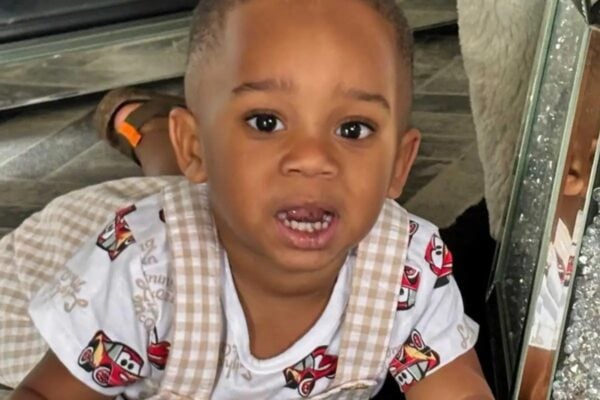
What I do know is that even if (for the sake of argument) Ms. Wiley or her friend stole diapers, that theft should not have resulted in the death penalty. In the wake of the killing, Martin Luther King Jr.’s daughter, Bernice, posted the following on Instagram: “We are treating items on a shelf as more valuable than a child. That is not just bad policing; it is a moral collapse.”
King went on to say, “In the name of ‘law and order,’ a child was killed and family was shattered over items that could be restocked, written off, and replaced. Our charge is clear: until the sacredness of human life is the starting point of every police encounter, we must demand changes in training and work unrelentingly to reform policies around police accountability.” Her father undoubtedly would have echoed those sentiments.
As is true in the Karmelo Anthony case, the reaction to the Wiley case breaks largely (though not exclusively) along racial lines. This is true even though the cases have nothing in common with each other – except for the racial dynamics that are at play. Given America’s history, the guilt or innocence of the parties involved in such cases is nearly always secondary to questions of race. There is virtually no reason to believe that will change anytime soon.
In the Anthony case, most white Americans see a Black “thug” (a euphemism for the so-called “n-word”) who viciously attacked an innocent white teen who had merely asked Anthony to leave a tent. By contrast, most Black Americans see a Black teen who had grown tired of harassment at the hands of two white bullies. He reacted in self-defense after being bullied yet again.
In the Wiley case, most Black folks see an all-too-familiar case of a homicidal police officer who acted with reckless disregard, if not outright malice, against a child. For most white folks, police officers acted justifiably in trying to stop suspects who were alleged to have committed a crime and subsequently tried to run them over.
Again, in the absence of indisputable evidence, I’ll stipulate that both of those perceptions are reasonable. What isn’t reasonable is that a baby is dead because someone associated with him may have stolen some diapers.
“The police are serving and protecting. They’re serving and protecting property.”
Van Lathan
Van Lathan of the Higher Learning podcast made this damning observation: “I look at all this and I see the twisted irony of losing your child over diapers… The police are serving and protecting. They’re serving and protecting property.”

The publicly expressed attitude of most white Christians stands in stark contrast. Specifically, the callousness with which so many of them have expressed their assessment of the inexcusable killing of this baby defies comprehension.
If after learning that a 1-year-old baby has been shot dead, your first (or second or third) response is, “But the mother should have…”, it is imperative that you deeply assess your relationship with Christ. It is literally impossible to believe that the Jesus of the Bible would have had a similar reaction.
And, to be clear, one cannot escape criticism by offering a half-hearted “only Jesus is perfect” in response. Doing so is a complete moral abdication, an abandonment of basic compassion toward the most innocent and vulnerable of God’s people.
I have written several times about the offensive lip service that so many people pay to Martin Luther King, Jr. by quoting one clause of one of his speeches — cynically and out of context — to telegraph their ostensible support for racial equality. Regarding the Wiley matter, I’ll offer an example from Dr. King’s final speech, “I’ve Been to the Mountaintop.” In that speech, King spoke movingly about Jesus’ parable of the so-called “Good Samaritan.”
After suggesting that the priest and the Levite who ignored the beggar might have done so out of fear that those who attacked him might still be near, King says: “And so the first question that the Levite asked was, ‘If I stop to help this man, what will happen to me?’ But then the Good Samaritan came by. And he reversed the question: ‘If I do not stop to help this man, what will happen to him?’”
“Being ‘pro-life’ … cannot end in the maternity room.”
Larry Smith
Being “pro-life,” as millions of Christians (including me) claim to be, cannot end in the maternity room. Indeed, the failure to love children after they have escaped the birth canal renders most pro-lifers willing participants in a cruel hoax. True godliness is rooted in compassion for others, not in empty platitudes and insincere protestations.
In a 1961 interview, the brilliant author James Baldwin said, “To be a Negro in this country, and to be relatively conscious, is to be in a state of rage almost, almost all of the time… And part of the rage is this: It isn’t only what’s happening to you, but it’s what’s happening all around you and all of the time in the face of the most extraordinary and criminal indifference — indifference of most white people in this country, and their ignorance.”
One does not have to believe in epigenetics to understand the compounding effects of generational trauma on African Americans. It is difficult to be a soldier pinned down in a foxhole during a firefight. It is unthinkable to be there with people who seem not to care if you live or die.
Contact community leader Larry Smith at larry@leaf-llc.com.





 Vellesyia Wiley or her friend stole diapers, that theft should not have resulted in the death penalty. In the wake of the killing, Martin Luther King Jr.’s daughter, Bernice, posted the following on Instagram: “We are treating items on a shelf as more valuable than a child. That is not just bad policing; it is a moral collapse.”)