
With rising prices, tracking your spending and creating a budget has never been more important
In this series for Money Smart Week, Everwise Credit Union is sharing tips on personal finance.
Creating and sticking to a budget requires discipline and attention. Here are some tips to get started.
Mastering this skill is easier said than done.
We’ve outlined how to track spending in 4 easy steps.
1. Pick your tracking method.
Use a budgeting app, spreadsheet, or even pen and paper. Use whatever works to track spending and identify waste.

2. Review your income and outgoing expenses.
Include account statements, bills and pay stubs. Track the purchases by reviewing monthly checking accounts and credit card statements at the end of the month.
3. Categorize your spending.
Save bills and receipts, whether electronic or paper. At the end of the month, review all the purchases made throughout the month. Don’t forget to include any automated payments, such as subscription fees and insurance premiums.
4. Don’t forget cash.
Regular cash withdrawals can sometimes slip through the cracks of financial tracking. However, it’s important to keep track of every dollar that’s coming in or going out.
Next, create and stick to a budget.
Creating a budget is one of the most vital parts of financial wellness, and it’s actually one of the simplest.
1. Track your spending.
Tally up total monthly expenses and all income streams.
2. List your needs.
Focus on essentials like rent or mortgage, utilities, groceries, and emergency savings. Yes, emergency savings are essential to be prepared for unexpected expenses that may arise.
3. List your wants.
These are the “nice-to-haves”—things like dining out, streaming subscriptions, or hobbies.
4. Assign dollar amounts to your expenses.
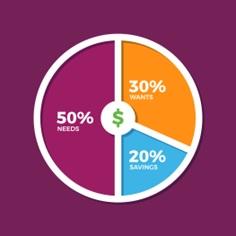
The list of expenses should start with fixed-cost needs, then variable cost needs, and finally, wants. A good rule of thumb is the 50/30/20 budget — spending roughly 50% of after-tax income on necessities, no more than 30% on “wants,” and putting at least 20% into savings or paying off debts.
5. Review and tweak as necessary.
Amounts in each expense category will likely need to be adjusted at least once every six months to keep the budget relevant. With inflation, it may even be every three months.
Celeste Jones is an Everwise Area Manager in central Indiana.
The information provided is for educational purposes only. The views and opinions expressed are solely those of the author. This information should not be considered to constitute financial, tax, legal, or accounting advice or recommendations. Please consult with an attorney, financial or tax professional for guidance.