
By JESSICA BRAIDDEN
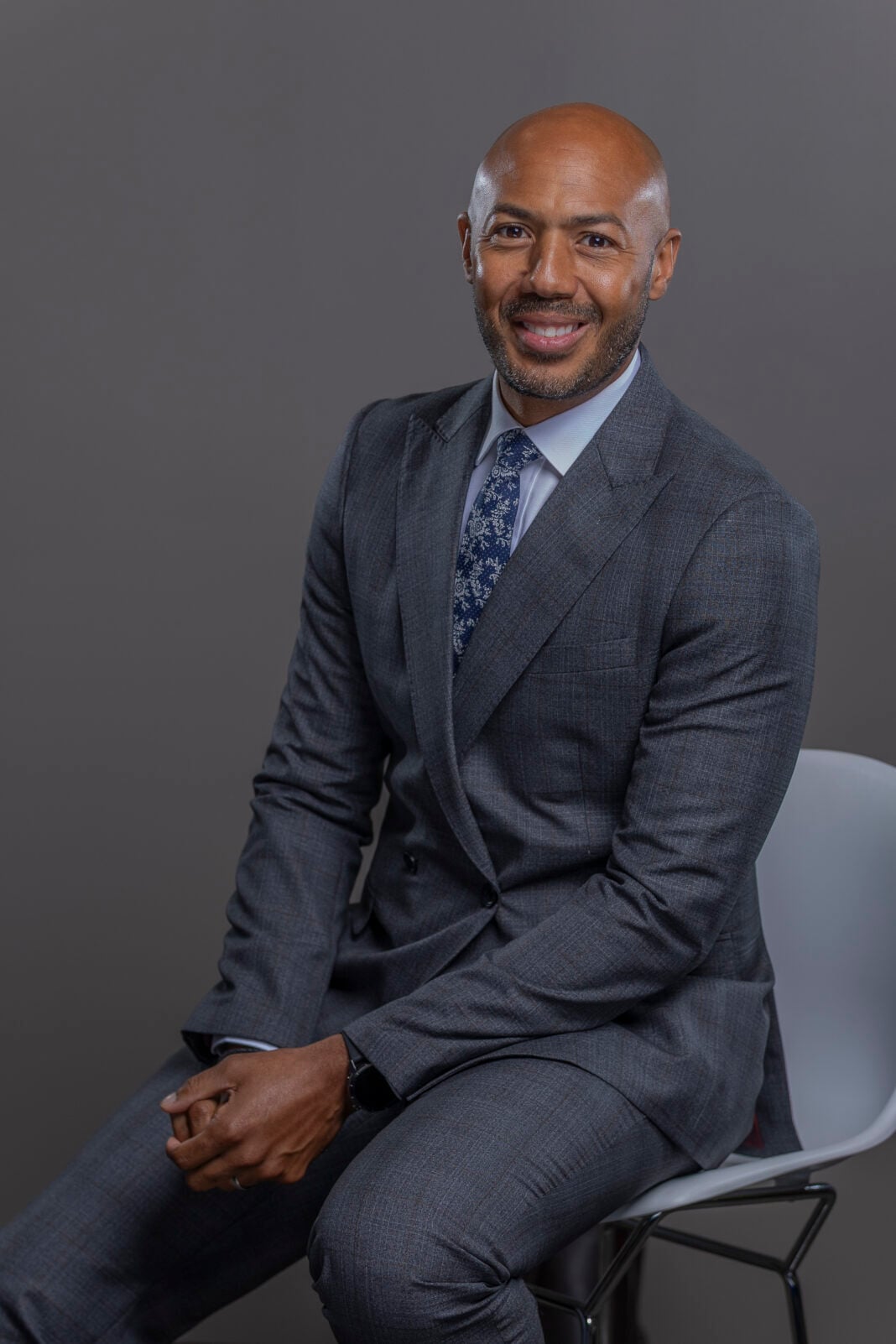
Ahmed Young, president and CEO of The Indianapolis Foundation, has worked across education, law, public service and corporate leadership. In the first of a two-part conversation with the Indianapolis Recorder, he reflects on what cannot be captured by a résumé: the faith that anchors him, the family that sustains him and the humility he believes leadership demands.
This interview has been edited for length and clarity.
You’ve had an impressive professional journey, serving in education, law, public service and corporate leadership. What ultimately led you to The Indianapolis Foundation, and what inspired you to accept this responsibility?
Ahmed Young: It starts with family and faith. Service has always been a part of my life.
When I was a kid, my mother reminded us that even on our most special days, when we’re celebrating our birthdays, it’s our responsibility to do for others.
From a young child, all the way to the start of my career as a teacher, through seeking justice as a prosecutor, practicing law at a private law firm, helping to support Indianapolis Public Schools through a very tumultuous time period, and serving at Walmart, whose values center around service and community, service has always been a through line through every step of my career, personally and professionally.
When I learned about the opportunity with The Indianapolis Foundation, I had to pause for a second, candidly, because I look at The Indianapolis Foundation as an essential component of a thriving Indianapolis.
If you’re not fully centered on truly serving this community, you’re going to do it simply for the sake of title, power and responsibility. That’s the worst type of leader we can have in a role like that.
So, I prayed about it.
Several of my prayers were centered around this opportunity allowing me to be a phenomenal husband, a phenomenal father and a servant to this community.
I put a lot of time and effort into preparing for the interview process. I cast a vision for what The Indianapolis Foundation can and should be, and the board embraced that vision.
You lead one of the region’s major philanthropic institutions while also being a husband, father, son and community leader. How do you navigate those responsibilities while remaining present for your family?
Young: It is 24/7. I don’t take off any of those hats, especially because I show up as my full self in every situation.
When I am at home with the family, I’m a dad 100%. I’m a husband 100%. I’m also still president and CEO, but I still just show up as me.
When you talk about work-life balance, there are times when the work has an emotional toll, and you’re physically present with family, but mentally and emotionally, you’re somewhere else.
Having a phenomenal wife who understands those pushes and pulls is important.
She shows up differently to support me in navigating that, and as she’s navigating pushes and pulls from her work, we support each other.
When you have that type of support system and three incredibly brilliant, smart and sometimes challenging children, it makes it all worthwhile.
Something that stood out to me was your emphasis on preparing extensively for your interview for this position, despite your professional background. What role do humility and preparation play in your leadership philosophy?
Young: I have a résumé, and it is my past, and it informs how I approach the present.
If you’re not able to cast a vision, if you’re not able to build culture, if you’re not able to bring people together and connect and collaborate, that’s not the sign of a leader.
We all have the ability to be phenomenal leaders, but it takes some work.
It takes a degree of humility and a commitment to do something that is going to be difficult at times, but it’s not always self-serving.
I put in work. I put in a lot of work, and I don’t take anything for granted.
That sense of entitlement does not reside within me by a long shot.
Leadership requires constant growth. How do you remain a lifelong learner while leading an organization of this magnitude? What role do mentorship, reading and community engagement play in your own development?
Young: I’m an avid reader, and there are several different ways in which I approach learning.
I also invest in relationships and learning from other people.
Just yesterday, I was on a Zoom meeting with a seasoned executive who’s been doing work in this community for generations, and I was able to just listen to him and learn.
It takes a certain level of humility and grace to say, “I want to learn from you.”
I don’t attend as many conferences because I want to be here. I’m truly learning and studying this city from a different perspective.
I’ve done all these different things, but I am still learning the city.
In order for me to truly continue to learn the city, I have to be out in the city.
In part two, Young discusses Indianapolis’s greatest challenges, the role of philanthropy beyond grantmaking and the future he hopes to help build for the next generation.
Jessica Braidden, Ph.D, PhilD, is a writer, host of WISH-TV’s “At the Table,” and the founder and executive director of Deborah’s Place.