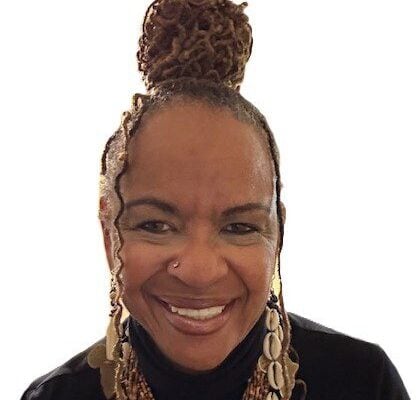
By MAXINE BRYANT
By the time you read this column, the 2026 midterm elections will be over. Some Americans will be celebrating. Others will be disappointed. And, millions will have returned to their everyday routines, giving little thought to voting until the next major election.
But here’s something we must never forget: The right to vote is not something we should think about only when an election approaches. It is a right that was fought, bled and died for. And it remains under threat.
The Black vote matters!
America has some remarkable stories to tell. We celebrate scientific discoveries, technological innovations, and historic firsts. Black Americans have our own extraordinary milestones: Thurgood Marshall’s appointment to the Supreme Court, Shirley Chisholm’s election to Congress, Barack Obama’s election as president, Kamala Harris as the first female and first Black/Asian U.S. Vice President, and Ketanji Brown Jackson’s appointment to the Supreme Court.
But alongside these accomplishments is another American story. One that is not nearly as celebratory.
It is the story of a nation that proclaimed liberty and justice while systematically denying millions of Black citizens the right to participate in its democracy.
The 15th Amendment, ratified in 1870, prohibited denying voting rights based on race, color, or previous condition of servitude. Yet Southern states devised literacy tests, poll taxes, grandfather clauses, and intimidation campaigns to keep Black Americans from exercising that constitutional right.
And when those measures failed, violence often followed.
Consider Maceo Snipes.
In 1946, Snipes, a Black World War II veteran, dared to vote in Georgia’s Democratic primary after federal courts struck down the white primary system. The following day, white men confronted him, and he was shot. He died two days later.
Think about that. A Black man exercised his constitutional right to vote — and paid for it with his life.
Why? Because those determined to preserve white political power understood something that Snipes understood, too.
The Black vote matters!
Fast-forward to 1965. Following decades of organizing, protest, sacrifice and bloodshed, Congress passed the Voting Rights Act. Among its strongest protections was a requirement that jurisdictions with histories of racial discrimination obtain federal approval before changing certain voting procedures.
But in 2013, the Supreme Court’s Shelby County v. Holder decision invalidated the formula determining which jurisdictions were subject to that requirement. A major federal safeguard against discriminatory voting changes was effectively dismantled.
And the struggle continues.
According to the Brennan Center for Justice, between the 2024 election and September 2026, lawmakers in 22 states enacted 47 laws restricting voting access. These include more demanding identification requirements, proof-of-citizenship documentation, and additional obstacles to registration and voting.
Even Indiana has adopted restrictions eliminating student identification cards as acceptable voter ID and increasing the risk that infrequent voters will lose their registration.
Consider the implications. When eligible citizens encounter unnecessary barriers to voting, whose voices are most likely to be diminished? Those with limited transportation, fewer resources, inflexible work schedules, or difficulty obtaining required documents. Historically, such barriers have disproportionately burdened Black communities.
And we cannot ignore another form of disenfranchisement: laws that prevent people with felony convictions from voting, sometimes even after their release. These restrictions vary by state, but their consequences extend well beyond individuals to families and communities.
Voter suppression does not always announce itself with a literacy test or a poll tax. Sometimes it arrives disguised as administrative procedure.
Yet, while laws can create barriers, apathy can silence us just as effectively.
How often have we heard someone say, “My vote doesn’t matter,” or “All politicians are the same?”
I wonder what Maceo Snipes would say.
Voting is not an endorsement of everything a candidate represents. It is an opportunity to influence who makes decisions about our schools, healthcare, housing, criminal justice system and economic future.
And voting is only part of our responsibility. We must remain informed, scrutinize legislation, attend public meetings, hold elected officials accountable, and prepare the next generation to understand the power of civic participation.
Our ancestors did not struggle for the right to vote so that we could exercise it only when convenient.
The midterms may be over, but our responsibility is not.
Register. Stay registered. Stay informed. Participate in local elections. Challenge barriers. And never surrender your voice to apathy.
Because the struggle was never simply about casting a ballot. It was about claiming the right to shape our own future.
The Black vote mattered then. It matters now. And it will matter long after the next election.
Maxine Bryant, Ph.D., the founder and curator of GriotSpeaks, is an author, and African American culture keeper. Contact her at mlb@drmaxinebryant.com.
For more community voices, visit indianapolisrecorder.com.

Maxine Bryant, Ph.D. is the founder of GriotSpeaks, author and African-American culture keeper. Dr. Bryant replaces mythology with truth about Africa and the African Diaspora experience. Learn more about her at www.drmaxinebryant.com and email her at mlb@drmaxinebryant.com.