Part two of this two-part interview explores how language can be misused to contribute to religious abuse.
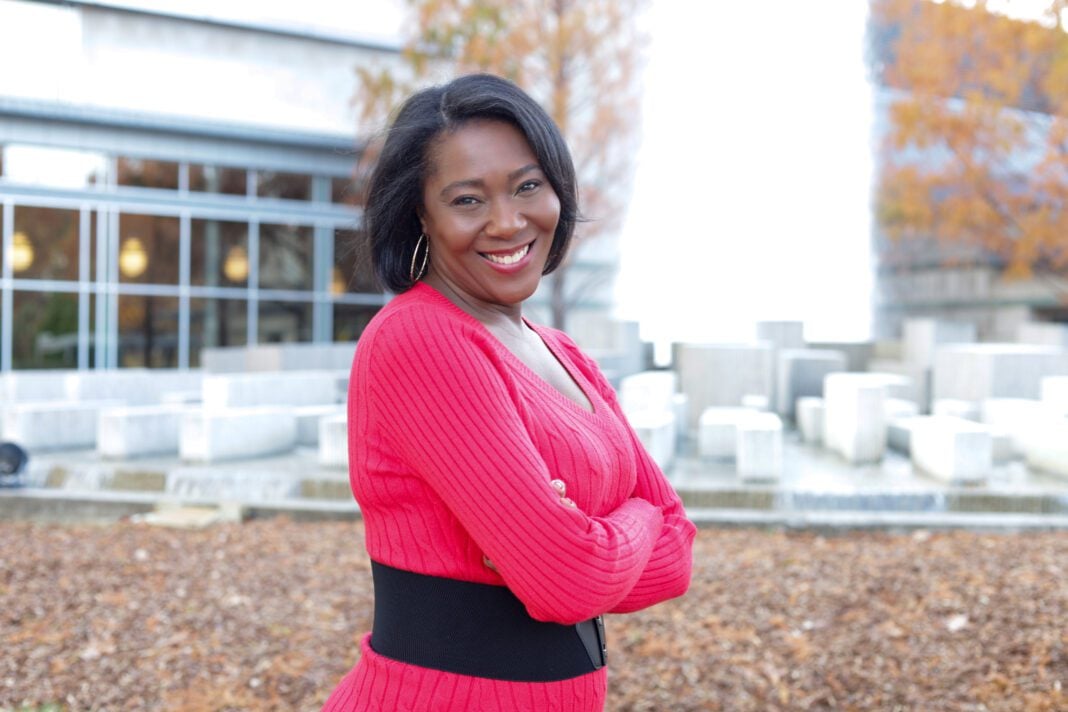
This is a continuation of the April 24, 2026 article that featured Alisha Powell, Ph.D., LCSW, LICSW, a professor, therapist, couples’ counselor, and owner of Amethyst Counseling and Consulting.
Mira Cassidy: In the world of religious abuse healing, understanding coded language is a big thing. Could you tell us what coded language is, and what phrases or biblical expressions are often misused in a spiritually abusive system?

Amethyst Counseling and Consulting is a religious trauma therapist specializing in Black communities. Learn more at
www.amethystcounselingandconsulting.com.
Alisha Powell: In a spiritually abusive system, there are certain scriptures that, a lot of times, are twisted in order to give the leader certain power and authority. Many times, in my experience, the leaders would make a point to say, ‘This is what I felt impressed to do,’ ‘This is what I felt led to do,’ ‘This is what I felt the Spirit was leading me to do.’ If the person said that, there was no questioning them because we weren’t really allowed to question whether the message was from God or not, because the person was saying that the message was from God.
Anytime someone’s saying that I speak for God, or I have the exclusive message, that is a red flag, because that is a part of the language that’s used. It’s something to keep an eye on and really watch closely for, because what are they going to say afterwards?
Is it something that aligns with the fruits of the Spirit? Is it honest? Is it kind? Is it compassionate? Is it loving? What are the fruits of what they are saying? What are they telling you to do? When that language is used, a lot of times they also will normalize suffering.
If something happens that’s unfortunate or really sad, you are told to believe that it may be because of something that you’ve done, or that it may be because of a sin that you have not confessed. Any leader or language that puts the blame on the individual for any bad thing or tragedy that has happened because of their own actions, is part of the language used to continue to hold people captive.
This means they are being taught that the more perfect you are, the less likely you are to have anything bad happen to you, and that is really problematic language. That language tries to convince people that everything that is unfortunate has happened because they’re sinners or because they haven’t confessed a sin.

Cassidy: I remember an illustration you shared about a hammer that I found extremely helpful in my own healing journey. Also, why is it that some people in authoritarian religions live extraordinarily happy lives while others get struck with horrific traumatic experiences, religious trauma?
Powell: From what I remember about the example, it really was talking about how religion can be a tool. It can be a tool for good or a tool for evil. It’s really how you use it. A hammer can be a tool of destruction, but it also can be a tool of production at the same time. It really depends on how you use it.
So, recognizing religious trauma and church hurt is recognizing that people can come from the same church and have a totally different experience than someone else that’s in the exact same church. People can be in a family group and experience a religion or a high control group and have a totally different experience on the other side of it. One person may say it’s the best thing that ever happened to me, and the next person in the same family may say it was the worst thing that ever happened to me.
I think it is so important to be able to hold those things with some nuance, recognizing that each person’s perception is their own reality, and it’s not necessarily our place to always argue with, yes it was bad, or yes it was good. Those things come internally as far as those questions that might make you think, ‘Is this the right group for me? Is this the right practice for me? Is this the right faith for me?’
You may start to see signs, or you might start to just feel nervous about what you’re hearing. Those are indications that more questions should be asked, just in general about the group or about their belief system.
If you are a practicing therapist and you would like to cross-train and become a religious trauma therapist, contact Alisha Powell to learn more by visiting her website: www.amethystcounselingandconsulting.com. Her practice currently covers the states of Arizona, Colorado, Georgia, Maryland, Massachusetts, Minnesota, Texas, Virginia, and Washington D.C.

Mira Cassidy is a religious abuse recovery coach, actress, and writer who works as an advocate and connector for women affected by religious abuse. Mira graduated with a Bachelor of Science degree in Psychology of Human Relations from IWU December of 2024. She is the founder of Sisters Living with Religious Trauma® Support Media LLC.