The Trump administration is giving Indiana new flexibility in how it spends some of its federal education funding.
But the waiver from the U.S. Department of Education is not nearly as expansive as what Indiana requested last year, when it sought a waiver from some provisions of the Every Student Succeeds Act, the main federal law governing K-12 education.
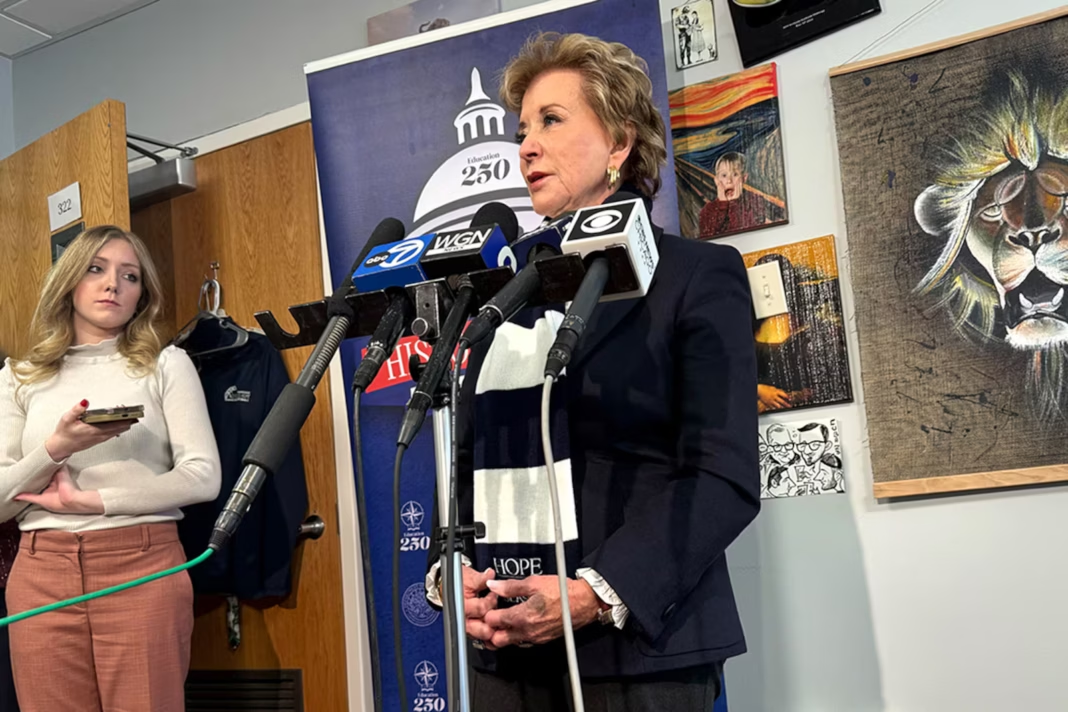
The approved waiver will merge five federal funding streams to the tune of around $50 million over the next four years, according to U.S. Secretary of Education Linda McMahon, who spoke at a news conference with Indiana Secretary of Education Katie Jenner and Indiana Gov. Mike Braun on Tuesday.
This strategy for federal education funding, often referred to as a block grant, is popular among conservatives championing fewer regulations. But others have criticized it, saying it could weaken accountability for the money and ultimately hurt certain students.
Indiana is now the third state after Iowa and Louisiana to receive a “Returning Education to the States” waiver from the Trump administration, which has also sought to close the Education Department. The flexibility the department provided to Iowa was also more modest than what the state originally sought.
McMahon and Jenner said the move will save Indiana an estimated $20 million in compliance costs over four years associated with administering the grants separately.
“As states, we have significant control over education. We set standards, choose our curriculum, and design assessments. When it comes to federal funding, our hands have always been tied, until now,” Jenner said.
The waiver will also allow the state to use its newly approved school accountability model as the sole accountability model for state and federal purposes.
At the state level, the waiver will merge the following funding streams:
- Title I, Part B grants, which cover assessment.
- Title II, Part A grants, which cover professional development.
- Title III, Part A grants, which cover education for English learners.
- Title IV, Part A grants, which cover enrichment.
- Title IV, Part B grants, which cover 21st Century Learning Centers.
The federal funding for these grants will not change under the waiver.
The waiver does not grant all Indiana districts similar flexibility to spend the money they receive from the state, as the state originally requested in its waiver application. Instead, it allows the state to create a pilot program for up to 15% of local education agencies that will allow them to merge Title II, Part A and Title IV, Part A funds.
The waiver also does not address Indiana’s request to redirect School Improvement Grant funding away from schools identified as low-performing. That request would have potentially diverted $25 million in annual federal funding to other schools, like charter schools and microschools.
Education advocates had expressed concern that this move would have hurt students who have to stay at the schools identified as low-performing.
Similarly, critics have also said that merging dedicated federal funding streams for specific student needs into block grants risks losing the guardrails that ensure the funding reaches those students.
Denise Forte, president and CEO of The Education Trust, an advocacy group that tracks the status of state waiver requests, said in a Tuesday statement that the Trump administration “has abandoned” commitments to supporting students and schools and to publicly reporting important education data.
“Instead, the Department of Education will allow Indiana to rewrite its accountability system in a way that will mask student performance and move millions of dollars in dedicated funding away from students who need it most,” Forte said.
Indiana officials on Tuesday rejected such arguments.
“Our funding formulas … direct a certain number of dollars per student to every school. That money will continue to flow,” Jenner said. “Now the money will be able to be deployed exactly how they need it in a timely manner.”
Aleksandra Appleton covers Indiana education policy and writes about K-12 schools across the state. Contact her at aappleton@chalkbeat.org.