A Sankofa ‘back-to-school’ history lesson
The United States was never really a melting pot. What, exactly, were we supposed to melt into?
Perhaps we could be better understood as a salad bowl — each ingredient maintaining its unique color, texture, and flavor while contributing to the whole. The crisp cucumber, juicy tomato, earthy mushroom, crunchy carrot, cheese, croutons and leafy greens all remain distinct. The dressing touches everything, bringing the ingredients together without requiring them to lose what makes them unique.
Our nation is much the same — a mixture of cultures, nationalities, ethnicities, histories and traditions. Our shared citizenship is the dressing that binds us together.
For that vision to work, we must respect our differences while remembering the history that connects us. Unfortunately, racism — both blatant and subtle — has repeatedly interfered with America’s promise of equality.
I was reminded of that recently in Birmingham, Alabama.
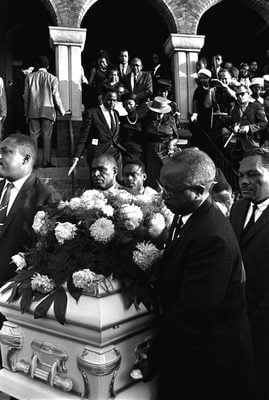
While visiting the Birmingham Civil Rights Institute, I walked through exhibits chronicling the struggle for Black civil rights. One detail on a timeline stopped me.
On Sept. 2, 1963 — the first day of school desegregation in Birmingham — Ku Klux Klansmen, who would later be connected to the bombing of the 16th Street Baptist Church, were reportedly seen scouting the church.
That bothered me deeply.
Black children were entering previously segregated schools, carrying books, hopes and the possibility of equality. Yet while children were entering classrooms, hatred was plotting.
Less than two weeks later, on Sept. 15, a bomb exploded at the 16th Street Baptist Church, killing four girls preparing for Youth Day: Addie Mae Collins, Denise McNair, Carole Robertson and Cynthia Wesley. A fifth girl, Sarah Collins Rudolph, survived with devastating injuries. Later that day, two Black boys — Johnny Robinson and Virgil Ware — were killed in separate acts of racial violence.
Six Black children died in Birmingham that day. They never got to finish that school semester.
And Birmingham was not alone. American history bears the scars of Greenwood in Tulsa, Oklahoma; Rosewood, Florida; East St. Louis, Illinois; and far too many other communities where racial hatred erupted into violence.
As children across this country return to classrooms this fall, one of the most important subjects they can study is history — all of it. Students should learn history through a kaleidoscope of lenses that brings the entire picture into focus — not a carefully cropped photograph designed to make us comfortable.
Teach that Indigenous people occupied lands that were taken from them.
Teach that Black people were enslaved, bought, sold and treated as property.
Teach that enslaved people resisted bondage rather than happily accepting it.
Teach about laws deliberately designed to strip Black Americans of rights.
Teach about people — Black and white — who fought, sacrificed, and sometimes died to change this nation.
Teach also about Black genius that shaped this nation: the agricultural knowledge Africans brought to the Colonies, the inventions of Garrett Morgan and Lewis Latimer, the medical breakthroughs of Dr. Charles Drew and Dr. Patricia Bath — just to name a few. Our children should know not only that Black people survived, but what Black genius produced.
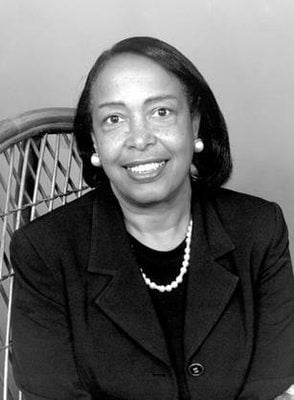
Accurate history must teach our children that Black history is more than oppression. It is genius.
That is not anti-American history. That is American history.
Accurate history gives us an opportunity to understand one another and perhaps heal a divided nation. Denying history does not erase it. Sanitizing history does not change it. Hiding racism does not eliminate racism.
In “Born a Crime,” Trevor Noah humorously captures the abbreviated version of racial history many receive: There was slavery, then Jim Crow, then Martin Luther King Jr. — and now it’s done.
If only history were that simple.
Today’s children learn from countless sources — Google, social media, family, church, friends, videos and their own lived experiences. Their worldview is not formed solely by a classroom textbook. Silencing uncomfortable history does not protect them. Instead, we should equip them to examine information critically, distinguish fact from fiction and confront truth — even when truth makes us uncomfortable.
That is where Sankofa becomes particularly relevant.
Sankofa, a concept from the Akan people of Ghana, teaches that there is wisdom in going back to retrieve what has been forgotten or left behind so we can carry it forward.
Moving forward often requires looking backward.
Our children deserve that backward glance. They deserve to know this nation’s brilliance and contributions, its triumphs and its failures. They deserve to understand how we arrived here, so they are better equipped to determine where we go next.
Racism impedes unity. The salad bowl allows each of us to remain who we are — with pride and without fear or ridicule — while contributing something valuable to the whole.
This school year, give our children the whole story. Give them the tools to wrestle with it. Give them the opportunity to learn from it. Then trust them to build something better.
As for me?
I’ll have the salad bar, please.
Maxine Bryant, Ph.D. is the founder of GriotSpeaks. Learn more at www.drmaxinebryant.com.
Maxine Bryant, Ph.D. is the founder of GriotSpeaks, author and African-American culture keeper. Dr. Bryant replaces mythology with truth about Africa and the African Diaspora experience. Learn more about her at www.drmaxinebryant.com and email her at mlb@drmaxinebryant.com.