I’m sure you’ve heard the saying: doing the same thing and expecting different results is insanity. When it comes to prisoner reintegration, the real question is — who is insane?
Most employers still hesitate to hire people with criminal histories. Many communities still resist welcoming returning citizens into their neighborhoods. “Ban the Box,” the effort to eliminate the requirement for job applicants to disclose their criminal history, is still misunderstood and politicized. Yet we expect people to come home from prison with little more than a check and a bus pass — and somehow build stable, productive lives. That’s insanity.
Since 2017, April has been recognized as National Second Chance Month, an effort launched by Prison Fellowship to highlight the barriers faced by people with criminal records and to advocate for change. Those barriers remain very real. And as long as they do, we should not be surprised by high recidivism rates. If we keep doing what we’ve always done, we will keep getting what we’ve always gotten.
And for the Black community, this conversation is not abstract — it’s deeply personal. Black Americans are disproportionately represented in the criminal legal system, from arrest to incarceration. That means Second Chance Month is not just about “them” — it’s about us. It’s about our brothers, sisters, parents and children returning home and whether our communities are prepared to receive them with dignity and opportunity.
So why is a Second Chance Month even necessary? Because the truth is, most incarcerated individuals will eventually return to society. Even those serving long sentences may come home after decades. But too often, we are not ready for them.
Part of the problem is how we define “reentry.” We place the burden almost entirely on the individual: get a job, find housing, stay out of trouble, don’t associate with the wrong people. While those expectations are reasonable, placing the full weight of success on someone returning from incarceration — often with limited resources — is a barrier in itself.
That burden is made heavier by how society sees them. We “polaroid camera” people with criminal histories. We capture them in a single moment — their worst moment — and freeze them there. Remember the old Polaroid cameras? You snapped the picture, shook it, and what developed was final and permanent. No edits. No adjustments. Now with our cell phones, we take a picture and instantly edit it — crop it, filter it, even remove things we don’t want to see.
But when it comes to justice-impacted individuals, we still use a Polaroid mindset. We lock them into a single frame: criminal, felon, offender — for life. And as long as we hold them in that frame, we limit their ability to move forward.
There’s also a broader cultural issue at play. In the United States, our system has historically emphasized punishment over rehabilitation. Our prisons are designed to contain, not necessarily to restore. Walk into many facilities and you’ll see concrete, steel and isolation.
Contrast that with countries like Denmark, where the philosophy centers on rehabilitation. Lower-security facilities resemble college dorms; not cages. Individuals work, cook, maintain family connections, and prepare for life after release. The punishment is the loss of freedom — not the loss of humanity. The result is lower recidivism and stronger reintegration.
If we want different outcomes, we must confront these realities.
First, we need to move toward true community reintegration — where the community shares responsibility. That means access to livable wages, safe housing, food, transportation and support systems. It means churches, nonprofits and neighbors stepping in — not stepping back.
Second, we must change how we see people. Stop holding individuals hostage to the image of their past mistakes. Move from a “polaroid camera” mindset to a “cell phone” mindset where edits (changes) are supported and expected. People are more than the worst thing they’ve done. Restoration requires us to believe that.
Finally, we must continue to examine how we incarcerate. Are we simply punishing, or are we preparing people to return home better equipped to succeed? That question cannot be ignored.
During this National Second Chance Month, I challenge you to decide to make a difference. Support organizations engaging in community reintegration work. Partner with programs that walk alongside people who are justice-impacted. Shift your language — recognize that justice-impacted individuals are people first.
Stay informed about policy changes. In many states, individuals who have completed their sentences can vote — a fundamental right that must be protected and promoted. Help spread that information. Help register voters. Help restore voices.
Remember, at the end of the day, this is not just about second chances — it’s about community restoration. And if we’re serious about breaking cycles that have disproportionately impacted Black communities for generations, then we must move from reentry insanity to intentional reintegration.
The question is no longer whether people deserve a second chance. The question is whether we are willing to help make it possible.
Contact Maxine Bryant, Ph.D., author and founder of GriotSpeaks, at mlb@drmaxinebryant.com.
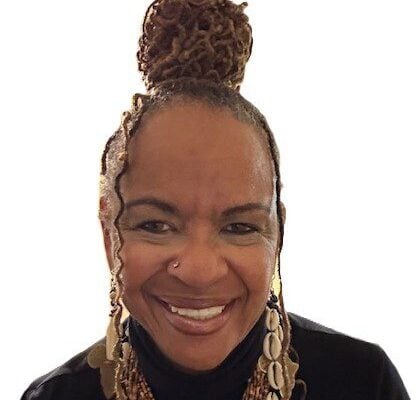
Maxine Bryant, Ph.D. is the founder of GriotSpeaks, author and African-American culture keeper. Dr. Bryant replaces mythology with truth about Africa and the African Diaspora experience. Learn more about her at www.drmaxinebryant.com and email her at mlb@drmaxinebryant.com.