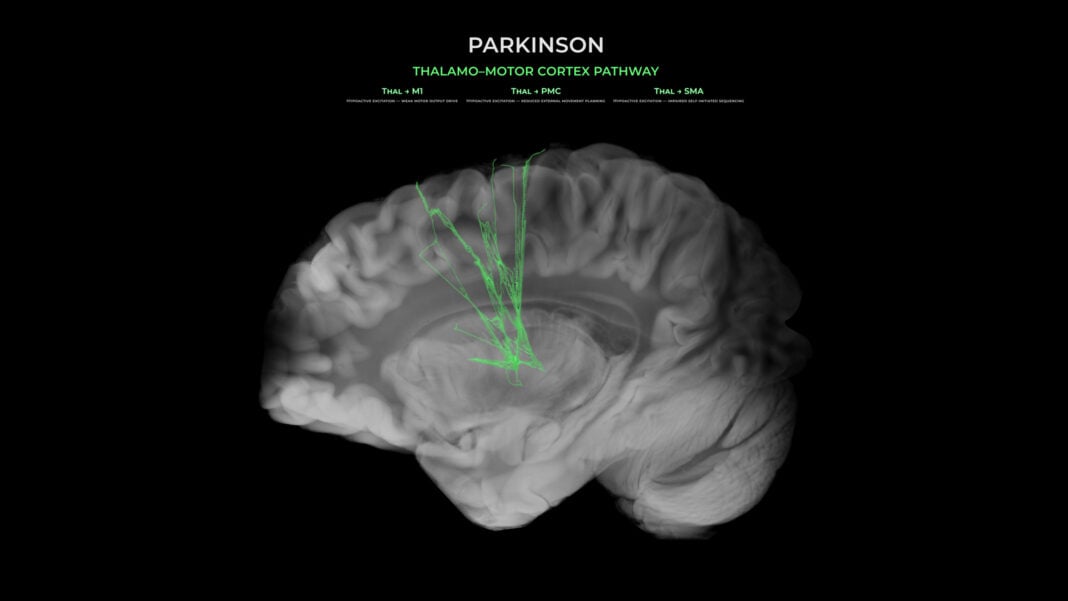
A team of researchers led by Indiana University School of Medicine has received a $9 million grant to investigate how aging immune cells may contribute to the risk and progression of Parkinson’s disease, a neurological disorder that affects more than 1.1 million Americans.
The project, led by Malú Gámez Tansey, professor of neurology at the IU School of Medicine, will focus on immune-cell exhaustion, a process associated with aging that may play a significant role in both idiopathic, with no identifiable cause, and familial, or inherited, forms of Parkinson’s disease.
The grant was awarded through Aligning Science Across Parkinson’s, or ASAP, in partnership with The Michael J. Fox Foundation for Parkinson’s Research. The funding supports the expansion of the Collaborative Research Network, an international effort aimed at addressing high-priority questions surrounding Parkinson’s disease and accelerating the development of new treatments.
Researchers say the project could help uncover why Parkinson’s disease develops differently from person to person and potentially lead to more personalized approaches to diagnosis and treatment.
“Age is the greatest risk factor for Parkinson’s disease, yet we still know relatively little about how aging of the immune system contributes to disease development and progression,” Tansey said. “The ultimate goal is to leverage knowledge of immune system aging to identify individuals at greater risk for Parkinson’s disease and then target the dysregulated processes in those individuals with treatments designed specifically for them, in ways similar to what the cancer field does today.”
Understanding immune-cell exhaustion
Immune-cell exhaustion occurs naturally as people age. Over time, certain immune cells become less effective at responding to threats, leading to diminished immune function and chronic inflammation. Scientists have observed these changes in a variety of age-related conditions, but their relationship to Parkinson’s disease remains poorly understood.
The IU-led team plans to investigate whether immune-cell exhaustion contributes to the onset and progression of Parkinson’s disease and whether biological markers of immune aging can be used to identify individuals at higher risk.
Researchers will also examine how environmental and lifestyle factors may interact with immune aging to influence disease development.
Parkinson’s disease is a progressive neurological disorder that affects movement and can cause symptoms including tremors, stiffness, balance problems and cognitive changes. According to researchers, the disease carried an estimated $82 billion burden in U.S. health care costs, disability expenses, lost productivity and caregiving needs in 2024.
A multi-institutional collaboration
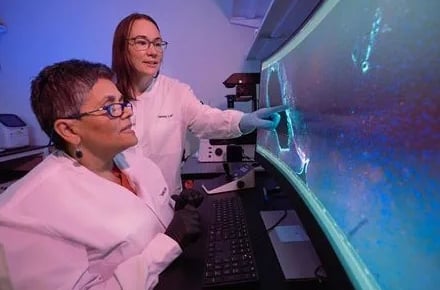
The project brings together experts from multiple universities and disciplines, including neurology, immunology, neuroscience, biostatistics and clinical care.
Tansey’s leadership team includes Rebecca Wallings, assistant professor of neurology at IU School of Medicine; Elizabeth Bradshaw, assistant professor of neurological sciences at Columbia University Vagelos College of Physicians and Surgeons; Richard Smeyne, professor and chair of neuroscience at Thomas Jefferson University; and Catherine Weindel, assistant professor of microbiology and immunology at Tulane University School of Medicine.
Smeyne said the collaborative nature of the research effort is one of its greatest strengths.
“Parkinson’s disease is complex enough that no single institution can answer these questions alone,” Smeyne said. “This collaboration between Jefferson, IU, Tulane and Columbia brings together complementary expertise in immunology, neuroscience, biostatistics and clinical care in a way that genuinely accelerates discovery.”
Smeyne added that his laboratory’s participation reflects a commitment to translating scientific discoveries into improvements in patient care as efficiently as possible.
Weindel said the partnership offers an opportunity to better understand how immune system aging influences neurological disease.
“What excites me most about this project is its power of collaboration,” Weindel said. “Combining our expertise in neuroscience, neuroimmunology and immunology will give a richer, more complete picture of how immune system aging could contribute to Parkinson’s disease.”
She added that the findings could help lay the groundwork for future immunotherapies aimed at slowing or preventing disease progression.

Searching for earlier detection and personalized treatment
A key component of the research will be conducted by Wallings and her laboratory at IU.
Her team will study what she describes as the “burn out” of immune cells over time and explore whether those changes can be linked to Parkinson’s disease development and progression.
Researchers hope their work will lead to tools that can identify Parkinson’s disease earlier, improve tracking of disease progression and reveal new treatment targets.
“Parkinson’s disease is very different from one person to another, and we still do not fully understand why,” Wallings said. “By studying immune-cell exhaustion and biological immune aging, we hope to uncover new clues about what drives these differences and identify measurable markers that could help predict disease progression or response to treatment.”
The research aligns closely with ASAP’s broader mission of understanding the biological diversity of Parkinson’s disease. Through its latest expansion of the Collaborative Research Network, ASAP aims to develop a comprehensive biological blueprint of the disease while creating standardized research tools and resources that can be shared globally.
Supporters of the initiative say those resources will help reduce technical barriers that often slow scientific progress and drug development.
Additional IU researchers involved in the project include Travis S. Johnson, assistant professor of Biostatistics and Health Data Science, who will serve as the project’s data manager and collaborating primary investigator. Other contributors include Andrea R. Merchak and Nicole R. Fowler.
As the research moves forward, investigators hope the findings will help explain how aging influences Parkinson’s disease and ultimately pave the way for more precise, individualized treatments for patients living with the condition.
To read more, visit iuhealth.org/find-medical-services/parkinsons-disease.
This reporting is made possible by a grant from the Indianapolis African-American Quality of Life Initiative, empowering our community with essential health insights. https://iaaqli.org/
Contact Health & Environmental Reporter Hanna Rauworth at 317-762-7854 or follow her on Instagram at @hanna.rauworth.

Hanna Rauworth is the Health & Environmental Reporter for the Indianapolis Recorder Newspaper, where she covers topics at the intersection of public health, environmental issues, and community impact. With a commitment to storytelling that informs and empowers, she strives to highlight the challenges and solutions shaping the well-being of Indianapolis residents.