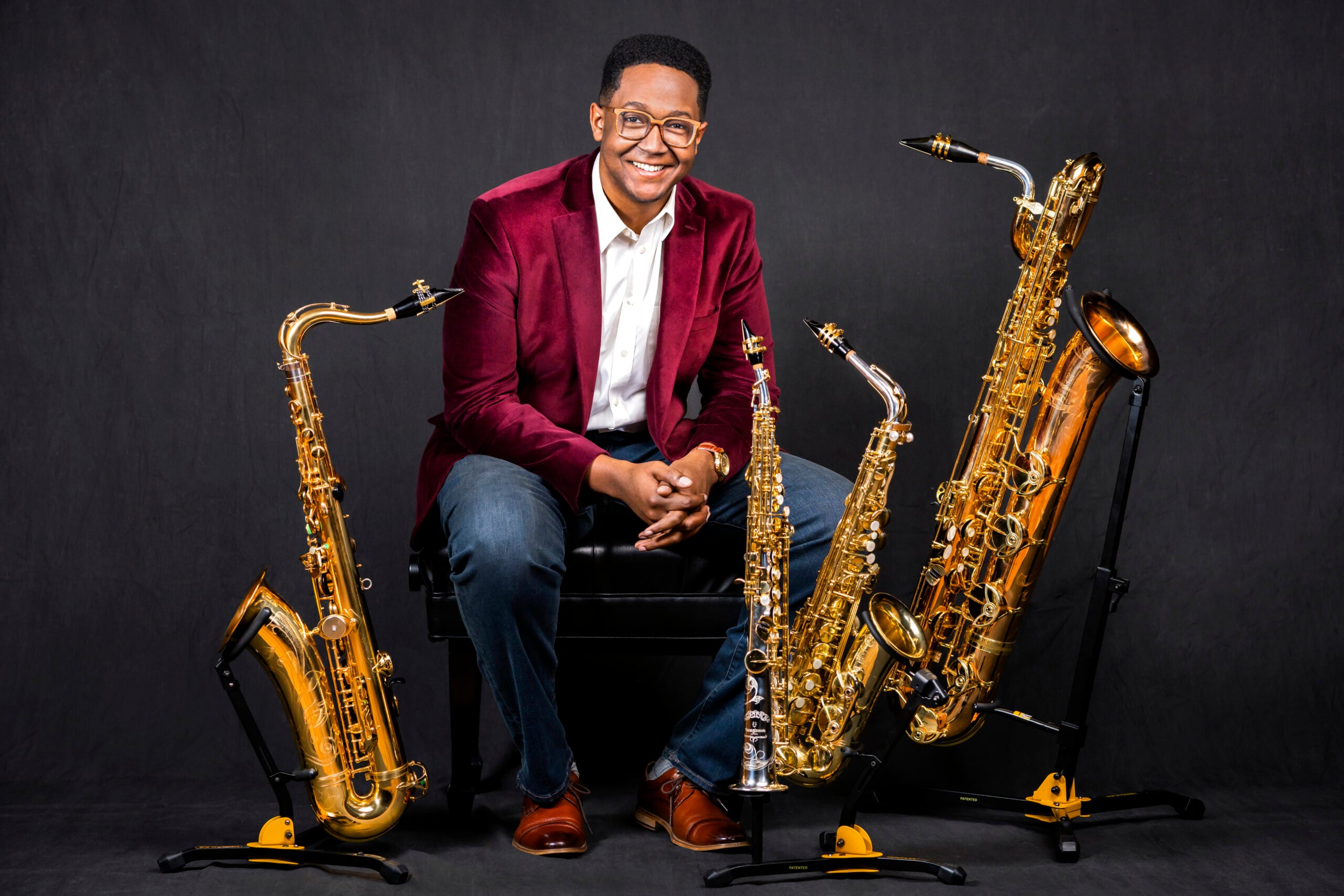
Classical saxophonist and composer Steven Banks will soon share the stage with the Indianapolis Symphony Orchestra.
Banks will perform “Love Returns,” a commissioned saxophone concerto by Joan Tower, as part of the ISO’s upcoming “Appalachian Spring” concert with guest conductor Robert Spano on May 29-30. Banks sat down with the Recorder ahead of his debut performance with the ISO to discuss his career, new album, and working on “Love Returns.”
Responses have been edited for clarity and brevity.
For readers who aren’t familiar with your work, can you introduce yourself and your background as a musician and composer?
Steven Banks: I became interested in classical music a little bit later than most would, though I came from a musical family, my mom was an elementary school music teacher, dad played brass instruments. I went to high school at the North Carolina School of the Arts, and there were a lot of artists of different kinds there — ballet dancers, actors, musicians, filmmakers. I really got into classical music there, though growing up, I was listening to and participating in a lot of gospel music and things like that. Once I found classical music, I never turned back. From there, one of the big things in my career is I won this competition called the Young Concert Artists Competitions, and that’s what allowed me to start playing more concerts and get management.
Can you talk about some of the ways you approach storytelling as both a musician and a composer? How do these roles differ or overlap?
Banks: With roots in gospel music, storytelling is sort of inherent. Beyond storytelling, it’s just a certain vitality of whatever you’re doing is extremely important. It’s never just an intellectual exercise; it’s always something meaningful.
Growing up in church, they say before the service starts, ‘does anyone have a song in their heart?’ And someone just starts to sing. It’s not like they preplanned it; it’s just this music is coming up and helping people work through their real lives. That is always an undercurrent for me, whether I’m performing or composing, just finding what is it about this thing I’m playing that is human and what needs to come out.
In terms of being both a performer and a composer, I used to think of them as a little bit more separate, but now I think that it’s all kind of the same thing. … As a composer, I kind of crossed the fact that the things I was trying to convey emotionally, I couldn’t actually put it down on the page. The beauty of being a performer is you’re taking what the composer put down on the page and you’re realizing it’s not even close to the full story. Engaging with both sides of that allowed me to feel more in touch with the whole ecosystem of making music.
Many people primarily associate the saxophone with jazz. What has your experience been like as a classical saxophonist, particularly as a musician of color navigating those spaces?
Banks: Well, jokingly I’ll say a lot of times, no matter what I’m playing, people think I’m playing jazz because I’m holding a saxophone and I’m a tall, Black man on the stage. One thing that I’ve had to overcome for myself personally is this idea that I’m always having to prove myself. As a saxophonist in the classical music world, I used to have this chip on my shoulder feeling like I have to prove this instrument belongs here. Also, as a Black man, having to always think or feel like I don’t belong here, I’m trying to prove that I do, either intellectually or playing perfectly. I used to say that I had to prove myself and now I’m working on just trusting that I’ve done enough and showing up as if I belong regardless.
What would you say to young Black and brown musicians who see the work you’re doing and want to follow in your footsteps?
Banks: Whatever you are genuinely drawn to is okay, and to really foster the things you’re actually interested in, but not at the expense of learning the fundamentals of musicianship. … It’s always a balance of being able to follow your heart and being able to put out what resonates with you and also trying to grow that and ‘have the chops,’ as we might say, to make a living and play and take whatever gig you actually have.
It’s very common now for students that I work with sometimes to not want to do anything they don’t inherently already love, and I think it’s important to realize you need to balance both sides of that and it’s not ‘selling out’ or not following your heart enough if you play a piece that isn’t your favorite one. My teacher always said, ‘whatever is on your stand needs to be your favorite piece,’ and that has served me well.
READ MORE: NearSpace Education looking for educators to lead state-wide STEM programming
Your debut album, “Cries, Sighs, and Dreams,” was released on May 8. What inspired the project, and is there a particular piece on the album that stands out to you personally?
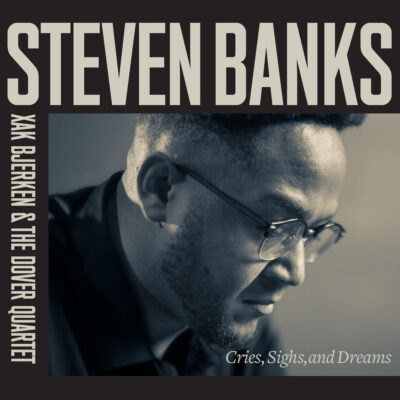
Banks: I view this project as a very strong marker for myself in my career, as sort of a capstone for the first portion of my career in that it includes a lot of different things I’ve been a part of. There are some of my compositions on there that have been really important to me, also some standard repertoire that is very seminal for the saxophone, like the Creston Sonata, (which) is one of the, if not the most important pieces written for the classical saxophone. I also play all four of my saxophones, soprano, alto, tenor and baritone. I think it’s just bringing together a lot of aspects of what I’ve done and presenting that to the world.
It’s hard to choose what sticks out, but I will say “Cries, Sighs, and Dreams” is also the name of one of the tracks on the album, which is a piece that I wrote. This name comes from a quote from Hector Berlioz where he was talking about the saxophone, and he says that the instrument cries, sighs and dreams, and I think it’s a perfect encapsulation of what the saxophone does regardless of genre. I think it has a particularly visceral quality to it that a lot of other instruments have, maybe in a different way.
Tell me about your upcoming performance of “Appalachian Spring” with the ISO. What is the significance of the piece audiences will hear?
Banks: The piece that I’ll be playing was co-commissioned by the Indianapolis Symphony, and it’s a piece called “Love Returns” by American composer Joan Tower. … This is a piece that memorializes her 50-year marriage with her recently deceased husband, and it’s the first piece she wrote after he passed. This idea of love returns is talking about the ebb and flow of a very, very long life together and ways we grow apart and back together.
It’s interesting for people who are familiar with the concerto genre, it’s not a typical concerto where the saxophone is just featured the whole time and it’s a tour de force of trying to show off virtuosity. The form of the piece is the purpose, this natural ebb and flow. It’s been very interesting to me to work on this piece and take on this different role as a soloist.
What are you most excited about for your performance with the ISO?
Banks: This is my first time playing with the Indianapolis Symphony, so I’m looking forward to getting to know the musicians and the hall and Robert Spano. This is really a moment of discovery for me, so I am looking forward to all these new relationships. I also went to Indiana University for my undergrad, so I think this may be one of my first times performing back in Indiana for a pretty long time, so I’m looking forward to that as well, in addition to just sharing this music with anyone who will listen.
“Appalachian Spring” takes place at 7:30 p.m. on May 29 and 5:30 p.m. on May 30. For more information or tickets, visit indianapolissymphony.org.
Contact Arts & Culture Reporter Chloe McGowan at 317-762-7848. Follow her on X @chloe_mcgowanxx.

Chloe McGowan is the Arts & Culture Reporter for the Indianapolis Recorder Newspaper. Originally from Columbus, OH, Chloe has a bachelor's in journalism from The Ohio State University. She is a former IndyStar Pulliam Fellow, and has previously worked for Indy Maven, The Lantern, and CityScene Media Group. In her free time, Chloe enjoys live theatre, reading, baking and keeping her plants alive.