
“It’s difficult to make predictions, especially about the future.” Danish politician Karl Kristian Steincke is often credited with having conceived this humorous aphorism. It’s a mild warning against prognosticating, even when we consider what the past and the present have taught us. But, humans being human, many of us have an insatiable appetite for self-aggrandizement — despite the risk of embarrassing ourselves if we turn out to be wrong.
I don’t “read” tea leaves. (That practice is officially known as “tasseography”, in case you’re wondering.) Neither do I engage in divination or “reading” entrails. But I confess that I do consider the past and the present when pondering the future. This includes examining warfare historically and contemporarily to get an idea of how it might evolve, or not, over time.
History has often witnessed underdogs defeating major military powers. Consider the Visigoths and the Vandals taking on the mighty Romans, the upstart American rebels outlasting the British, the Vietnamese humiliating the Americans, the Afghanis kicking out the Russians, or even a youth named David who mortally wounded a giant named Goliath.
Such victories aren’t merely tales of yore. I will highlight two wars whose outcomes have yet to be determined. First, there is the improbable state of Ukraine’s fight against Russia. Vladimir Putin’s renowned arrogance seduced him into an unprovoked and unjustifiable invasion of Ukraine in February 2022. His “special military operation” was supposed to have lasted weeks, if not days. Unfortunately for Russia, the Ukrainians apparently didn’t know that they couldn’t win.
Despite some very tough losses on the battlefield and in civilian areas, it’s fair to argue that Ukraine is winning the war. It has done so by turning disadvantages, such as its small size (as compared to Russia), into advantages. Its relatively small size makes it much nimbler. Its military strategy is decentralized, allowing lower-level troops to make decisions in real-time. This is in contradistinction to Russia’s “command and control” modus operandi. Further, Ukraine has learned to adapt quickly based upon battlefield realities and available resources.
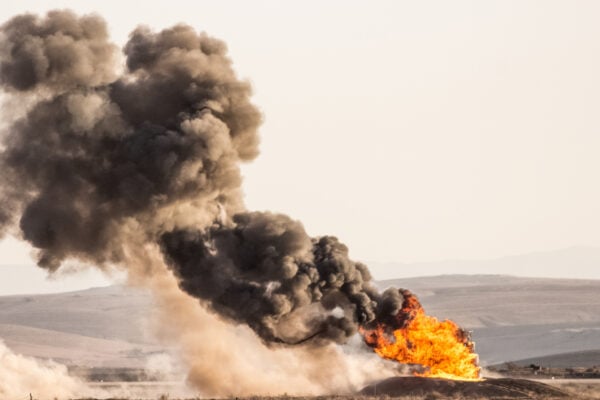
Most importantly, Ukraine’s advanced weaponry has largely negated Russia’s asymmetric advantages. For example, Ukraine has AI-assisted drones that are wreaking havoc on Russian forces. And, now, those drones are hitting suburbs in Moscow. That’s a legitimate strategy given that the Russians have deliberately targeted civilians from the beginning. Now, Muscovites fear being wounded or killed by Ukraine.
Further, Ukraine has successfully damaged Russia’s primary source of revenue — its oil infrastructure. Along with hitting civilian areas, President Volodymyr Zelensky is hoping that hurting Russia in the pocketbook will cause enough domestic dissension to make Putin abandon the war. For its part, Russia has been reverse-engineering Ukrainian weapons and scaling up the production thereof. Still, Secretary of State Marco Rubio has stated that Ukraine has the strongest and most powerful military in Europe. We’ll see what happens.
Then there is the U.S./Israeli decision to launch a war against Iran — a war that has proven to be ill-conceived and, at this point, ill-fated. In the Ukraine/Russia example, the great equalizer is technology. However, in centuries past, underdogs were often able to defeat larger and better-equipped forces because of topography. In other words, the type of land, waterways, or even weather can offer a tactical advantage to “the home team” when invaders, well, invade.
For example, in what the Vietnamese refer to as “The American War,” the Viet Cong and North Vietnam outmaneuvered the technologically advanced U.S. and South Vietnamese forces. They did so by making effective use of a vast network of tunnels, fighting a guerilla insurgency (as America had done against the British), and employing their understanding of jungle terrain. Eventually, they broke the will of the American people to continue the fight.
Likewise, in the case of the U.S./Israeli/Iranian conflagration, terrain is playing a role. Iran has mountains. A lot of them. In addition to being natural barriers against attacks, they’re very good for hiding things, such as lethal weapons and stockpiles of enriched uranium. Recognizing this fact is one of the reasons that previous U.S. presidents have been unwilling to launch a war against Iran.
Then there is the potentially astronomical cost of the war. Linda Bilmes, Ph.D., of Harvard’s Kennedy School recently estimated that our war with Iran could eventually cost us as much as one trillion dollars. (Bilmes earned her doctorate from Oxford University, writing her dissertation on the financing of the wars in Iraq and Afghanistan.) As it stands, the American people are not likely to support such an expensive adventure, especially given that most have never supported it.
As these two wars rage, much of the world is watching to see whether or how China might try to take over Taiwan, militarily or otherwise. China’s President Xi Jinping made forceful statements regarding Taiwan following his recent meeting with President Trump. The examples of Russia/Ukraine and U.S./Israeli/Iran have to be top of mind for Xi. The prospect of a nearly interminable supply of drones could go a long way in thwarting any Chinese plan to cross the Taiwan Strait.
Likewise, future U.S. presidents will look back on these two major conflicts and, perhaps, will be more judicious when deciding which wars to fight. (Though, to be clear, several previous American presidents wisely steered clear of a major military conflict with Iran, understanding that we could achieve our strategic objectives without the unpredictability of war.)
As technology continues to advance ever more swiftly, it will make wars even less predictable than they have always been. After the U.S. dropped two atomic bombs on Japan, some hopeful observers believed that nuclear deterrence would largely obviate the need for war — at least those akin to World War II. Sadly, that prediction was not to be.
I will go out on a limb and predict that war will remain inevitable as long as people are around. Ironically, our technology could one day decide that we no longer are.
Contact community leader Larry Smith at larry@leaf-llc.com.