
Expanded pretrial detention authority raises questions about judicial discretion, public safety and due process.
What happens when the presumption of innocence becomes a question of discretion?
Indiana voters approved a constitutional amendment expanding the circumstances under which judges may deny bail to people charged with crimes other than murder or treason.
With 98% of precincts reporting, unofficial results showed approximately 58% of voters supported Public Question 1, while 42% opposed it. According to the American Civil Liberties Union of Indiana, that opposition amounted to more than 750,000 voters — a larger share than voted against similar amendments in Texas and Tennessee, which passed with 61% and 67% support, respectively.
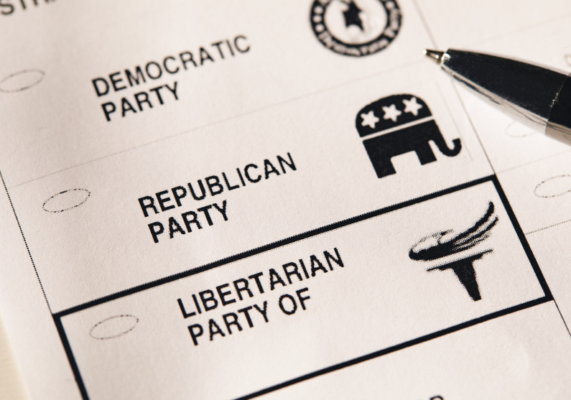
Under the amended provision, a person charged with an offense other than murder or treason may be denied bail when the evidence against the person is strong and the state demonstrates that no release conditions would reasonably protect another person or the community.
The change is scheduled to take effect Jan. 1, 2027, under Senate Enrolled Act (SEA) 2.
What changed?
In a 2022 decision, DeWees v. State, the Indiana Supreme Court recognized that judges already had considerable authority over bail. Under certain circumstances, a court could increase bail or revoke it entirely when clear and convincing evidence established that a defendant posed a physical safety risk.
But that authority operated within existing bail procedures. Public Question 1 creates an additional constitutional exception, allowing the state to seek detention without bail when specific legal standards are met.
Former prosecutor Matthew Whitley questioned whether the change will improve public safety.
“I do not think that this constitutional amendment was necessary from the standpoint of increasing public safety,” Whitley said.
Taking the supporters’ argument in good faith, Whitley said the goal was to give judges broader discretion to weigh the facts of a specific case. Before the amendment, outside of murder and treason, bail could be denied or revoked only in a narrower set of circumstances, such as when a person was accused of committing a new offense while already out on bail.
Whitley, who now practices civil rights, personal injury and consumer protection law, said the amendment does not identify specific offenses that would qualify someone for detention.
“By the language on its face, you really don’t know what you voted for at all,” he said.
SEA 2 provides the procedures judges must follow. At a detention hearing, the state must establish by a preponderance, or majority, of the evidence that the proof is evident, or the presumption is strong. It must also prove by clear and convincing evidence that the person poses a substantial risk to another person or the community and that no conditions of release can reasonably protect against that risk.
Retired Marion County Judge David Shaheed said the clear and convincing standard is very hard to meet. Shaheed spent decades in the legal system, including nearly 20 years on the bench. He presided over criminal court and helped establish Marion County’s Re-entry Court.
The law does not list qualifying offenses or automatically exclude misdemeanors and low-level felonies. Lawmakers rejected changes that would have excluded them. Instead, judges must now consider the circumstances of the “alleged” offense — including whether it involves alcohol or drug abuse — the weight of the evidence, criminal history, any history of drug or alcohol abuse, employment, family ties, financial resources and whether less restrictive release conditions could address the risk.
People facing detention have the right to counsel and an opportunity to present evidence and challenge the state’s case. Citizens should know that the judge must explain the decision in writing if bail is denied.
Discretion and its consequences
Without a defined list, Whitley said, decisions could differ across Indiana’s 92 counties.
“It’s going to vary from venue to venue, within Indiana,” he said.
Local bail guidelines already differ from county to county, he said, and it will likely take years of appeals before higher courts define what does and does not meet the clear and convincing standard.
In a one-minute video released before the election, Gov. Mike Braun, who earlier this year signed SEA 2, which sets the procedures for bail hearings, and SEA 3, which set the ballot language for Public Question 1, gave an example of what judges would weigh: “Did it [the alleged crime] involve drugs, alcohol, or an act of violence?”
Whitley said that uncertainty extends to drug cases and impaired driving.
“We don’t know what it does or does not include. That’s the problem,” he said.
Under the law as written, he said, a prosecutor and a judge in each county will decide whether someone suspected of drug dealing, drug use or impaired driving should be held without bail.
Whitley said the law could have been targeted. As a prosecutor in a crimes-against-women unit, he saw how domestic violence can escalate to homicide — one area, he said, where killings have not declined the way other violent crime has. Naming those offenses, he said, would have been data-informed.
For examples of of how to navigate changing the bail proceedings, Whitley also pointed to Alabama, which listed specific violent offenses, and New Jersey, which expanded pretrial detention while also eliminating cash bail.
The cost of detention
Shaheed pointed to the cost to taxpayers of people who have not been convicted of the charges that brought them before the court.
“The taxpayer is gonna pay more for people who are locked up, because they have to be housed, they have to be secured, and they have to be fed,” Shaheed said.
Whitley said the amendment arrived without additional funding for counties, public defenders, drug treatment or transfers of people between county jails.
“There’s no new money,” he said.
He said even a short period of detention can destabilize a person’s life.
“Short-term detention really does cost people their job, their housing, their custody of their children. It’s a mess,” he said. “And again, this is all before they’ve actually been proven guilty.”
The concerns come as Indiana already holds a substantial pretrial population. The Vera Institute of Justice reported that 69% of people in Indiana jails were being held before trial as of August 2026. That figure describes the share of the jail population, not the number of people who will necessarily be detained under the new law.
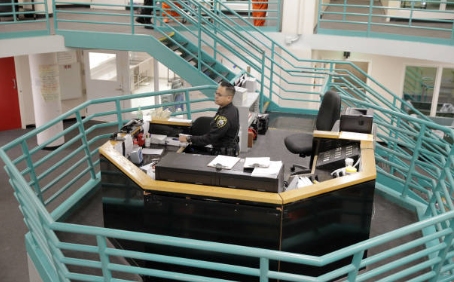
In Marion County, the Adult Detention Center reported a population of 2,506 people against a rated capacity of 2,985 in July 2026.
Will detention make communities safer?
Supporters of expanded detention authority argue that judges need the ability to keep people in custody when they pose a serious danger and release conditions cannot adequately protect the public.
Whitley said the amendment is not built on evidence.
“This is just not data informed. It just frankly isn’t,” he said.
Research published in the American Economic Review in 2018 examined the effects of pretrial detention in two large urban jurisdictions. Researchers found detention increased the likelihood of conviction, largely through guilty pleas, and reduced formal-sector employment. The study found no net effect on future crime, although detention reduced pretrial crime and failures to appear.
The study was not conducted in Indiana and did not evaluate Public Question 1. Its findings, however, raise questions about the long-term consequences of detention as a public safety strategy.
Who bears the burden?
Whitley said the effects will fall hardest on low-income communities, and that Black residents will “almost certainly catch the brunt.”
The ACLU of Indiana also opposed the amendment, warning that expanded detention authority could increase jail populations and deepen disparities in the criminal justice system.
In a statement released Nov. 11, Danielle Drake, the organization’s senior advocacy manager, said the group remained concerned about how individual judges would exercise the authority.
“Placing this power in the hands of individual judges opens the door for discrimination, further overcrowding of our jails, and the destruction of an accused individual’s livelihood,” Drake said.
The organization urged lawmakers returning for the 2027 session to roll back the amendment. At minimum, it called for revisiting SEA 2 to set strict limits on which offenses qualify and to require public reporting on how often and why Hoosiers are detained.
Whitley said residents can also press for change at the ballot box by paying attention to which offenses their local prosecutors ask judges to hold people on.
The question is no longer simply who can be detained before trial. It is whether Indiana can demonstrate that expanding that power makes its communities safer — and who bears the consequences for these decisions.
Contact Health and Environmental Reporter LaTasha Boyd Jones at tashaj@indyrecorder.com or follow her on social media @iamtashajones.

Tasha Jones is a poet, writer, researcher, and educator whose work explores language as a tool for liberation and resistance. She hosts In the Beginning: The Spoken Word Podcast, the #1 spoken word podcast on Apple and Spotify. Tasha is also the Poems & Parables Literary Journal editor and is currently writing Pyramids. Plantations. Projects. Penitentiaries. You can follow her on social media: @iamtashajones, @itbspokenwordpod, and @poemsandparables.